
Willow leaf gall midge
Dasineura interbracta
Description
How to identify
The willow leaf gall midge (Dasineura interbracta) is a tiny insect belonging to the family Cecidomyiidae within the order Diptera. The adult midge is a delicate fly, typically measuring only 2–3 mm in length, which makes it easily overlooked in the garden environment.
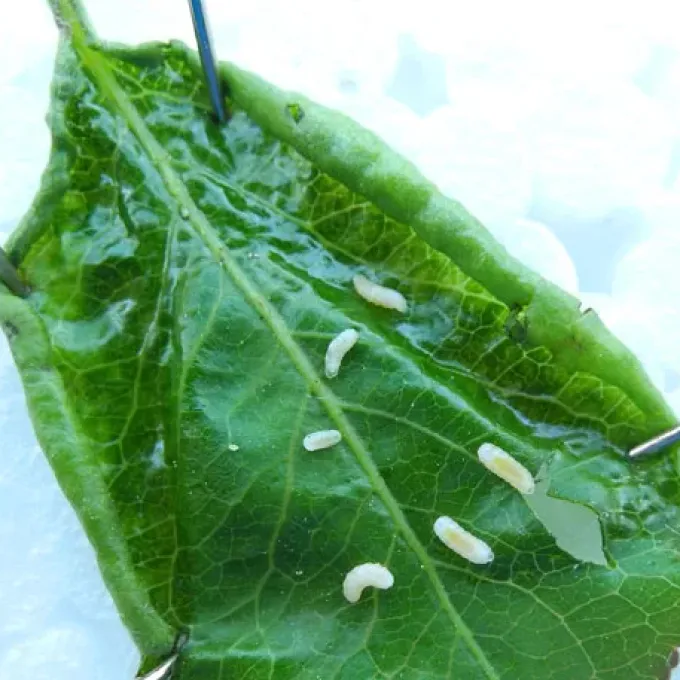
The larvae are legless, spindle-shaped, and usually pale white or orange. They reside inside protective gall structures that they induce on the host plant's tissues, shielding them from the external environment.
Adult midges are rarely seen due to their short lifespan and cryptic behavior. Identification is most commonly achieved by observing the specific deformation patterns caused by the larvae on willow leaves.
The classification of this species relies on specialized entomological keys, as the Dasineura genus contains many closely related species with similar appearances. The shape of the gall is often the primary diagnostic feature.
Their life cycle is highly synchronized with the host plant's phenology, specifically targeting the period when young leaves are most succulent and available for the development of the next generation.
What it damages
Willow trees (Salix spp.) are the primary host for this species. The midge larvae feed specifically on young, developing leaves at the tips of the shoots, causing localized irritation to the plant tissues.
This feeding triggers the formation of abnormal growths or galls, which serve as both food sources and nurseries for the larvae. The presence of these galls disrupts the leaf's normal function and development.
In ornamental willow nurseries, heavy infestations can cause significant aesthetic damage, reducing the commercial value of the stock as the plants appear stunted or deformed.
While mature willow trees can often tolerate these infestations without serious health impacts, the cumulative effect of constant feeding can stress younger or weaker specimens.
Premature leaf drop is a common consequence of high larval density within the foliage, which can weaken the plant's overall photosynthetic capacity over the season.
When it appears
The activity of the willow leaf gall midge usually peaks in late spring, coinciding with the rapid growth of new willow leaves that provides the necessary environment for oviposition.
The adults emerge, mate, and females lay eggs onto the young leaf tissues. As the larvae hatch and begin to feed, the characteristic gall structures start to develop around them.
Depending on local climate conditions, the midge may complete one or several generations throughout the growing season, continuing to infest new growth until it hardens.
As the season progresses and the leaves mature, the larvae exit the galls and descend into the soil or leaf litter to pupate and overwinter in a dormant state.
Effective scouting for this pest should take place early in the season when the first signs of leaf distortion are visible, allowing for early intervention before the population spreads.
Signs of infestation
The presence of the gall midge is signaled by noticeable leaf distortions, such as swelling, rolling, or the formation of distinct fleshy growths on the willow leaves.
The color of the affected leaves often changes, displaying yellow, red, or pale green discoloration in the areas surrounding the galls compared to the healthy tissue.
By carefully opening a gall, you can observe the small larvae inside, which is the most reliable way to confirm the cause of the damage to the willow tree.
In severe cases, the shoot tips themselves may become stunted or curved as the normal vascular transport within the leaf is disrupted by the insect feeding activity.
Overall, affected willow trees lose their neat appearance, with individual branches showing dense clusters of deformed leaves that clearly differ from the rest of the canopy.
Control measures
Pruning is the most effective mechanical control measure. Removing and destroying infested leaves and twigs before the larvae exit the galls can significantly reduce the local population.
Sanitation of the garden area is crucial; clearing away leaf litter and lightly tilling the soil beneath the trees can disrupt the life cycle of the overwintering pupae.
Chemical control, if necessary, should utilize systemic insecticides targeted at the time of adult emergence to prevent them from laying eggs on the new growth.
Promoting natural biological control by providing habitats for beneficial insects such as parasitic wasps can help maintain a balance and prevent major outbreaks of the midge.
Selecting willow varieties known for higher resistance to gall midge infestation is a recommended long-term strategy for landscape managers and garden owners.
Taxonomy
- Latin name
- Dasineura interbracta
- Order
- Diptera (flies)
- Family
- Cecidomyiidae
- EPPO code
- DASYIN
Discussion
No discussions yet — be the first.