
Honey locust gall midge
Dasineura gleditchiae
Description
How to identify
The honey locust gall midge (Dasineura gleditchiae) belongs to the order Diptera and the family Cecidomyiidae. These are tiny flies, often referred to as gall midges, which are barely visible in their adult stage.
The damage is primarily caused by the larvae, which live inside the leaves of the host tree. The insect induces the formation of galls, which are abnormal growths of plant tissue that provide food and shelter for the developing larvae.
Adult females deposit eggs on the expanding leaflets in spring. The larvae are typically orange-yellow in color and are footless, spending their entire growth cycle within the protection of the plant gall.
The biological cycle is closely tied to the budding and leaf expansion of the honey locust. Depending on the climate, the midge can produce multiple generations throughout the growing season.
Pupation occurs either within the gall or in the soil, depending on the generation and environmental conditions. Overwintering occurs in the soil, where larvae remain until the following spring.
What it damages
This pest is highly host-specific, attacking primarily the honey locust tree (Gleditsia triacanthos). It does not affect other tree species in the landscape.
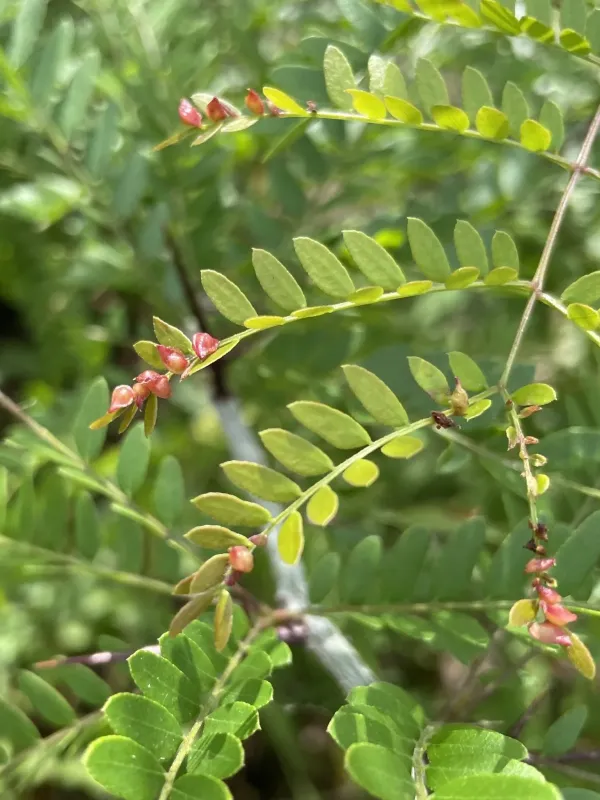
The damage manifests as curled, pod-like leaflets. These galls disrupt the normal physiological processes of the leaf, significantly reducing its photosynthetic capacity.
Severe infestations lead to stunted leaf growth, discoloration, and premature leaf drop. While rarely fatal to mature trees, it can significantly weaken the health and appearance of the foliage.
For young nursery plants and ornamental urban trees, the cosmetic damage is the most critical issue, as it renders the trees unsightly and reduces their commercial or aesthetic value.
Repeated annual attacks can lead to branch dieback and an overall reduction in the growth rate of the tree, making it more susceptible to other biotic stresses.
When it appears
The activity begins in late spring, corresponding with the bud-break and development of new, tender foliage on the honey locust tree.
The peak period of infestation usually occurs during the early to mid-summer months when the environmental conditions favor rapid insect reproduction.
Because the midge can complete its lifecycle in a matter of weeks, several overlapping generations can occur, ensuring a continuous presence of the pest on the tree.
As the season progresses toward late summer, the hardening of the foliage makes the tree less suitable for new egg-laying, causing the infestation to taper off.
In the fall, the larvae emerge from the galls and drop into the soil to begin their overwintering phase, marking the end of the activity period for that year.
Signs of infestation
The most distinctive sign of a gall midge infestation is the presence of small, pod-like swellings or galls on the leaflets. These are easily spotted upon close inspection of the canopy.
The leaflets often appear curled, twisted, or folded. Within these folds, one or more orange larvae may be found residing in the cavity created by the plant tissue.
General yellowing or browning of the foliage may occur if the infestation is heavy, giving the tree a sickly or distressed appearance.
In urban settings, the loss of foliage density and the deformed leaves are the primary diagnostic indicators that a management intervention is required.
- Pod-like swellings on leaflets.
- Curled and deformed leaf margins.
- Presence of orange-colored larvae inside the galls.
- Premature yellowing or browning of the leaves.
Control measures
Management often involves cultural practices, such as removing and destroying infested debris to reduce the overwintering population of the midge.
Monitoring is crucial in nurseries, starting early in the spring to detect the first sign of egg-laying and initiate timely control measures.
Systemic insecticides are the most effective chemical method for control, as they are absorbed by the plant and kill the larvae residing within the galls.
Biological control methods are being researched and utilized, involving the encouragement of natural predators such as parasitic wasps that target the midge.
When applying pesticides, it is essential to ensure minimal impact on beneficial pollinators, as honey locust trees attract bees and other essential insects during their flowering stage.
Taxonomy
- Latin name
- Dasineura gleditchiae
- Order
- Diptera (flies)
- Family
- Cecidomyiidae
- EPPO code
- DASYGL
Discussion
No discussions yet — be the first.