
Ash gall midge
Dasineura fraxini
Description
How to identify
The ash gall midge (Dasineura fraxini) is a small dipteran insect belonging to the family Cecidomyiidae. The adult is a tiny, delicate fly, often referred to as a gall midge, which is difficult to detect due to its small size and cryptic behavior.
The life cycle of this pest is highly specialized and synchronized with the development of ash trees (Fraxinus spp.). The insects emerge in spring, coinciding with the opening of ash buds and the emergence of fresh leaves.
Female midges lay their eggs into the young leaf tissues. Upon hatching, the larvae secrete chemicals that disrupt the plant's normal cell development, forcing the leaf tissue to grow in an abnormal, rounded structure known as a gall.
The larvae are small, legless maggots, typically pale yellow or white. They spend their larval stage inside the gall, feeding on the nutrient-rich plant juices within the protected environment created by the host plant.
After completing their development, the larvae may pupate within the gall or drop to the ground to pupate in the soil. This unique life strategy allows them to survive through different stages of the tree's annual cycle.
What it damages
The primary damage is caused by the larval feeding within the leaf tissue. As the gall forms, it creates a localized deformity that interferes with the leaf's normal function, including photosynthesis and nutrient transport.
Heavy infestations lead to widespread gall formation across the leaf blade. This significantly reduces the total functional surface area of the leaves, which can negatively impact the overall vigor of the ash tree.
In cases of severe attack, affected leaves may become severely distorted, curled, and brittle. This causes them to drop prematurely, potentially leading to early defoliation in late summer.
Young trees in nurseries or newly planted saplings are the most susceptible to structural damage. Repeated annual attacks can cause stunted growth and make the trees more susceptible to secondary fungal infections or environmental stressors.
While the ash gall midge rarely kills a mature tree, the cosmetic damage and the drain on the tree's energy reserves make it an important pest for urban forestry and landscape management.
Signs of infestation
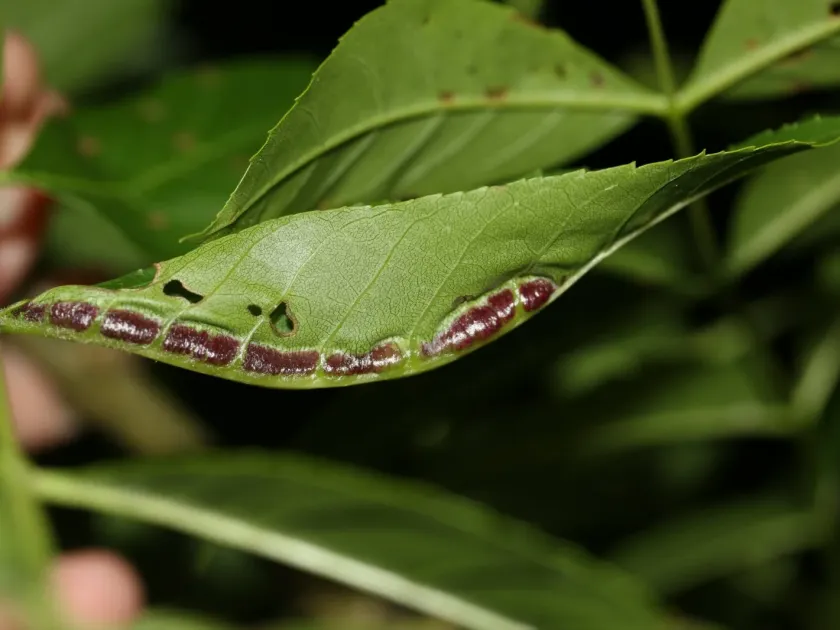
The most visible sign of an infestation is the appearance of small, raised swellings or galls on the surface of the ash leaves. These galls appear in late spring and early summer as the leaves mature.
Galls often start as light green bumps and may transition to shades of yellow or reddish-brown as the season progresses. They are commonly found near the midrib or veins of the leaflets.
Close inspection of a fresh gall will reveal the presence of one or more tiny, yellowish larvae residing inside. If the gall is opened, the internal chamber created by the pest becomes clearly visible.
Leaves affected by high numbers of galls will appear puckered, wrinkled, or rolled. The overall canopy of a heavily infested tree will look stressed and lose its uniform, natural appearance.
Autumn leaf litter containing dried galls is another significant indicator. The presence of these deformed leaves on the ground confirms that the tree was a host for the midge during the growing season.
Control measures
The most effective management strategy is sanitation. Collecting and destroying fallen leaves in the autumn prevents the larvae from overwintering successfully near the tree, significantly reducing the population for the following year.
In nursery settings, systemic insecticides applied during the peak flight period of the adult midges can provide effective control. Timing is critical, as treatments must be aligned with the tree's budding stage.
Promoting tree health is essential for resilience. Regular irrigation and proper fertilization help the ash tree maintain its physiological strength, allowing it to recover more effectively from pest-induced stress.
Encouraging natural predators, such as parasitic wasps, is a sustainable long-term approach. These biological control agents help keep midge populations in check within diverse woodland or park ecosystems.
- Regular monitoring of canopy health during spring.
- Removal and disposal of infested leaf litter in autumn.
- Use of targeted insecticides if infestation threatens sapling growth.
- Maintenance of tree vigor through appropriate silvicultural practices.
Taxonomy
- Latin name
- Dasineura fraxini
- Order
- Diptera (flies)
- Family
- Cecidomyiidae
- EPPO code
- DASYFX
Discussion
No discussions yet — be the first.