
Ash leaf gall midge
Dasineura fraxinea
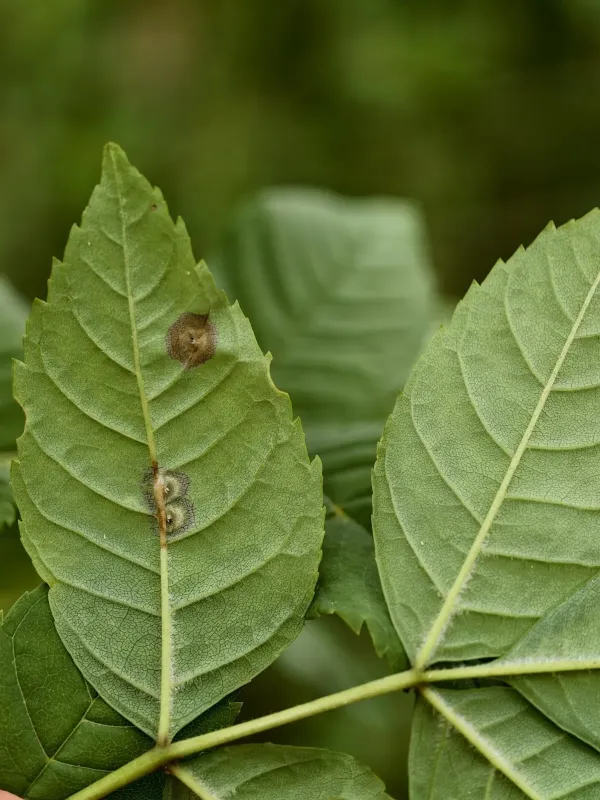
Description
How to identify
The ash leaf gall midge (Dasineura fraxinea) is a small dipteran insect belonging to the Cecidomyiidae family. These midges are inconspicuous, often overlooked due to their tiny size and short lifespan in the adult stage.
Adult midges typically measure around 2-3 mm in length, featuring a yellowish-brown body and transparent wings. They emerge in spring, coinciding with the bud burst of the host plant, to mate and deposit eggs.
The larval stage is the primary cause of damage. Larvae are white or yellowish, legless, and feed internally on plant tissues, secreting chemical substances that induce the formation of galls.
The life cycle is closely synchronized with the host tree phenology. After completing their development inside the leaf tissues, the larvae usually drop to the ground to pupate in the soil or leaf litter.
Depending on local climate conditions, the midge typically completes one generation per year, with pupae serving as the overwintering stage until the next spring season.
What it damages
The primary host for Dasineura fraxinea is the European ash (Fraxinus excelsior). The pest targets tender young leaves and growing shoots, causing visible deformations.
The characteristic damage is the formation of leaf galls. These are localized growths of plant tissue that encase the larvae, providing protection and a direct food source for the developing midge.
Severe infestations cause leaves to curl, twist, and become brittle. This reduces the photosynthetic surface area, leading to general tree stress and potentially premature leaf drop during the summer months.
Young ash trees and nursery saplings are particularly vulnerable. Damage to the apical buds can lead to stunted growth and permanent stem deformities, which significantly reduce the commercial or ornamental value of the tree.
Repeated yearly infestations can compromise the overall health and vigor of the tree, making it more susceptible to secondary environmental stresses like drought or opportunistic fungal infections.
Signs of infestation
The most prominent sign of infestation is the appearance of thickened, curled, or distorted edges on the leaflets during late spring and early summer. The leaves may take on a rolled appearance along the midrib.
Inspection of the curled leaf margins often reveals the presence of tiny, pale larvae protected within the gall structure. The disfigured leaf tissue may also show signs of chlorosis or reddish discoloration.
In cases of high population density, entire branches may appear stunted or scorched. The aesthetic quality of the foliage is significantly diminished due to the widespread leaf curling.
In winter, finding empty larval skins or traces of old galls in the leaf litter can indicate that the tree was previously infested and that the midge population is present in the area.
Observation of poor shoot development in spring, accompanied by curled leaf tips, serves as a strong indicator that the midge is the underlying cause of the tree's poor growth.
Control measures
Cultural control is the first line of defense. Raking up and destroying fallen leaves in the autumn is crucial, as this removes the majority of the overwintering pupae from the tree’s immediate vicinity.
Tilling or disturbing the soil beneath the canopy in early spring can expose pupae to harsh weather conditions and natural predators, effectively reducing the number of midges that emerge to attack the new growth.
Chemical control is most effective when applied at the very start of the season, coinciding with bud burst. Systemic insecticides are preferred as they penetrate the leaf tissue to reach the larvae before the galls become fully developed and protective.
Promoting overall tree vigor through proper fertilization and watering helps trees tolerate infestation. A healthy tree has better recuperative powers after damage occurs.
- Monitor for early signs of leaf curling in early spring.
- Introduce or protect natural predators like parasitic wasps.
- Apply horticultural oils in early spring to deter egg-laying adults.
Taxonomy
- Latin name
- Dasineura fraxinea
- Order
- Diptera (flies)
- Family
- Cecidomyiidae
- EPPO code
- DASYFR
Discussion
No discussions yet — be the first.