
Blueberry gall midge
Dasineura fastidiosa
Description
How to identify
The blueberry gall midge (Dasineura fastidiosa) is a small insect belonging to the order Diptera and the family Cecidomyiidae. It is a highly specialized pest that targets blueberry plants.
The adult midge is a delicate, gnat-like insect, measuring roughly 1.5 to 2 millimeters in length. They are rarely seen due to their small size and cryptic habits.
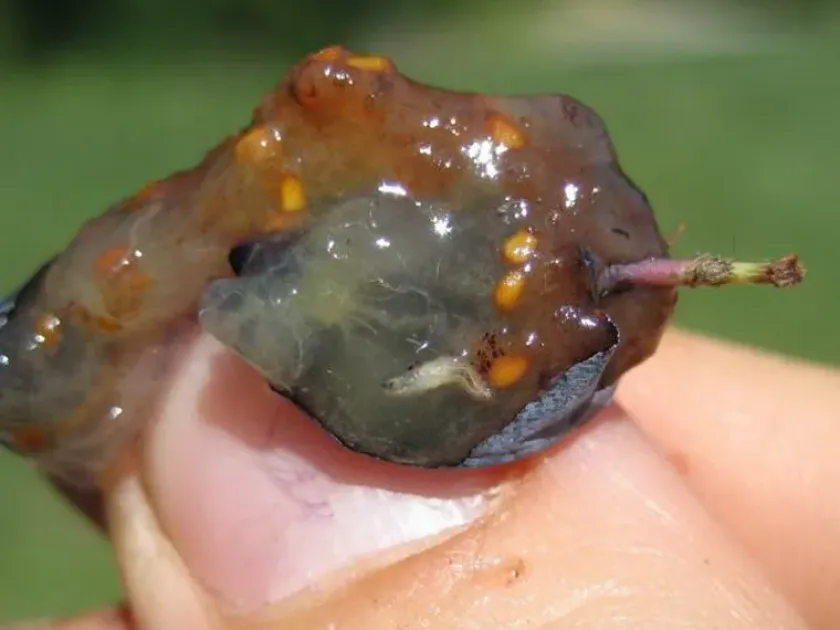
The larvae are legless and headless, typically appearing white or orange-colored depending on their stage of development. They reside within the plant tissue.
The life cycle involves complete metamorphosis, including egg, larva, pupa, and adult stages. They overwinter as larvae in the soil beneath the host plants.
Identification in the field is usually performed by observing the specific plant damage rather than the adult insects themselves, which are difficult to catch.
What it damages
The blueberry gall midge specifically attacks the blueberry plant (Vaccinium). The larvae cause damage by feeding on the apical meristems and young developing leaves.
As the larvae feed, they inject substances that cause abnormal growth, leading to the formation of galls, where the leaves become curled, thickened, and distorted.
This feeding activity halts the growth of the shoots, effectively reducing the plant's ability to produce new foliage and store energy for the next season.
In high-pressure situations, the infestation can severely stunt the development of entire branches, leading to a decrease in overall plant vigor and health.
While the midge does not typically feed on the fruit directly, the weakening of the plant leads to significant yield losses over successive growing seasons.
When it appears
Adult midges emerge in the spring, synchronized with the start of the blueberry plant's vegetative growth period. This ensures that young leaves are available for egg-laying.
The peak activity generally occurs during late spring and early summer when the plant is pushing out new, tender growth that the larvae prefer.
Depending on local temperature and climate, the midge can complete several generations within a single year, continuously posing a threat to the crop.
The most dangerous window for infection is during the active vegetative growth phase when the plant is most vulnerable to the formation of galls.
As fall approaches, the larvae drop to the ground to pupate or enter a diapause state in the soil, awaiting the return of favorable conditions the following year.
Signs of infestation
The most evident sign of infestation is the curling and distortion of leaves at the tips of the shoots, often creating a "rosette" or stunted bunch appearance.
Upon closer inspection, the leaves appear thickened and may show signs of abnormal tissue growth, which serves as a protective house for the larvae.
The affected tips may eventually turn black or brown and die back, leading to a noticeable cessation of new shoot elongation on the infected bush.
When the leaf rosettes are opened, the small, bright-colored larvae can usually be found resting within the folded leaf tissues.
Infected bushes often look unkempt or stunted compared to healthy neighboring plants, with visibly compromised shoot development throughout the canopy.
Control measures
Effective management requires an integrated strategy focused on disrupting the pest's life cycle and protecting the crop during vulnerable stages.
- Pruning and destroying infected tips as soon as symptoms appear to reduce the local larval population significantly.
- Applying mulch around the base of the bushes to create a physical barrier, which can help trap adult midges when they try to emerge from the soil.
- Using yellow sticky traps to monitor for the presence of adult midges and to time insecticide applications more effectively.
- Implementing systemic insecticide treatments only when necessary and strictly following local regulations for berry crops.
- Maintaining high plant health and vigor through balanced fertilization and irrigation to help bushes recover from minor feeding damage.
Taxonomy
- Latin name
- Dasineura fastidiosa
- Order
- Diptera (flies)
- Family
- Cecidomyiidae
- EPPO code
- DASYFD
Discussion
No discussions yet — be the first.