
Daphne gall midge
Dasineura daphnes
Description
How to identify
The Daphne gall midge (Dasineura daphnes) belongs to the Cecidomyiidae family, commonly known as gall midges, within the order Diptera. These are tiny insects that resemble small mosquitoes.
The larvae of this pest are legless and typically yellowish-white or orange in color. This stage is the most damaging, as larvae feed on plant tissues inside the galls they induce.
The life cycle is synchronized with the phenology of the host plant. Adults emerge at the start of the growing season when young, susceptible leaves are available for oviposition.
Pupation often occurs within the feeding sites or in the topsoil layer, depending on moisture and temperature conditions during the season.
Identifying adults in field conditions is extremely difficult due to their small size and high mobility during their short lifespan.
What it damages
The primary host for this pest is the Daphne plant (Daphne genus), including various ornamental species grown in gardens and nursery settings.
The midge targets the tender, actively growing tips of the shoots, which significantly hinders the overall development of the ornamental plant.
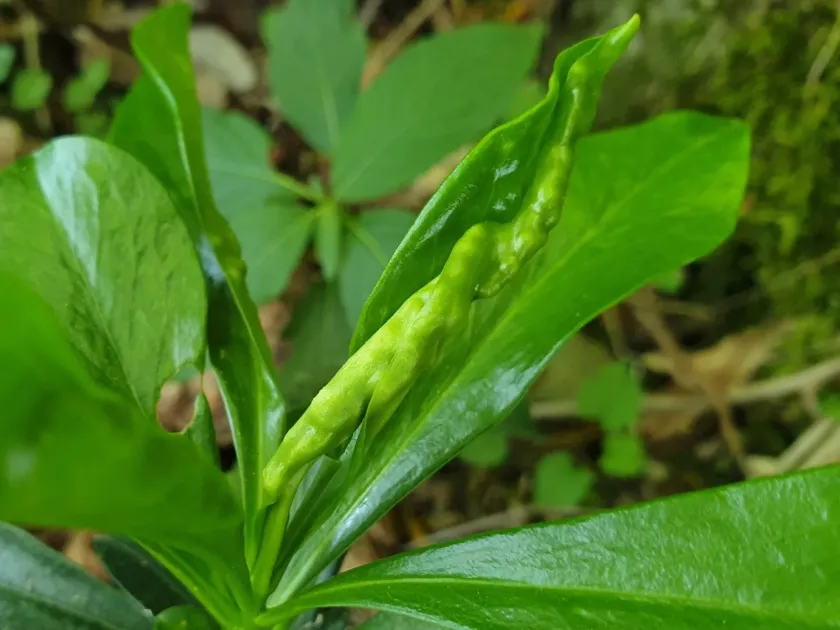
As a result of feeding, young leaves become deformed, tightly rolled, and lose their natural color, severely reducing the aesthetic value of the shrub.
Severe infestations can lead to a cessation of shoot growth, leaving the plant prone to stunted development and secondary fungal pathogens.
In nurseries, high pest populations can cause significant losses in young plant inventory, leading to substantial economic damage.
Signs of infestation
The main sign of an infestation is the formation of characteristic galls — pathological tissue swellings at the shoot tips.
Leaves in infested areas curl tightly, forming a 'rosette' that protects the larvae inside from environmental stressors and pesticides.
Visual inspection often reveals discoloration of the leaf tissue, which may turn pale or develop reddish spots due to the chemical reaction of the plant to the larval secretions.
Inside the curled leaves, one can find clusters of small larvae actively feeding on the sap of the plant.
In later stages, infested shoot tips often dry out, turn dark, and drop prematurely, indicating a critical level of infestation.
Control measures
The primary control measure involves the mechanical removal and destruction of all infested shoot tips before the larvae exit the galls.
Cultural practices should focus on maintaining overall plant health: regular watering, balanced fertilization, and proper pruning improve the plant's resistance.
In cases of heavy infestation, the application of systemic insecticides is recommended to penetrate the galls and reach the larvae living inside.
- Apply systemic insecticides during the bud-burst stage.
- Regularly monitor the shrubbery throughout the spring and summer.
- Implement autumn sanitation of the soil under the canopy to destroy overwintering pupae.
It is essential to rotate products with different active ingredients to manage the risk of resistance development in the midge population.
Taxonomy
- Latin name
- Dasineura daphnes
- Order
- Diptera (flies)
- Family
- Cecidomyiidae
- EPPO code
- DASYDP
Discussion
No discussions yet — be the first.