
Dactylis gall midge
Dasineura dactylidis
Description
How to identify
The Dactylis gall midge (Dasineura dactylidis) is a small dipteran insect belonging to the Cecidomyiidae family, commonly known as gall midges. It is a specialized pest primarily targeting forage grass crops.
The adult stage consists of delicate, tiny flies that are rarely seen due to their size and nocturnal or twilight behavior. Their primary function is mating and oviposition on the host plants.
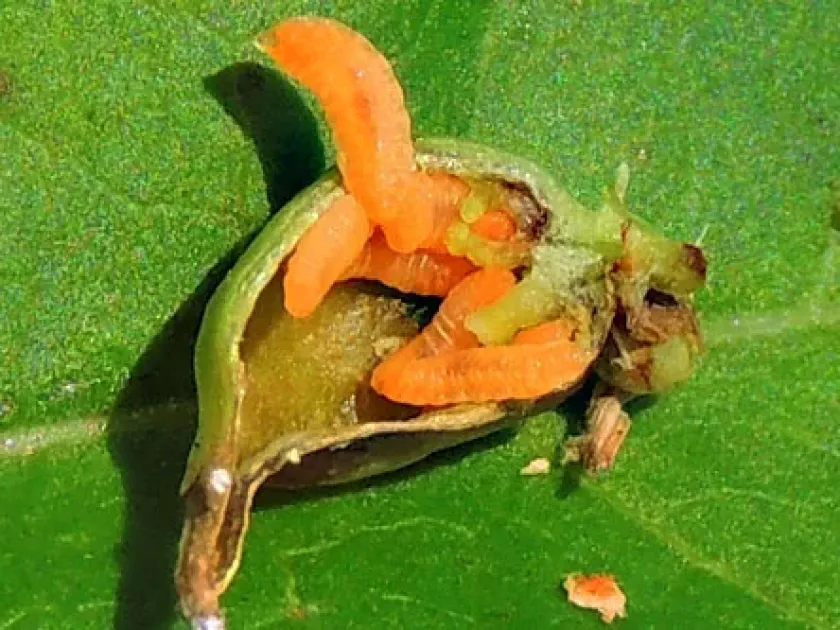
The larval stage is the most destructive phase. The larvae are legless, spindle-shaped, and usually pale yellow or white, thriving inside the reproductive parts of the plant.
They undergo a complete metamorphosis. The larval period is spent feeding within the florets, which disrupts the normal development of the plant’s seeds.
Understanding their life cycle is crucial for effective management, as the pest relies heavily on the phenology of its host, specifically the orchard grass.
What it damages
The primary host for this pest is orchard grass (Dactylis glomerata), a vital crop for high-quality livestock feed production.
Larvae feed on the developing ovaries within the spikelets. This feeding triggers the plant to form galls, causing the spikelet to swell and preventing the formation of viable seeds.
Severe infestations can lead to significant economic losses, as the resulting seed yield is drastically reduced both in quantity and overall quality.
The physical deformation of the panicles makes the grass less suitable for harvesting and harvesting machinery may struggle with the uneven structure.
By preventing seed maturation, the gall midge effectively undermines the reproduction cycle of the grass in seed production fields.
When it appears
The emergence of adult midges from the soil typically coincides with the booting stage of orchard grass in late spring or early summer.
The flight period is strongly influenced by weather conditions, particularly moisture levels and temperature, which trigger the pupation process.
The timing of the pest's emergence is critical; it is perfectly synchronized with the host's flowering phase, ensuring that the larvae have access to young plant tissues.
After completing their development, the final generation of larvae moves to the soil or remains within plant debris to survive the winter period.
Monitoring for the start of the adult flight is the most important step for farmers to determine the appropriate timing for any necessary protective measures.
Signs of infestation
Infestation is characterized by the distortion of the inflorescence, where the panicle loses its typical open shape and appears bunched or gnarled.
The florets often fail to open properly and may appear swollen or discolored due to the presence of larvae developing inside the floral structures.
- Swollen or distorted spikelets within the panicle.
- Visible presence of small, pale larvae inside opened spikelets.
- Shriveled or non-existent grains in the infected areas.
- Premature browning or drying of the flower heads.
- Significant decrease in seed weight and viability.
Close inspection of the panicles before the full blooming stage reveals the typical gall formations that indicate the presence of the pest.
Control measures
Integrated pest management strategies are essential. Cultural practices, such as deep plowing after harvest, help bury overwintering larvae and disrupt their life cycle.
Spatial isolation between new seed production fields and older, untreated stands of orchard grass can prevent the spread of the midge.
If chemical intervention is deemed necessary, insecticides must be applied precisely during the adult flight period before eggs are deposited.
Regular monitoring of adult populations using sticky traps allows farmers to make informed decisions about when to apply treatments to avoid unnecessary pesticide use.
Good agricultural practices, such as maintaining strong and healthy crop growth, can also increase the plant's resistance and minimize the overall impact of infestation.
Taxonomy
- Latin name
- Dasineura dactylidis
- Order
- Diptera (flies)
- Family
- Cecidomyiidae
- EPPO code
- DASYDA
Discussion
No discussions yet — be the first.