
Hawthorn gall midge
Dasineura crataegi
Description
How to identify
The Hawthorn gall midge (Dasineura crataegi) belongs to the Cecidomyiidae family, commonly known as gall midges. It is a tiny dipteran insect that poses a specific threat to hawthorn species.
Adult midges are extremely small, delicate flies, usually reaching only 2–3 mm in length. Their presence is often overlooked by gardeners due to their minute size and nocturnal or crepuscular activity patterns.
The life cycle involves complete metamorphosis, consisting of the egg stage, larvae, pupae, and the adult stage. The larvae are bright yellow or orange and are responsible for all the structural damage observed on plants.
The species typically overwinters as mature larvae or pupae, hiding within fallen leaf litter or in the upper soil layers directly beneath the infested host plant.
Upon the arrival of spring and the onset of budding, the pupae emerge as adults, ready to mate and lay eggs on the newly developing succulent shoots of the hawthorn.
What it damages
The primary host for this pest is the Hawthorn (Crataegus). The midge exhibits high host specificity, focusing its reproductive cycle almost exclusively on the youngest, most actively growing parts of the shrub.
Damage occurs when larvae feed on the meristematic tissues of the buds. This feeding triggers a pathological response in the plant, resulting in the formation of galls that house the larvae.
These galls prevent the shoot from continuing its normal longitudinal growth, effectively terminating that branch's expansion for the current season.
In ornamental gardens, heavy infestations significantly degrade the aesthetic value of the bushes by creating numerous deformed, stunted, and clustered shoot tips.
While the Hawthorn gall midge rarely kills a healthy, mature plant, the resulting loss of vigor and potential reduction in flowering can impact the overall health of the shrub.
Signs of infestation
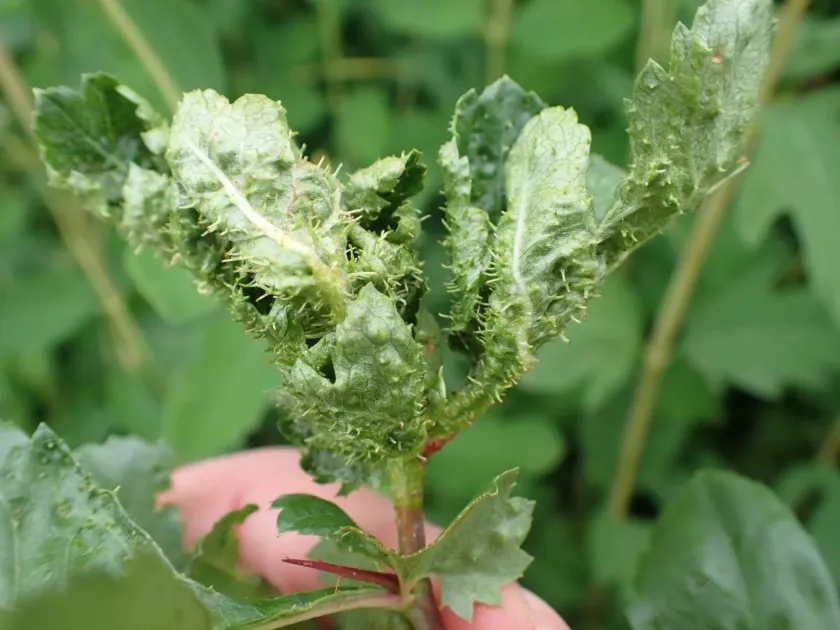
The most diagnostic sign of an infestation is the presence of leafy, cabbage-like rosettes at the tips of the branches. These structures are composed of tightly clustered, deformed leaves.
Inside these rosettes, the yellow larvae are protected from predators and weather conditions. Dissecting these galls will usually reveal the larvae feeding on the inner tissues.
Affected leaves often show discoloration, turning reddish, yellow, or pale green. The entire structure of the terminal growth becomes rigid and ceases to grow normally.
Gardeners should inspect their hawthorns in late spring and early summer when the characteristic rosettes are most prominent and clearly visible against the healthy foliage.
Persistent stunted growth on terminal branches is a reliable indicator that an active midge population is present and causing damage to the host plant.
Control measures
The most effective cultural control method is the manual removal and destruction of the infested gall-bearing tips before the larvae finish their development and drop to the ground.
Sanitation is critical; cleaning up and burning all fallen leaves in autumn prevents the next generation of midges from successfully overwintering in the soil.
Cultivating or turning the soil under the canopy of the hawthorn in both spring and autumn can destroy overwintering pupae and significantly reduce the emergence of the next year's population.
Systemic insecticides may be used in cases of severe infestation, though they should be applied early in the season to catch the adult midge activity before egg-laying occurs.
Integrated Pest Management (IPM) practices, such as promoting natural predators and maintaining healthy plant vigor, are the best long-term solutions for managing gall midge populations.
Taxonomy
- Latin name
- Dasineura crataegi
- Order
- Diptera (flies)
- Family
- Cecidomyiidae
- EPPO code
- DASYCR
Discussion
No discussions yet — be the first.