
Balsam gall midge
Dasineura balsamicola
Description
How to identify
The balsam gall midge (Dasineura balsamicola) is a small fly belonging to the Cecidomyiidae family. Adult insects resemble tiny mosquitoes and are rarely observed due to their small size and fleeting lifespan during the spring season.
The larval stage is the most significant part of the life cycle regarding plant interaction. These small, legless maggots reside inside the host plant's tissues, stimulating the formation of galls that provide protection and food for the developing larvae.
What it damages
The primary host for this pest is the balsam fir (Abies balsamea). The insect is host-specific, meaning it focuses its reproductive and feeding efforts exclusively on this species, which can lead to severe infestations in forest stands and nurseries.
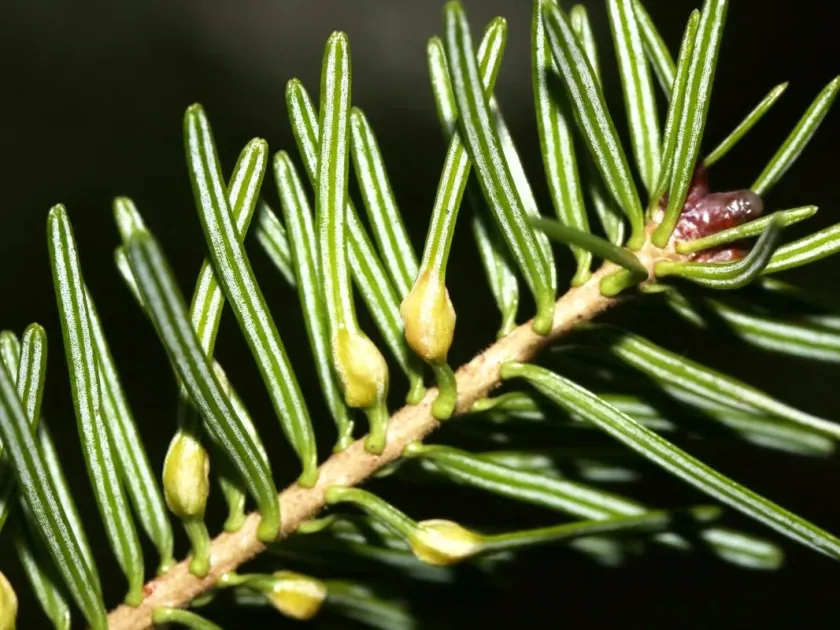
Larvae damage the needles by feeding on them while they are still developing. This feeding activity disrupts the needle tissue, forcing the plant to create a swollen gall structure, which ultimately stunts the needle's growth and restricts its ability to photosynthesize.
When it appears
The life cycle of the balsam gall midge is strictly synchronized with the bud burst and early needle development of the host fir tree. Adult midges emerge in the spring, precisely when the new growth is most susceptible to egg-laying.
The larvae develop inside the galls throughout the summer months. By the time the needles mature or the season ends, the larval development is typically completed, and the insect moves to the next stage of its cycle to overwinter.
Signs of infestation
The presence of the balsam gall midge is identified by the characteristic pod-like galls that form on the current year's needles. These galls appear as noticeable swellings that distort the shape and alignment of the foliage.
Affected needles frequently become discolored, turning yellow or brown, and tend to drop prematurely from the twigs. Severe infestations can cause significant thinning of the crown, reducing the ornamental value and vigor of the fir trees.
Control measures
Cultural control is a primary method for small-scale infestations, involving the pruning and disposal of infested shoots before the adult midges emerge. This sanitation process breaks the life cycle and limits population growth.
- Monitor adult midge activity using pheromone or sticky traps.
- Apply systemic insecticides during the peak of egg-laying.
- Encourage natural predators such as parasitic wasps.
- Avoid monoculture plantings to reduce host availability.
- Use resistant cultivars of balsam fir if available.
Taxonomy
- Latin name
- Dasineura balsamicola
- Order
- Diptera (flies)
- Family
- Cecidomyiidae
- EPPO code
- DASYBA
Discussion
No discussions yet — be the first.