
Violet gall midge
Dasineura affinis
Description
How to identify
The violet gall midge (Dasineura affinis) is a small dipteran insect belonging to the Cecidomyiidae family. Adult midges are very small, mosquito-like creatures that measure only a few millimeters in length.
The damaging stage is the larva, which is legless and typically pale white or orange-yellow. They develop in protected environments created by the plant’s own tissues in response to their feeding activity.
The life cycle involves multiple generations per year, depending on the climatic conditions. The adult female lays eggs in the young, unfolding leaves of the host plant.
Pupation occurs within the soil under the host plants, which is a critical aspect of their biology that must be considered when planning protective measures.
Because they are small and secretive, these pests often go unnoticed until significant leaf damage has already occurred, necessitating early and frequent surveillance.
What it damages
The primary host for Dasineura affinis is the violet (Viola) genus. Both wild and cultivated garden violets are susceptible to infestations by this midge.
The larvae feed on the sap of young, developing leaf tissues. As they feed, they release compounds that trigger the plant to produce characteristic deformations.
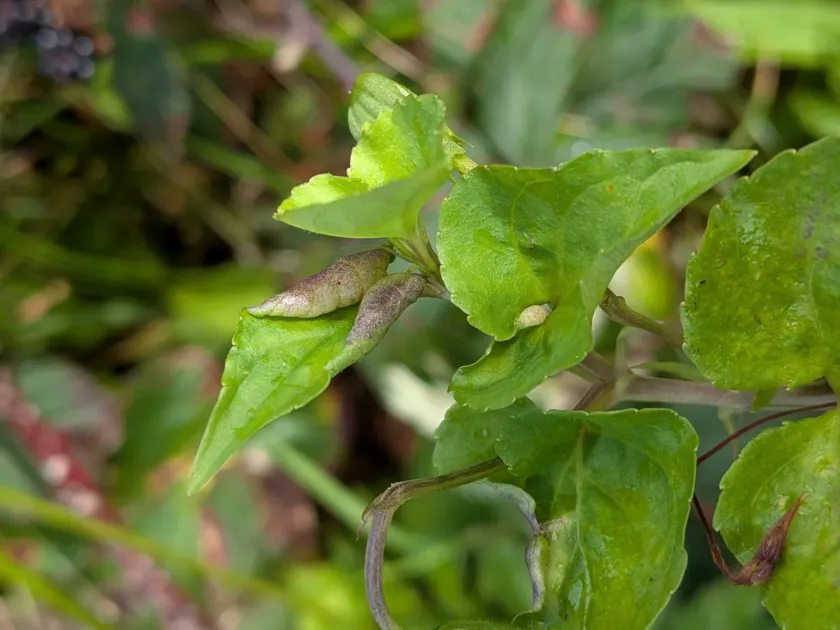
The leaf edges curl inwards and thicken, creating a roll or gall. These structures provide a sheltered environment for the larvae to grow and mature undisturbed.
Feeding results in reduced photosynthetic efficiency, as the leaf tissues become distorted and sometimes necrotic. This stress weakens the entire plant over time.
In severe cases, the growth of the plant is significantly stunted, and the aesthetic value of the violet is lost due to the widespread leaf rolling and yellowing.
Signs of infestation
The most distinctive symptom of infestation is the curling and thickening of the margins of young leaves, which often look like small rolled tubes or pods.
Upon closer inspection, opening the rolled leaf margins will reveal small, pale, immobile larvae huddled together within the folds.
Affected leaves may show discoloration, turning pale green or developing yellow spots as a result of the localized feeding of the larvae.
During the growing season, a general decline in the plant's health, characterized by poor foliage development and distorted leaf shapes, indicates a midge problem.
The presence of stunted growth at the shoot tips and the failure of the plant to produce a normal, flat, symmetrical leaf structure are clear signs of damage.
Control measures
Effective management begins with mechanical removal of infested leaves as soon as the characteristic curls are spotted, ensuring that the larvae inside are destroyed.
Keeping the area around violet plantings free from weeds is essential, as these can serve as alternative host sites and harbor the pest throughout the year.
Chemical control involving systemic insecticides is often necessary when infestations are widespread, as the systemic action allows the product to reach larvae inside the galls.
Cultivation practices such as turning over the topsoil in late autumn help disrupt the lifecycle of the midge by exposing overwintering pupae to cold and predators.
- Regular monitoring of young foliage throughout the spring and summer.
- Removal and disposal of garden debris at the end of the season.
- Maintaining healthy plant vigor through proper fertilization and watering.
Taxonomy
- Latin name
- Dasineura affinis
- Order
- Diptera (flies)
- Family
- Cecidomyiidae
- EPPO code
- DASYAF
Discussion
No discussions yet — be the first.