
Maple midge
Dasineura aceris
Description
How to identify
The maple midge (Dasineura aceris) is a small dipteran insect belonging to the family Cecidomyiidae. These tiny midges are often overlooked in the garden due to their minute size and elusive behavior, despite being a common pest of maple trees.
The life cycle of this insect is strictly synchronized with the developmental stages of its host plant. The primary damage is caused by the larvae, which live inside specialized leaf structures called galls, ensuring both food and protection from the environment.
Adult midges are delicate flies that emerge in early spring. They are fragile and have a short lifespan, focusing their activity on finding suitable leaves to lay their eggs during the crucial leaf-expansion phase of the maple tree.
The larvae are legless and pale, living entirely hidden within the gall tissue. Because of this protected environment, they are shielded from many conventional contact insecticides, requiring careful management strategies based on life cycle timing.
In forest ecosystems, the maple midge is a natural part of the food web. Predatory insects and parasitoid wasps often keep their populations in check, preventing widespread damage under balanced ecological conditions.
What it damages
The maple midge targets various maple species, including the Norway maple (Acer platanoides) and field maple (Acer campestre). They thrive in urban landscapes, parks, and natural woodlands alike, wherever host trees are present.
Feeding larvae induce the formation of galls by injecting enzymes into the leaf tissues. This biochemical stimulation causes the maple tree to develop irregular growths, which provide the essential nutrients needed for the development of the midge larvae.
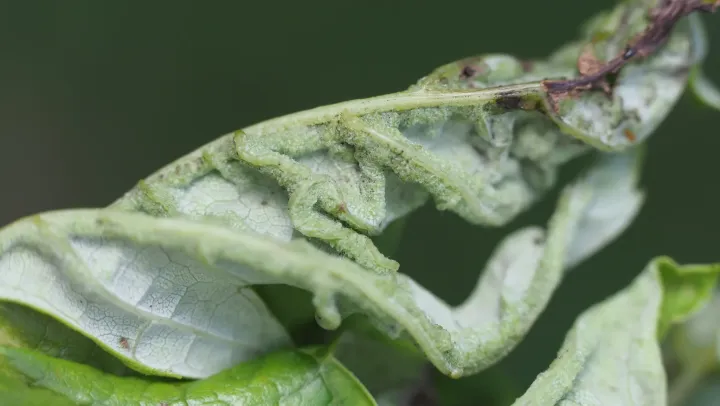
Affected leaves often display significant distortion, curling, and irregular shapes. This physical damage compromises the tree's ability to photosynthesize, which can lead to reduced growth rates and premature leaf senescence during the summer months.
While a single infestation is rarely fatal to a mature tree, chronic annual damage weakens the plant's overall vitality. This stress can make the maples more susceptible to secondary infections, bark diseases, and adverse environmental conditions.
For ornamental nurseries, the presence of these galls is a significant quality issue. Trees covered in galls are unattractive and do not meet the aesthetic standards required for landscape sales, leading to economic losses for growers.
When it appears
The seasonal cycle begins in early spring as adult midges emerge from their overwintering sites. This timing is precisely matched with the budding and leafing out of maple trees, which provides the necessary oviposition sites for the next generation.
Eggs are laid on the surface of young leaves. Once the larvae hatch, they penetrate the leaf tissue, triggering the gall formation. This period is critical, as the developing galls are the only visible sign of the infestation process.
Throughout the summer, the larvae continue their development inside the galls. Depending on the climate and temperature, there may be multiple generations per year, which significantly influences the density and severity of the gall infestation on the canopy.
By autumn, the larvae reach maturity and exit the galls, dropping to the soil surface. They spend the winter in the leaf litter or topsoil, typically within a protective cocoon, waiting for the spring temperatures to repeat their cycle.
Understanding this seasonal timing is essential for effective pest management. Interventions must be timed to target either the emerging adults before egg-laying or the larvae before they move into the soil for winter dormancy.
Signs of infestation
The most distinctive sign of a maple midge infestation is the presence of numerous small, wart-like galls on the leaf blades. These growths can vary in color from pale green to vibrant red or brown, depending on the maple cultivar.
If you inspect the underside of an affected leaf, you will often see small openings where the larvae have exited or where they reside. Large numbers of these galls can cover almost the entire leaf surface, causing it to look distorted and bumpy.
- Leaves show noticeable bumps and wart-like structures.
- Distortion and curling of the leaf margins and surface.
- Premature leaf yellowing and dropping during the growing season.
- Visual presence of small flies around the tree canopy in spring.
It is important to distinguish midge galls from fungal leaf spots. Galls are three-dimensional growths with an internal cavity containing a larva, whereas fungal spots are generally flat, necrotic lesions on the leaf tissue.
Infestations typically start in the lower canopy, where humidity and microclimate conditions favor the midge. Over time, and without intervention, the infestation can spread throughout the entire tree, especially in dense plantings.
Control measures
The most practical and eco-friendly control method is the thorough collection and destruction of fallen leaves in autumn. By removing the leaf litter, you eliminate the primary overwintering sites for the midge larvae.
Cultivating the soil around the base of the trees in late autumn or early spring can help expose overwintering pupae. This mechanical disturbance kills many larvae and makes them vulnerable to predation by birds and beneficial insects.
Chemical control using systemic insecticides can be effective if applied early in the season. Treatment should occur just as buds are breaking, ensuring the active ingredients are present in the leaf tissues before the larvae can establish their galls.
Encouraging natural predators such as ladybugs, lacewings, and parasitic wasps can significantly reduce midge populations. Maintaining a healthy, biodiverse garden environment helps keep pest populations below the economic injury level.
Regular monitoring of your maple trees is essential. By identifying early signs of gall formation, you can manually remove infested leaves, which effectively prevents the buildup of a larger population in subsequent years.
Taxonomy
- Latin name
- Dasineura aceris
- Order
- Diptera (flies)
- Family
- Cecidomyiidae
- EPPO code
- RHABAC
Discussion
No discussions yet — be the first.