
Acacia gall midge
Dasineura acaciaelongifoliae
Description
How to identify
The Acacia gall midge (Dasineura acaciaelongifoliae) is a small insect belonging to the family Cecidomyiidae (gall midges) within the order Diptera. These are delicate, small insects, often resembling tiny gnats or mosquitoes.
The biological uniqueness of this pest lies in its ability to manipulate the host plant's physiology. By inducing the growth of galls, the midge creates a highly specialized microhabitat for its offspring.
Adults have fragile bodies, thin wings, and are generally active during periods of low light or high humidity. Their lifespan as adults is relatively short, focusing primarily on reproduction and egg-laying.
The larvae are typically the life stage that causes damage. They are small, often orange or yellow, and remain confined within the gall structures, feeding on the nutrient-rich plant tissue produced in response to their presence.
Taxonomically, identifying Dasineura species is complex due to the morphological similarities between different species that are restricted to specific host plants.
What it damages
The primary hosts of this pest are species within the genus Acacia. The midge targets juvenile growth, specifically new leaves and tender shoots, which are crucial for the tree's vertical development.
As the larvae feed, they inject substances that interfere with the plant's hormonal balance. This forces the host to develop complex gall structures instead of normal foliage or healthy shoot tissue.
These galls act as nutrient sinks, diverting resources away from the rest of the plant. Consequently, severely infested branches may suffer from stunted growth, reduced photosynthetic capacity, and localized necrosis.
In ornamental or forest nursery settings, the damage is particularly detrimental. The resulting deformation of the tree architecture significantly degrades the visual and commercial quality of the plants.
While an individual gall might not kill a mature tree, cumulative damage from heavy infestation seasons can weaken the tree's health, making it more susceptible to other pathogens or drought stress.
When it appears
The pest's lifecycle is highly synchronized with the phenology of the acacia host. Adult emergence typically begins in early spring, coinciding with the flushing of new leaves.
Depending on environmental conditions, multiple generations can occur throughout the growing season. Warm and humid conditions generally favor the rapid development of larvae inside the galls.
The peak of infestation is usually observed during mid-summer. During this time, the availability of succulent new tissue ensures the success of successive midge generations.
As temperatures begin to drop and the growth of acacia slows down in autumn, the midge enters a diapause state. The larvae remain in the soil or within fallen plant debris to survive the winter.
Monitoring the flight periods and the initial appearance of galls is critical for developing an effective strategy to break the lifecycle and reduce the overall pest population.
Signs of infestation
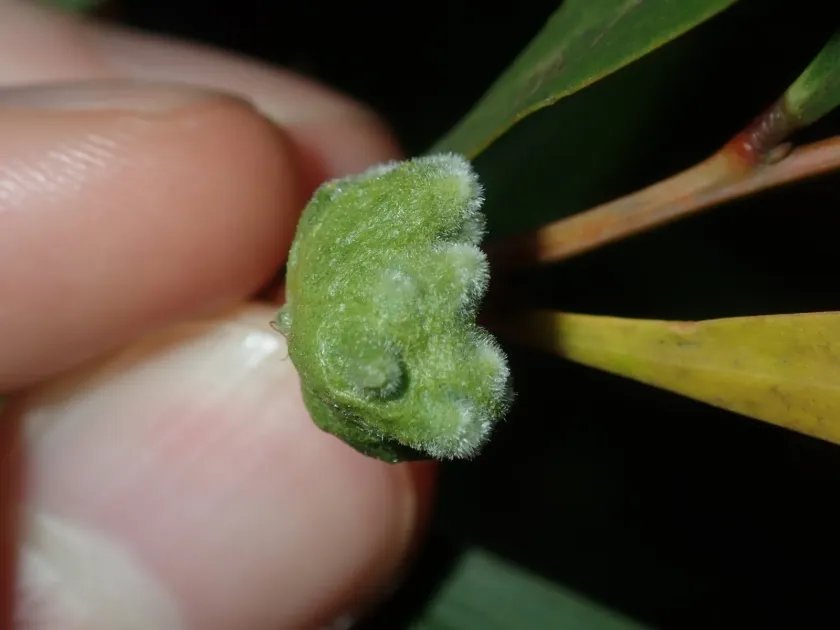
The most diagnostic sign of an infestation is the appearance of galls. These are distinct, abnormal growths on leaves or stems that vary in shape and texture depending on the specific host response.
The affected foliage often shows signs of chlorosis, twisting, or premature senescence. Plants may appear irregular in shape, with distorted branches that struggle to maintain a normal growth habit.
If you inspect the galls, you might notice small exit holes where the adult midges have emerged. Cutting open a fresh gall will reveal the larva residing within its dedicated chamber.
Reduced vigor of the entire plant or specific sections is a secondary symptom. Persistent infestations over several years can lead to the gradual decline of the host tree's overall crown density.
In early stages, the galls might be mistaken for normal buds or floral parts, which is why close inspection during the active growth phase is required to confirm the presence of the pest.
Control measures
Effective management requires a combination of cultural practices, biological monitoring, and timely chemical intervention.
- Pruning and destroying infested plant material to prevent the emergence of new adults.
- Cultivating the soil beneath infested trees during autumn to disrupt the overwintering pupal stages.
- Applying systemic insecticides during the peak of adult flight to limit egg-laying success.
- Encouraging and maintaining local populations of predatory insects and parasitoid wasps.
- Rigorous inspection of nursery stock to prevent the introduction of the pest to new areas.
Taxonomy
- Latin name
- Dasineura acaciaelongifoliae
- Order
- Diptera (flies)
- Family
- Cecidomyiidae
- EPPO code
- CECIAL
Discussion
No discussions yet — be the first.