
Cystiphora
Cystiphora
Description
How to identify
Cystiphora is a genus of gall midges belonging to the family Cecidomyiidae (order Diptera). These are minute insects, with adults rarely exceeding 1–2 millimeters in length, making them difficult to detect in field conditions.
The damaging stage consists of larvae that develop inside plant tissues. These larvae are typically legless and vary in color from whitish to yellowish-orange, allowing them to remain hidden within the galls they induce.
Species identification often relies on the specific shape and location of the galls on the host plant. Cystiphora species are highly host-specific, which is a crucial factor for accurate diagnosis in the field.
Adults have a short lifespan, dedicated primarily to locating suitable host plants for oviposition. Their biological strategy focuses on rapid reproduction during favorable growing seasons.
Detection is often difficult due to the cryptic nature of the larvae. The primary indicator of their presence is localized tissue alteration caused by the larvae's enzymes affecting the host plant cells.
What it damages
This pest primarily infests members of the Asteraceae family, particularly species within the genus Lactuca (lettuce) and several medicinal plant varieties.
Larvae invade the leaf parenchyma, triggering the plant to form pathological tissue growths known as galls. This process disrupts the plant's normal metabolism and nutrient transport.
Heavy infestations lead to premature leaf wilting, which is particularly detrimental to leafy vegetables and ornamental plant species.
Damaged areas become more susceptible to secondary infections, such as fungal pathogens that thrive in compromised plant tissues.
Overall crop yield is significantly reduced as the plant allocates resources to mitigate the parasite's impact instead of maintaining normal vegetative growth.
When it appears
Cystiphora activity begins in the spring when stable positive temperatures allow for adult emergence and oviposition on young leaves.
The peak of pest damage usually occurs in mid-summer, when overlapping generations lead to mass infestation of the foliage.
As summer draws to a close, larvae migrate to the soil or remain in plant debris to pupate and prepare for adverse conditions.
The number of generations per season varies based on climatic zones; however, high humidity levels can accelerate the insect's development cycle.
In autumn, the population declines, and the pest enters a state of diapause, overwintering in protected sites near the plant base or within the topsoil layer.
Signs of infestation
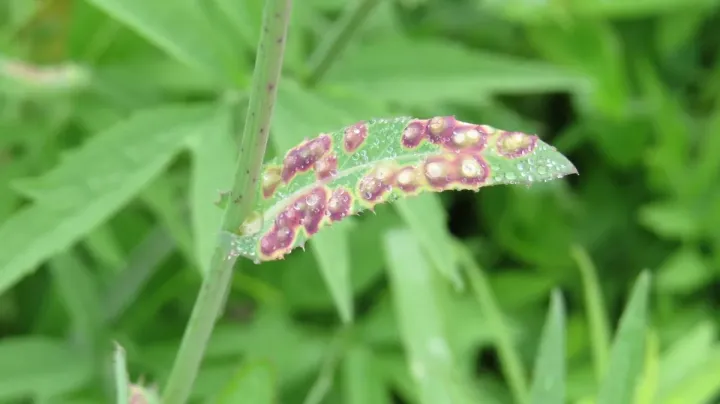
The primary symptom is the appearance of specific swellings or spots on the leaf surface, ranging in color from light green to reddish-brown.
Leaves often become deformed, curled, or wrinkled at the site of larval activity, which is clearly visible when inspecting the underside of the leaf.
Opening a gall reveals the larva, which feeds on the plant sap, causing localized chlorosis and stunted tissue development.
In areas of heavy infestation, the entire crop may show signs of stress, lagging behind in development compared to unaffected plants.
Over time, damaged areas may undergo necrosis, leaving behind perforated or dry patches on the leaves after the larvae have exited.
Control measures
Effective agrotechnical control includes the timely removal and destruction of crop residues where larvae or pupae overwinter.
Crop rotation is essential for reducing the overall infestation pressure by preventing the pest from accumulating in the same field over multiple years.
Regular crop monitoring is vital for detecting early infestation clusters, allowing for immediate removal of affected plant parts to prevent spread.
Biological control strategies involve the use of natural predators or parasitoids that target gall midge larvae, proving effective in organic farming systems.
In cases of high population density, systemic insecticides that penetrate plant tissues may be used to target the larvae living within the galls.
Taxonomy
- Latin name
- Cystiphora
- Order
- Diptera (flies)
- Family
- Cecidomyiidae
- EPPO code
- CYSTSP
Discussion
No discussions yet — be the first.