
Cratopus exquisitus
Cratopus exquisitus
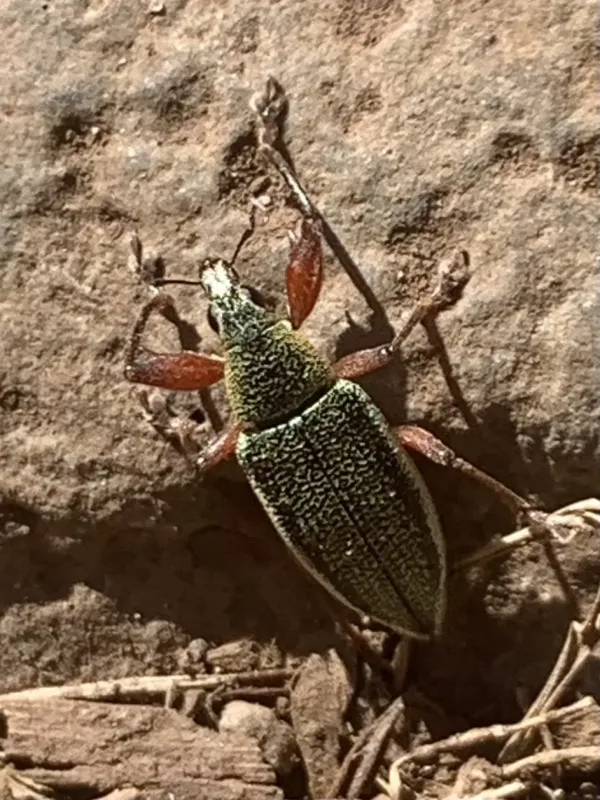
Description
How to identify
Cratopus exquisitus is a species of weevil belonging to the Curculionidae family, known for its distinctive snout-like rostrum used for feeding and egg-laying.
Adult beetles are typically small with a hard exoskeleton covered in scales, which can exhibit various colors or a shimmering, metallic appearance for camouflage.
The morphology of the genus Cratopus is characterized by robust legs and antennae, allowing these beetles to cling tightly to host plants and move efficiently.
Larvae are generally apodous (legless), whitish or cream-colored, and are primarily found in soil environments or within the internal plant tissues they infest.
Correct identification often requires examination of taxonomic features such as the arrangement of scales and the shape of the pronotum under magnification.
What it damages
These pests consume a wide variety of plant tissues, causing direct physical damage that can significantly affect plant health and productivity.
Adults primarily target leaves, creating characteristic notches or ragged edges along the margins, which is a hallmark of many weevil species' feeding behavior.
Larval stages are often more destructive as they feed on roots, subterranean stems, or tubers, causing significant stress to the host plant and disrupting water uptake.
The feeding holes created by adults provide entry points for secondary pathogens, potentially leading to bacterial or fungal infections within the plant tissue.
Heavy infestations can result in stunted growth, reduced photosynthetic capability, and, in severe cases, the complete death of the affected plant specimens.
Signs of infestation
The most visible symptom of an infestation is the presence of irregular, notched feeding patterns on the leaves, usually appearing during the growth season.
Observing plants during night hours with a light source often reveals the presence of adult beetles, as they are frequently more active after sunset.
Wilted or yellowing plants, especially those that do not recover after watering, may indicate damage to the root system caused by larvae hidden in the soil.
Frass (insect excrement) may be found on the undersides of leaves or on the soil surface, providing clear evidence of the pest's presence in the immediate area.
Early-stage infestations can be spotted by checking for localized stunted growth or patchy areas in a field where plant vigor appears lower than surrounding crops.
Control measures
Effective management of Cratopus exquisitus requires an integrated approach that targets both the adult population and the soil-dwelling larvae.
Cultural practices, such as crop rotation and the removal of host weeds, help to disrupt the pest's life cycle and limit its ability to re-establish.
Biological control using entomopathogenic fungi or beneficial nematodes can be highly effective in reducing the larval population within the soil environment.
Chemical control methods include the application of registered insecticides during the peak activity period of adults to minimize the number of eggs laid.
Maintaining soil health and plant vigor through balanced fertilization and proper irrigation helps plants withstand or recover from minor pest-related damage.
Taxonomy
- Latin name
- Cratopus exquisitus
- Order
- Coleoptera (beetles)
- Family
- Curculionidae
- EPPO code
- CTPUEX
Discussion
No discussions yet — be the first.