
New Zealand grass grub
Costelytra zealandica
Description
How to identify
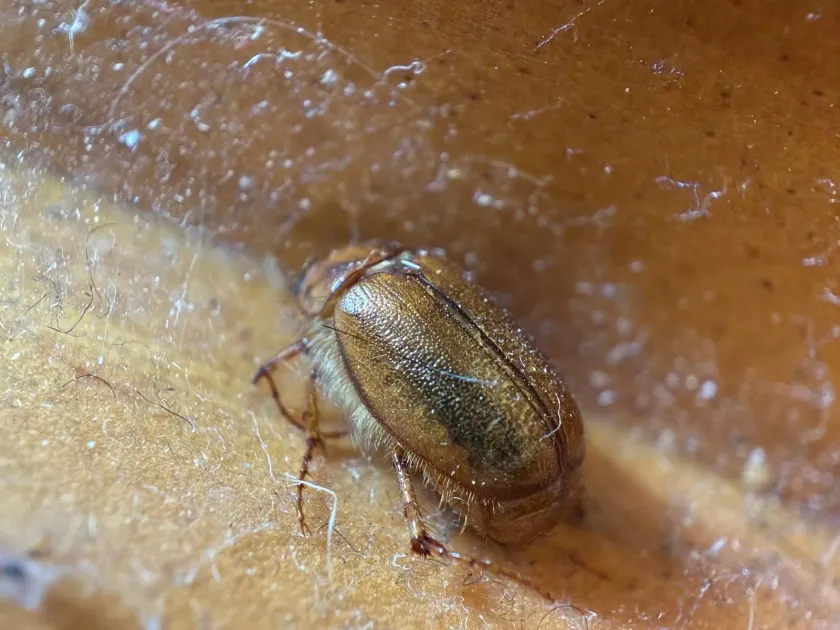
The New Zealand grass grub is a small scarab beetle, measuring approximately 10–12 millimeters in length. Adults typically display a reddish-brown color, often with a darker head and pronotum.
The larvae are classic "white grubs," featuring a C-shaped body with a soft, creamy-white abdomen and a hardened, brownish head equipped with strong mandibles for chewing roots.
As the larvae develop through three instars, they increase significantly in size, with mature larvae reaching up to 25 millimeters in length. They are frequently found curled in the soil profile.
Identification is often confirmed by examining the raster pattern (the arrangement of spines) on the ventral surface of the last abdominal segment, which is unique to the species.
Adult beetles are active at night and are attracted to lights, which is a common behavioral trait often observed by farmers and homeowners during the swarming season.
What it damages
The primary damage is caused by the larval stage, which feeds voraciously on the roots of various grasses, eventually severing the root system from the soil surface.
Affected plants include a wide range of pasture grasses such as ryegrass and fescue, as well as lawn grasses. When roots are destroyed, the turf dies and can be easily rolled back like a carpet.
Adult beetles cause secondary damage by feeding on the leaves of a broad range of broadleaved plants, including fruit trees, vegetable crops, and ornamental shrubs.
Large populations of larvae can result in significant loss of pasture productivity, leading to soil instability and an increased risk of erosion in high-density grazing areas.
The economic impact is particularly severe in the dairy and livestock sectors, where damaged pastures must be re-sown at a high financial cost to the producer.
When it appears
The life cycle is generally completed in one year. The emergence of adult beetles typically occurs in late spring or early summer, synchronized with favorable soil moisture and temperature.
Eggs are laid in batches within the soil, where they hatch after a few weeks. The young larvae then begin feeding near the surface where the roots are most concentrated.
Peak feeding activity usually occurs during late summer and autumn, as the larvae grow rapidly through the soil profile before winter sets in.
During the colder winter months, larvae migrate deeper into the soil to escape freezing temperatures, where they remain relatively inactive until spring.
Before pupation in the spring, larvae move back toward the surface and feed briefly before constructing a small subterranean cell in which the metamorphosis to the adult beetle occurs.
Signs of infestation
One of the most obvious signs is the appearance of brown, dying patches of grass that can be pulled up easily because the roots have been entirely consumed by the grubs.
Increased bird activity on pastures or lawns, where birds are seen actively probing and digging up the soil, is a strong indicator of a grub infestation underneath.
In infested areas, digging a small sample of soil will reveal numerous C-shaped grubs in the upper 5–10 centimeters of the soil profile.
Adult beetle feeding signs include skeletonized or notched leaves on various broadleaved plants during the summer months when the beetles are most active.
The patches of damage often expand quickly during dry weather, as plants with damaged roots lose their ability to take up water and sustain themselves.
Control measures
Biological control methods, such as the application of entomopathogenic fungi like Beauveria brongniartii, have shown promise in naturally reducing grub populations.
Chemical control involving soil-applied insecticides can be effective, but they must be carefully timed with the larval life cycle to ensure maximum efficacy and minimal environmental impact.
Cultural management practices include maintaining a dense, healthy sward and ensuring optimal soil fertility, which can make the environment less conducive to egg-laying.
Light traps are useful for monitoring the flight periods of adult beetles and can help in timing other control measures more accurately across a property.
Crop rotation and selecting resistant grass cultivars can also play a vital role in preventing severe outbreaks and maintaining sustainable land productivity.
Taxonomy
- Latin name
- Costelytra zealandica
- Order
- Coleoptera (beetles)
- Family
- Scarabaeidae
- EPPO code
- COSTZE
Discussion
No discussions yet — be the first.