
Cosmopterigidae
Cosmopteryx
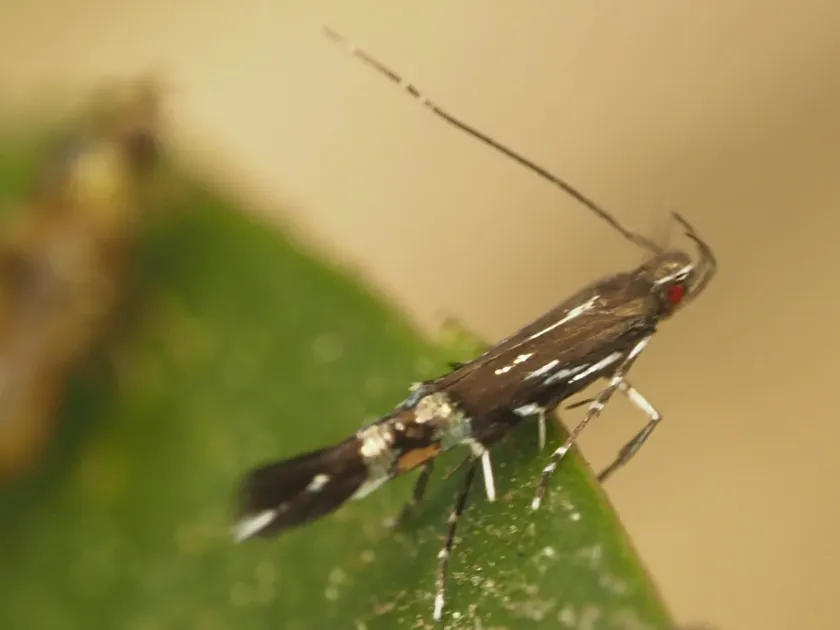
Description
How to identify
The family Cosmopterigidae belongs to the order Lepidoptera. These are mostly tiny moths with narrow wings, often having a wingspan that rarely exceeds 10-15 mm.
Adults typically feature elongated antennae and frequently exhibit a vibrant metallic sheen on their wings, making them recognizable upon close inspection.
The biology of these insects is closely linked to their behavior as leaf miners. Females lay eggs primarily on the surface of leaves, stems, or fruits of host plants.
The larvae, or caterpillars, possess cylindrical bodies and specialized mouthparts adapted for boring into plant tissues to create tunnels.
Insects most often overwinter as pupae or late-stage larvae in plant debris, soil, or inside damaged stems, which ensures their high survival rate.
What it damages
Representatives of this family damage a wide range of agricultural crops. Species that parasitize legumes, such as beans, are particularly destructive.
Caterpillars can attack the generative organs of plants, including seeds within pods, which significantly reduces the market value of the harvest.
Beyond legumes, certain Cosmopterigidae species are found on ornamental plants, grasses, and vegetables in both open-field and greenhouse conditions.
The damage is caused not only by direct tissue consumption but also by creating pathways for secondary infections like bacterial and fungal diseases.
The economic injury level is often reached during mass outbreaks when a significant portion of the crop becomes infested with larvae.
When it appears
The activity of Cosmopterigidae begins in spring when average daily temperatures exceed 10-12 degrees Celsius, triggering the flight of the first generation of moths.
Throughout the growing season, the pest is capable of developing through multiple generations, the number of which depends on regional climatic conditions.
The peak of activity and the most intense crop damage typically occur during hot summer months, as larval development accelerates.
By autumn, population numbers may decline, although some individuals enter diapause to successfully overwinter in sheltered locations.
Monitoring for moth emergence is recommended using pheromone traps to identify the onset of the flight period in a timely manner.
Signs of infestation
The primary sign of infestation is the presence of characteristic mines — winding tunnels bored by larvae inside leaf blades or stem epidermis.
In areas where caterpillars have entered, yellowing and premature wilting of the affected plant parts are frequently observed.
When bean pods are damaged, one can notice entry holes and the presence of caterpillar frass on the exterior of the fruit surface.
Heavily infested leaves may curl, dry out, and drop prematurely, which disrupts photosynthesis and weakens the entire plant.
The presence of fine excrement inside the tunnels serves as a reliable indicator that active larvae are currently feeding within the plant tissues.
Control measures
Agronomic measures include deep autumn plowing, which destroys overwintering sites and reduces the population size for the following season.
Crop rotation and spatial isolation of susceptible crops from potential infection sources are essential practices for managing this pest.
Chemical control involves the application of systemic or contact insecticides during the egg-laying period or when young larvae first emerge.
Biological control methods can include attracting natural entomophages, such as predatory bugs or parasitic wasps, and using Bacillus thuringiensis-based products.
Cleaning and destroying plant debris immediately after harvest helps prevent pest spread and reduces the carry-over population for the next year.
Taxonomy
- Latin name
- Cosmopteryx
- Order
- Lepidoptera (butterflies)
- Family
- Cosmopterigidae
- EPPO code
- COSXSP
Discussion
No discussions yet — be the first.