
Hops mine moth
Cosmopterix zieglerella
Description
How to identify
The Hops mine moth (Cosmopterix zieglerella) is a small moth belonging to the Cosmopterigidae family within the order Lepidoptera.
The adult moth is characterized by its narrow, lanceolate wings that display metallic luster, with a wingspan ranging from 10 to 12 millimeters.
The wings typically feature a distinct pattern of orange-yellow or golden bands outlined with bold black lines, making them distinguishable under magnification.
Larvae are cylindrical and pale-yellow in color, developing a mining habit that allows them to remain protected inside the host plant tissues for most of their lives.
The species completes its life cycle through complete metamorphosis, often over-wintering in the soil as a pupa or as a late-stage larva within plant debris.
What it damages
The primary host plant for this species is the common hop (Humulus lupulus), which is highly susceptible to larval mining activities.
The larvae feed specifically on the internal leaf tissue (parenchyma), causing significant damage while leaving the upper and lower leaf skins intact initially.
This mining activity directly disrupts the photosynthetic capacity of the hop plant, leading to reduced growth and diminished yield of the hop cones.
Severe infestations can result in extensive necrotic lesions on the foliage, which weakens the overall health and productivity of the hop yard.
In addition to direct physiological damage, the loss of foliage density makes the plants more susceptible to environmental stress and other opportunistic diseases.
Signs of infestation
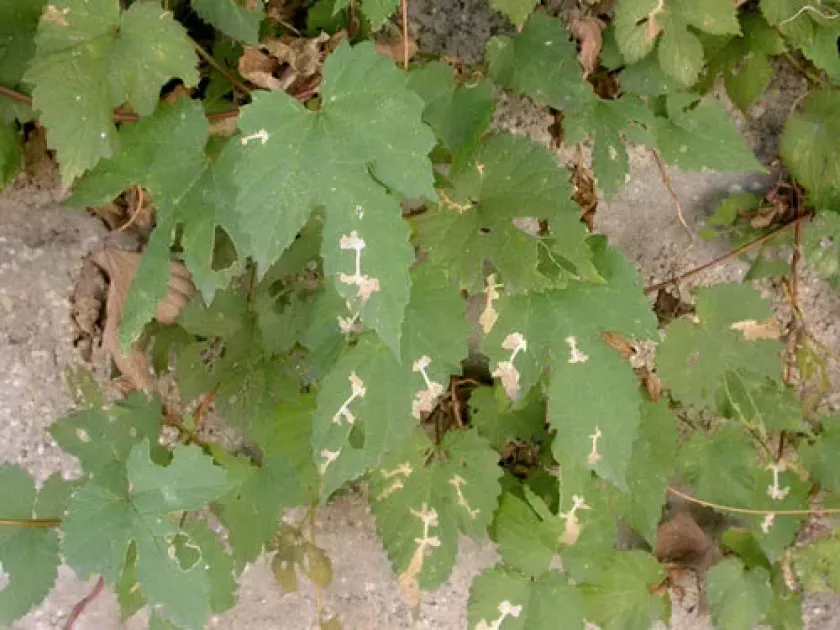
The most diagnostic sign of infestation is the presence of pale, winding mines on the leaves, which gradually turn brown as the tissue dies.
Examining the leaves against direct sunlight often reveals the presence of the larva or the dark trail of excrement left behind within the tunnel.
Affected leaves may curl, wither, or drop prematurely, creating a patchy or scorched appearance across the hop vines.
Adult moths may be spotted resting on the foliage during the day, though they are primarily active during twilight hours.
Reduced vigor of the entire plant or specific vines during the peak growing season is often a secondary symptom of ongoing larval feeding.
Control measures
Effective management requires a combination of sanitation and targeted interventions to prevent the buildup of the moth population.
Sanitation practices such as removing and destroying fallen leaves and crop residues are essential to eliminate over-wintering stages of the pest.
Cultivation of the soil between rows can disrupt the pupation cycle of the moth, significantly reducing the success of the following generation.
In cases of high infestation, insecticides labeled for use on hops should be applied during the early stages of larval development to ensure maximum efficacy.
- Regular monitoring with light traps or pheromone attractants.
- Encouraging natural predators and parasitic wasps in the hop yard.
- Using biological controls like Bacillus thuringiensis-based sprays.
Taxonomy
- Latin name
- Cosmopterix zieglerella
- Order
- Lepidoptera (butterflies)
- Family
- Cosmopterigidae
- EPPO code
- COSXEX
Discussion
No discussions yet — be the first.