
Sweet potato leaf miner
Cosmopterix dulcivora
Description
How to identify
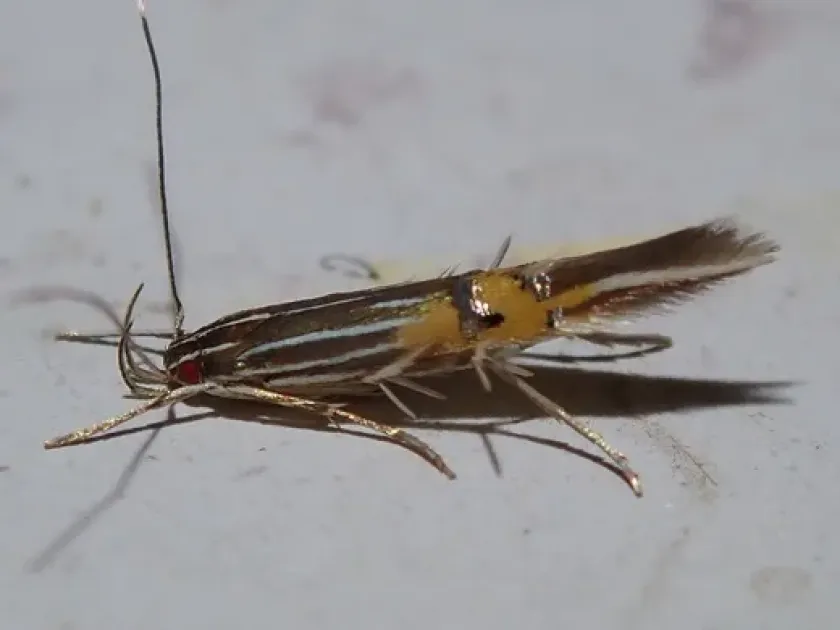
Cosmopterix dulcivora, commonly known as the sweet potato leaf miner, belongs to the family Cosmopterigidae. These small moths are characterized by narrow, pointed wings, often displaying metallic markings that aid in camouflage.
The larvae are small caterpillars that live internally within the plant tissues. Their cryptic nature makes early detection difficult, which often leads to significant infestations before they are noticed.
The biology of this species is primarily linked to tropical climates where sweet potatoes are cultivated. In non-tropical regions, its presence is mostly associated with greenhouse environments or imported infested nursery stock.
As members of the order Lepidoptera, they undergo a complete metamorphosis. Understanding the life cycle of this moth is crucial for agricultural authorities to prevent its accidental introduction into new geographical areas.
Monitoring for adult moths is effectively conducted using pheromone traps, allowing agronomists to determine the peak activity of the pest and schedule appropriate protective measures.
What it damages
The primary host for this pest is the sweet potato (Ipomoea batatas). The larvae can feed on both the foliage and the tubers, causing direct damage to the plant's photosynthetic and storage organs.
Damage to the tubers is particularly severe, as the entry points provide easy access for secondary pathogens, such as bacteria and fungi, which lead to rapid decay during storage.
Beyond sweet potatoes, the pest may infest other related plants in the Convolvulaceae family. This necessitates strict weed control measures to eliminate alternative host plants in the field.
Economic losses are driven by both reduced crop yields and the lowered marketability of damaged tubers, which fail to meet quality standards for human consumption.
In high-density cultivation scenarios, this moth can cause substantial losses, especially if storage conditions are not optimized to inhibit larval activity.
Signs of infestation
The earliest signs of infestation are the visible serpentine mines on the leaves, created as the larvae tunnel through the leaf mesophyll. This leads to chlorosis and premature wilting of the plant.
On the tubers, the symptoms manifest as small, round entry holes accompanied by internal tunneling. Frass (larval excrement) is often visible near these entry points, confirming the presence of the insect.
Cutting into a damaged tuber reveals dark, winding tunnels throughout the flesh. These internal cavities are often colonized by mold, further degrading the internal quality of the produce.
Field inspections should focus on both the foliage and the root zone. Consistent scouting is the most effective way to detect early activity before the population reaches an uncontrollable level.
Overall plant weakness and stunted growth are indirect indicators that a larval colony may be feeding within the root system or the tubers, requiring immediate intervention.
Control measures
The first line of defense is strict phytosanitary inspection of all incoming planting material. Any tuber showing signs of tunnels or holes must be rejected and safely destroyed.
Cultural practices, such as crop rotation with non-Convolvulaceae plants, are highly effective in disrupting the life cycle of the moth and reducing local population pressure.
Pheromone traps are essential for monitoring adult populations. By tracking the flight activity, growers can apply treatments at the optimal timing to maximize efficacy and minimize costs.
Chemical control with systemic insecticides may be necessary during periods of high pest pressure. It is important to rotate products to prevent the development of resistance in the pest population.
Proper sanitation of storage facilities is vital. Cleaning and disinfecting storage areas before the harvest is brought in ensures that the tubers are protected from infestation during the storage period.
Taxonomy
- Latin name
- Cosmopterix dulcivora
- Order
- Lepidoptera (butterflies)
- Family
- Cosmopterigidae
- EPPO code
- COSXDU
Discussion
No discussions yet — be the first.