
Four-spotted leaf beetle
Coraliomela quadrimaculata
Description
How to identify
The Four-spotted leaf beetle (Coraliomela quadrimaculata) is a member of the leaf beetle family (Chrysomelidae) within the order Coleoptera, known for its specific host plant association.
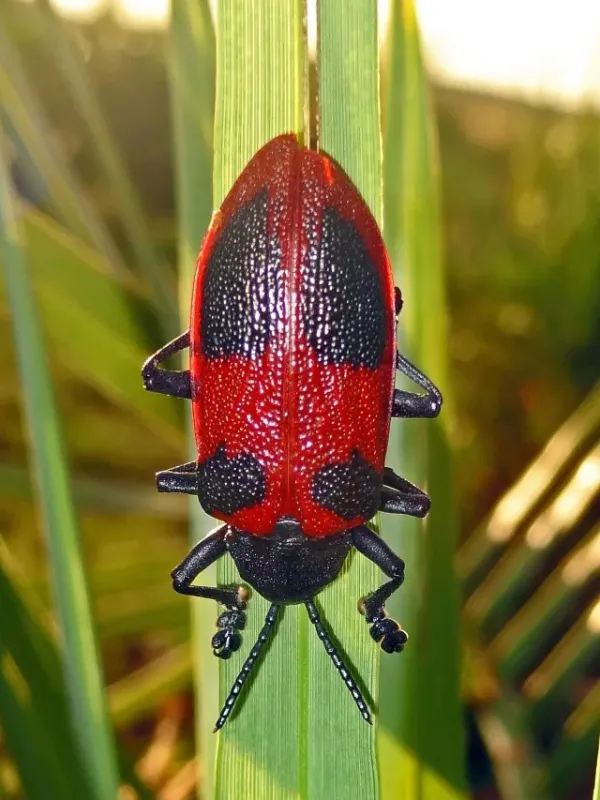
Adult beetles are characterized by an elongated body shape and a distinct pattern of four dark spots on their yellowish-brown elytra.
The larvae typically feature a flattened body structure, adapted for feeding within the tightly packed leaflets of young palm leaves.
These insects undergo a complete life cycle, where each stage is highly specialized to exploit the nutrients provided by their specific palm hosts.
Morphological traits allow them to blend into the foliage, making detection difficult during the initial stages of population establishment.
What it damages
The primary hosts of this pest are various species of palm trees (Arecaceae), which are essential for both ornamental and ecological purposes in tropical and subtropical regions.
The beetle causes severe damage by feeding on young, developing leaves and the tender tissues of the central growing point of the palm.
By consuming the meristematic tissue, the pest effectively halts the growth of the plant, which is particularly destructive for nursery saplings.
Damage to the leaf surface disrupts photosynthesis, leading to stunted growth, reduced vigor, and increased susceptibility to secondary infections.
In cases of heavy infestation, the cumulative effect of tissue destruction can lead to the death of the entire palm if not managed in time.
Signs of infestation
Early symptoms of infestation are manifested as long, narrow feeding furrows found on young, unopened fronds or leaves.
As the leaves expand, the damage becomes clearly visible as symmetrical rows of holes or parallel strips that follow the leaf veins.
The presence of frass (insect excrement) tucked within the palm's crown and leaf axils serves as a clear indicator of active beetle presence.
Progressive chlorosis, followed by necrosis and browning of the leaf margins, confirms that the insect population is causing significant physical harm.
The eventual drying out and collapse of the central spear of the palm is a terminal sign that the interior tissues have been heavily damaged.
Control measures
Effective management requires a combination of early detection through visual monitoring and rigorous sanitation practices within the growing area.
Biological control agents, including specific entomopathogenic fungi, have shown promise in regulating populations without the need for harsh chemicals.
Chemical control involving systemic insecticides is often necessary for larger infestations, as these chemicals are translocated within the plant to kill hidden larvae.
Implementing strict quarantine protocols for imported plant material is crucial to prevent the spread of the beetle to unaffected palm populations.
- Regular crown inspections.
- Sanitary removal of infested fronds.
- Application of systemic insecticides.
- Promotion of natural predators.
Taxonomy
- Latin name
- Coraliomela quadrimaculata
- Order
- Coleoptera (beetles)
- Family
- Chrysomelidae
- EPPO code
- CRLMQU
Discussion
No discussions yet — be the first.