
Lily gall midge
Contarinia quinquenotata
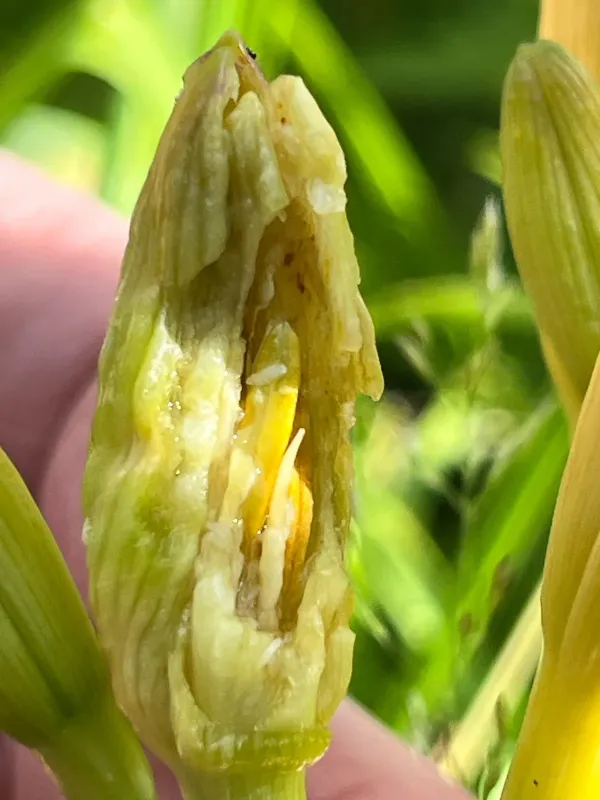
Description
How to identify
The lily gall midge (Contarinia quinquenotata) is a small insect belonging to the order Diptera and the family Cecidomyiidae. The adult is a tiny, delicate fly measuring approximately 2 mm in length.
The larval stage is the destructive phase, characterized by legless, creamy-white or yellow larvae that live inside the developing flower buds of lily plants.
The lifecycle is highly synchronized with the host plant's phenology. Adults emerge in late spring just as the lily buds begin to form, allowing them to lay eggs.
The pest typically completes one generation per year, though environmental conditions can influence the timing and success of emergence in the early summer months.
Pupation occurs within the soil, where the larvae overwinter before transforming into adult midges, making the soil an important focus for integrated management programs.
What it damages
The lily gall midge specifically attacks the genus Lilium. It poses a significant threat to ornamental lily collections by targeting the reproductive structures of the flowers.
As larvae feed within the bud, they cause severe internal damage, consuming the petals, stamens, and pistils, which leads to the structural collapse of the flower.
This damage prevents the flowers from opening properly. Deformed buds often fail to bloom altogether, resulting in a significant loss of aesthetic value for gardeners.
Secondary infections are common, as the larval damage creates entry points for fungal pathogens, causing the buds to rot or wither prematurely on the stem.
In cases of heavy infestation, the entire bloom can be destroyed, leaving the gardener with stunted plants and no floral display for the season.
Signs of infestation
The most distinctive sign of a gall midge infestation is the abnormal swelling and deformity of the lily buds, which often appear rounded or lopsided compared to healthy ones.
Infested buds often show signs of premature yellowing or necrosis. They may feel soft to the touch and appear distinctively larger than normal buds at the same stage.
If a suspected bud is opened, the presence of multiple tiny, translucent larvae confirms the infestation, distinguishing it from physiological growth issues.
A common sign is the sudden abscission or dropping of buds from the plant, indicating that the larvae have matured and are exiting the flower to pupate in the soil.
In damp conditions, the damaged buds may become covered in gray mold, as the tissue breakdown invites opportunistic fungi to colonize the compromised plant structure.
Control measures
The primary control measure is the vigilant inspection and immediate removal of all deformed buds before the larvae can escape into the soil to pupate.
Cultivation of the soil surface in the autumn and early spring can help expose larvae to predators and environmental stresses, effectively reducing the overwintering population.
Chemical control using systemic insecticides can be effective if applied during the early bud formation stage, targeting the adults before they lay their eggs.
Maintaining a clean garden environment by clearing away old lily debris helps to reduce the number of sites where midges can successfully complete their lifecycle.
- Regular monitoring of buds starting in late spring.
- Immediate disposal of infested buds in sealed bags.
- Applying insect-netting to cover vulnerable lily patches.
- Using biological control agents that target soil-dwelling larvae.
Taxonomy
- Latin name
- Contarinia quinquenotata
- Order
- Diptera (flies)
- Family
- Cecidomyiidae
- EPPO code
- CONTQU
Discussion
No discussions yet — be the first.