
Douglas-fir needle gall midge
Contarinia pseudotsugae
Description
How to identify
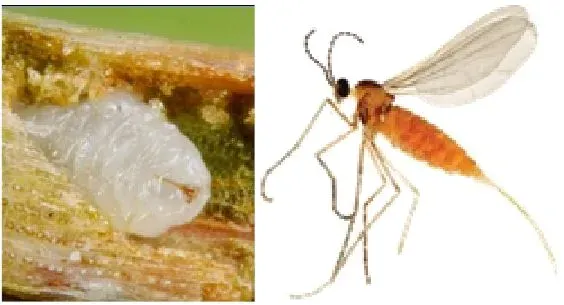
The Douglas-fir needle gall midge Contarinia pseudotsugae belongs to the order Diptera and the family Cecidomyiidae. These are extremely small insects that resemble delicate flies or gnats with fragile bodies.
The larvae of this pest are bright yellow or orange and are legless. They live internally within the host plant's tissue, making them difficult to detect without careful inspection of the needles.
Their life cycle is closely synchronized with the phenology of the Douglas-fir. Adult midges emerge during the bud burst period to lay eggs specifically on developing young needles.
Overwintering occurs primarily as larvae within the fallen needles or the soil litter. Once spring arrives, they pupate, and the cycle repeats with the emergence of the adult generation.
The success of this pest's development is highly dependent on environmental variables such as temperature and humidity, which dictate the synchronization between the midge and its host tree.
What it damages
The primary host for this pest is Pseudotsuga menziesii. The midge larvae induce the formation of galls, which are abnormal tissue growths on the needles of the tree.
These galls disrupt the normal physiological function of the needle, impairing photosynthesis and diverting vital nutrients that the tree would otherwise use for healthy growth.
In high populations, these midges cause severe yellowing and premature shedding of needles. This reduces the aesthetic value and growth rate of young, vulnerable conifers.
Persistent infestations weaken the tree's overall vigor, making it significantly more susceptible to secondary stressors, such as fungal pathogens and wood-boring insects.
Commercial nurseries often face economic losses due to this pest, as infested seedlings may fail to meet quality standards and are frequently culled due to their unhealthy appearance.
Signs of infestation
The earliest symptom of infestation is the development of small swellings on young needles. These swellings may change color to yellowish or reddish as the larvae inside continue their feeding.
Needles become deformed, twisted, and eventually lose their healthy green color. Under magnification, one can identify entry points where the larvae burrowed into the needle tissue.
Canopies of affected trees appear thin and sparse. Premature needle drop during the summer season is a clear indicator of a severe infestation requiring management intervention.
The lower portions of the tree canopy are usually affected first, as the humidity and shelter provided in the lower branches favor the survival of the adult midges.
During bud break, the presence of numerous small flies around the branches indicates that the adult flight is occurring and that monitoring should be intensified.
Control measures
Good silvicultural practices are the foundation of effective management. Maintaining high plant vigor ensures that the trees can better withstand or recover from localized midge attacks.
Sanitation is a critical control measure. Removing and destroying infested fallen needles can significantly reduce the overwintering population of the midge in small-scale nurseries.
Chemical control involving systemic insecticides is recommended only when damage thresholds are exceeded. Applications must be timed precisely to coincide with the vulnerable stages of the insect.
Biological control options involve encouraging natural predators, specifically parasitic wasps, which can naturally regulate the midge population levels within stable ecosystems.
Using sticky traps for monitoring allows growers to accurately time their interventions. Knowing exactly when the adult flight begins ensures that treatments are applied when they are most effective.
Taxonomy
- Latin name
- Contarinia pseudotsugae
- Order
- Diptera (flies)
- Family
- Cecidomyiidae
- EPPO code
- CONTPS
Discussion
No discussions yet — be the first.