
Pea midge
Contarinia pisi
Description
How to identify
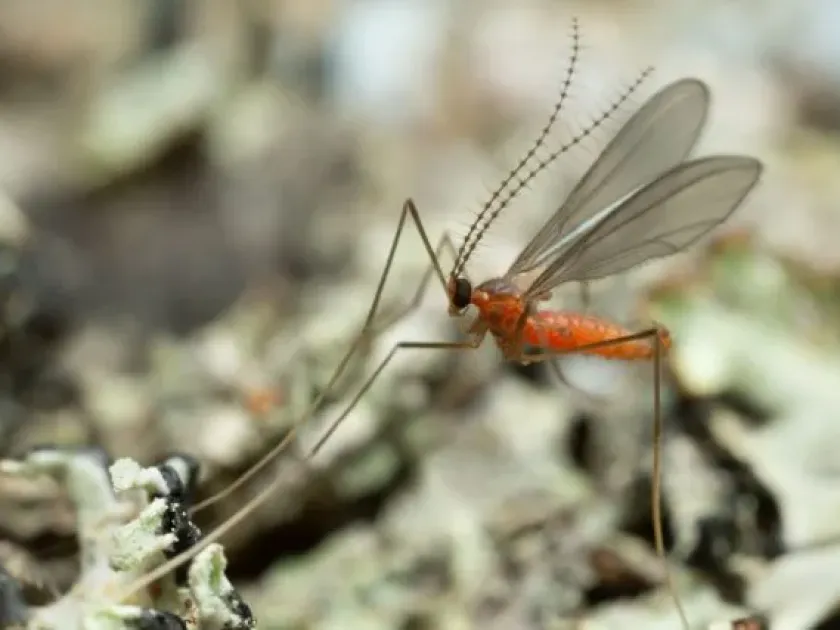
The pea midge (Contarinia pisi) is a tiny insect belonging to the Cecidomyiidae family, order Diptera. The adult is a very small, delicate gnat, measuring about 1.5–2 mm in length with a yellowish body and long, thin legs.
The larvae are spindle-shaped and grow up to 2.5 mm long. Their color changes during development, ranging from creamy white to bright lemon yellow or orange depending on their maturity and feeding activity inside the plant tissues.
These pests overwinter as larvae in cocoons within the top 5–10 cm of the soil. As the ground warms up in the spring, the larvae pupate, and the adults emerge just in time for the pea crop's budding stage.
The life cycle is strictly synchronized with the phenology of the host plant. Depending on the climate and weather conditions, the insect can produce one or two generations per season, which significantly impacts the severity of the infestation.
Because of their microscopic size, identifying adults in the field is challenging. Most farmers notice the midge only after the larvae have caused visible damage to the flower buds or reproductive parts of the pea plant.
What it damages
The pea midge is a specialized pest primarily affecting the pea crop. It causes significant damage to generative organs, which directly leads to reduced pod count and lower grain yield quality.
The larvae feed by sucking juices from the interior tissues of the flower buds. This feeding behavior triggers pathological deformation, causing the buds to swell and preventing them from opening or setting fruit properly.
In infested buds, secondary infections by fungi and bacteria often occur, as the damaged tissues lose their natural resistance. This leads to the rotting of flowers and, eventually, complete sterility of the plant shoot.
The damage is often hidden. Even if a crop appears healthy from a distance, the reproductive success can be severely compromised because the larvae have already destroyed the essential tissues within the buds.
In cases of high infestation, the pea midge can destroy over 50% of the potential grain yield. This level of economic damage makes it one of the most critical pests for growers in regions where peas are a major commercial crop.
When it appears
The emergence of adults from the soil coincides with the early budding stage of the pea plant. This is a critical time, as it is the most vulnerable phase for the plant to be colonized by the midges.
Warm and humid weather conditions are ideal for the mass reproduction of this species. High humidity increases the survival rate of eggs and speeds up the larval development process, leading to rapid population growth.
The adult activity period typically lasts for several weeks. During this time, the females are highly active, searching for the most developed flower buds to lay their eggs, ensuring the larvae have immediate access to food.
After finishing their feeding cycle, the larvae exit the buds and burrow into the soil. Some of them enter diapause to survive until the next season, while others may continue their development if conditions remain favorable.
Irrigated fields are often at higher risk of midge outbreaks. Constant soil moisture levels help the pupae survive and ensure that the emerging adults have optimal conditions to begin the next generation.
Signs of infestation
The primary symptom of an infestation is the abnormal swelling and deformation of the pea buds. The buds become bloated, take on a rounded shape, and stop their development, remaining tightly closed.
If you dissect a deformed bud, you will find clusters of tiny, active yellow or orange larvae. Their presence inside the bud is a definitive sign of an active pea midge infestation.
Over time, the infested flowers turn yellow, wither, and drop prematurely. This results in barren stems where pods should have developed, leaving the plants unproductive and stunted.
Early-stage damage can sometimes be mistaken for physiological disorders caused by heat or drought. However, the presence of larvae inside the bud tissue confirms the biological nature of the problem.
Fields infested with pea midge show visible patchiness. Affected areas have lower pod set and reduced vigor, which is easy to spot during regular field scouting as the plants transition into the flowering stage.
Control measures
Crop rotation is the foundation of management. Avoiding peas on the same field for at least 4–5 years significantly reduces the larval population in the soil, preventing severe outbreaks in subsequent seasons.
Deep plowing after harvest is an effective mechanical method to destroy the pupal stages. Burying plant debris and soil surfaces deep prevents adults from emerging in the following spring.
Sowing peas as early as possible helps the crop reach critical growth stages before the midge population reaches its peak. This "avoidance" strategy often provides excellent results without chemical interventions.
Chemical control should be timed to match the adult flight period, before egg-laying occurs. Once the larvae are safely inside the buds, they become shielded from many contact insecticides, making treatment significantly less effective.
Using pheromone traps or yellow sticky traps for monitoring allows farmers to apply insecticides only when necessary. This precise timing protects beneficial insects and reduces the overall chemical load on the environment.
Taxonomy
- Latin name
- Contarinia pisi
- Order
- Diptera (flies)
- Family
- Cecidomyiidae
- EPPO code
- CONTPI
Discussion
No discussions yet — be the first.