
Lucerne gall midge
Contarinia medicaginis
Description
How to identify
The lucerne gall midge (Contarinia medicaginis) is a small dipteran insect belonging to the Cecidomyiidae family. Adult midges are very small, measuring approximately 1.5–2 mm in length.
The adults have fragile bodies and transparent wings covered with fine hairs. Their lifespan is short, as they focus primarily on mating and laying eggs within the host plant tissues.
The larvae are small, legless, and typically yellowish-white in color. They reside inside the flower buds, making them difficult to spot during routine field inspections.
The life cycle involves complete metamorphosis, including egg, larva, pupa, and adult stages. The pupal stage commonly occurs in the soil, which serves as a reservoir for the population.
Proper identification relies on observing the specific morphological changes in the plant buds rather than catching the elusive adults in the field.
What it damages
The lucerne gall midge primarily attacks alfalfa (lucerne) crops, causing significant damage during the budding phase of the plant's development.
Larvae feed on the internal structures of the flower buds, including the ovaries and stamens. This feeding prevents the development of flowers and, consequently, the production of seeds.
This pest is a major threat to seed alfalfa production, where infestation levels can result in substantial yield losses, sometimes exceeding 50% of the crop.
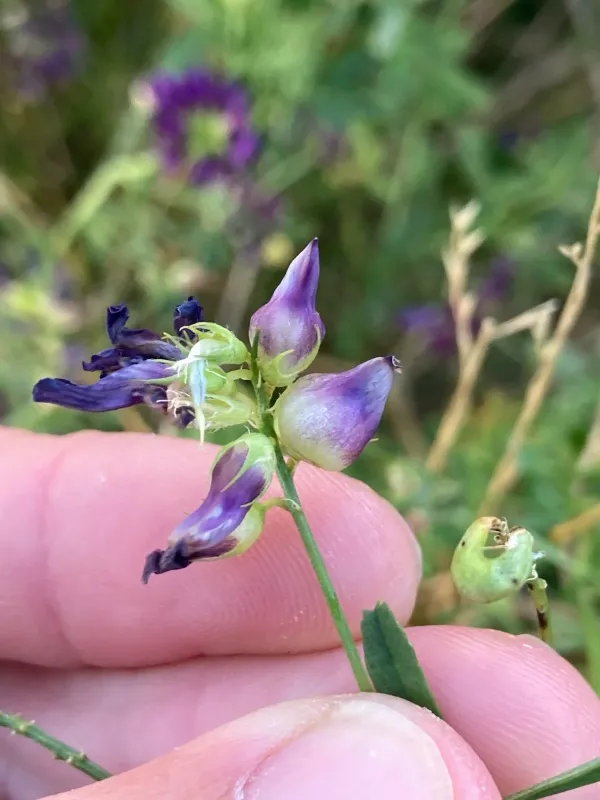
The damage is highly specific: infested buds become swollen, deformed, and fail to open. These buds eventually wither and drop from the plant, directly reducing seed viability.
In addition to direct yield loss, the pest weakens the plant's reproductive potential, which can lead to long-term issues in the overall health of the alfalfa field.
When it appears
The overwintering adults emerge in the spring as soil temperatures rise, synchronizing their emergence with the budding stage of the early alfalfa cuts.
The midge can produce several generations per season, depending on the climatic conditions of the region. Warmer temperatures generally accelerate the lifecycle.
The most critical window for infestation occurs during the mass budding period. This is when the midge population peaks and finds the most favorable conditions for oviposition.
As the season progresses toward autumn, the final generation of larvae moves into the soil to pupate or enter diapause, ensuring survival through the winter months.
Monitoring efforts should be concentrated on the budding stages of both the first and second cuts, as these represent the primary targets for the pest.
Signs of infestation
The hallmark sign of an infestation is the swelling and deformation of the flower buds, often referred to as "galls." These buds remain closed and take on a spherical or bloated appearance.
Infested buds may show a color change from healthy green to a yellowish or pale green hue. They are visibly arrested in their development and never reach the flowering stage.
When an affected bud is dissected, one or more yellowish larvae are typically found inside. The internal tissues show clear signs of consumption and larval frass.
Visually, an infested field may appear to have patches where flowering is significantly reduced or completely inhibited, even if the foliage remains green.
- Swollen, globose-shaped flower buds.
- Lack of flower opening in infested regions of the crop.
- Premature dropping of underdeveloped buds.
- Presence of tiny yellow larvae within the internal cavity of buds.
Control measures
Agronomic control is the most effective approach. Early harvesting for hay can prevent larvae from completing their development and dropping to the soil to pupate.
Deep plowing after the harvest helps bury pupae residing in the soil, effectively reducing the population available for the next season.
Maintaining spatial separation between different age-groups of alfalfa fields can help limit the spread of the midge across larger farms.
Chemical control is considered a secondary measure and should only be applied when economic injury levels are exceeded, ensuring minimal impact on beneficial pollinators.
Using resistant cultivars and managing irrigation to ensure healthy, fast-growing plants can sometimes mitigate the damage caused by the midge.
Taxonomy
- Latin name
- Contarinia medicaginis
- Order
- Diptera (flies)
- Family
- Cecidomyiidae
- EPPO code
- CONTME
Discussion
No discussions yet — be the first.