
Spotted-winged gall midge
Contarinia maculipennis
Description
How to identify
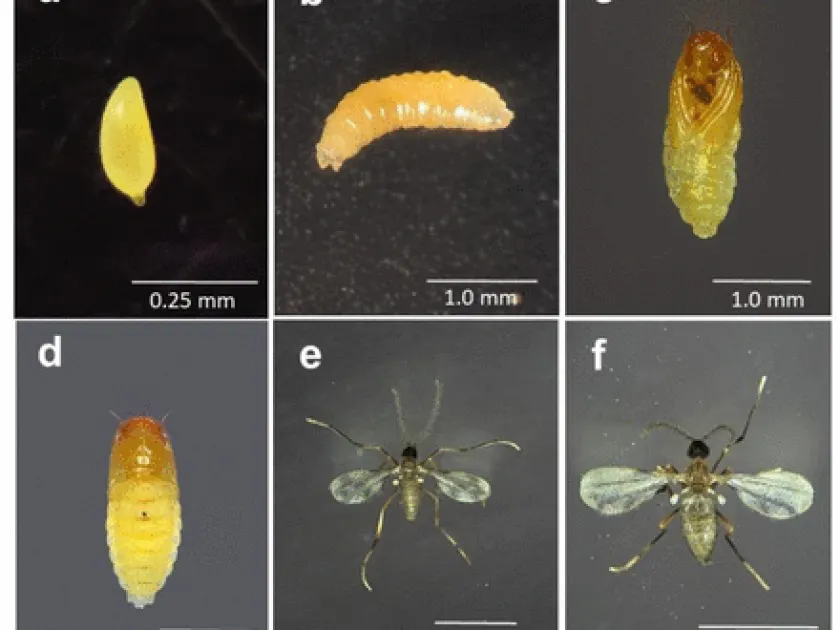
The spotted-winged gall midge (Contarinia maculipennis) is a small insect belonging to the family Cecidomyiidae (Diptera). As the name suggests, the adults are distinguished by characteristic spots on their wings.
The adult midge is fragile, with a yellowish-brown body and slender, long legs. Due to their small size, they are often overlooked during routine field inspections.
The larvae are legless and often exhibit a jumping behavior when disturbed, which is a classic taxonomic feature of many species within this family.
The life cycle involves a complete metamorphosis: egg, larva, pupa, and adult. They typically overwinter in the soil as larvae or pupae, protected from environmental stressors.
Environmental factors such as high humidity and moderate temperatures significantly influence their activity, often leading to multiple generations per season.
What it damages
This gall midge primarily attacks legume crops, with beans and soybeans being the most susceptible hosts. The damage is concentrated on the reproductive parts of the plants.
The larvae feed on the internal tissues of buds and developing ovaries. This interference prevents proper pollination and fruit set, leading to substantial yield losses.
Infested buds frequently show signs of deformation and discoloration before dropping prematurely from the plant. This leaves the plant with significantly fewer pods.
Economic damage is most severe when the pest population peaks during the flowering stage, potentially reducing harvest volumes by up to half.
Secondary infections often develop in damaged tissues, as the feeding wounds allow fungi and bacteria to enter, further deteriorating the quality of the plants.
Signs of infestation
The most obvious sign of an infestation is the premature shedding of unopened buds. A close examination of these fallen buds usually reveals the presence of small, pale larvae.
Plants may exhibit localized swelling or twisted flower stems. Despite appearing green and healthy, the plants fail to produce pods, a condition often described as "blind flowering."
Yellow sticky traps placed near the field perimeter or between rows are highly effective for monitoring the flight activity of adult midges during the bud development stage.
Early signs include subtle changes in bud color, where the tips may appear pale or slightly wilted before the entire structure begins to collapse.
Visual verification of adult insects resting on leaves during calm, humid evenings confirms the need for immediate action to protect the crop.
Control measures
Integrated Pest Management (IPM) is essential. Crop rotation is the most effective preventative measure to break the life cycle and reduce the local soil population.
Deep plowing after the harvest helps disrupt the pupation process, exposing dormant stages to natural predators or mechanical destruction.
Chemical control should be timed precisely to target the adults before they lay eggs on the buds, as larvae are well-protected once they enter the plant tissue.
Selecting varieties with tighter bud structures can physically hinder the midge's ability to access the interior of the flower for egg deposition.
Biocontrol agents, including parasitic wasps and entomopathogenic fungi, are becoming increasingly important tools in minimizing the reliance on synthetic pesticides.
Taxonomy
- Latin name
- Contarinia maculipennis
- Order
- Diptera (flies)
- Family
- Cecidomyiidae
- EPPO code
- CONTMU
Discussion
No discussions yet — be the first.