
Lentil gall midge
Contarinia lentis
Description
How to identify
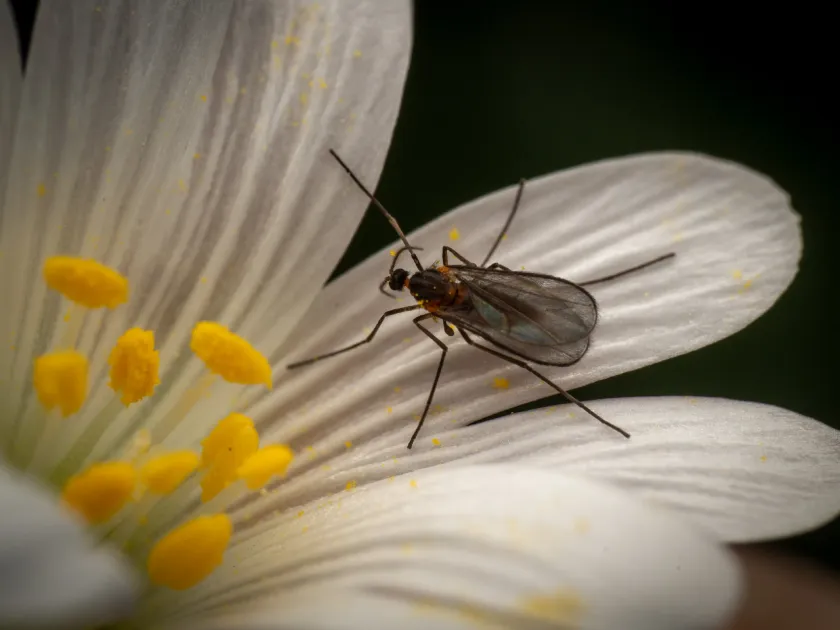
The lentil gall midge (Contarinia lentis) is a small dipteran insect belonging to the family Cecidomyiidae. Adult flies are extremely small, typically measuring 1.5 to 2 mm in length, and have a fragile body structure.
Larvae of this pest are legless and exhibit a yellowish or milky-white coloration. They develop within the plant tissue, undergoing several larval stages before pupation occurs, usually in the soil.
This species is a specialized pest that is tightly synchronized with the life cycle of the lentil crop (Lens culinaris). Identification of adults in the field is difficult due to their minute size and secretive behavior.
Professional identification often requires microscopic examination of the male genitalia. In agronomic practice, identification is usually based on characteristic symptoms observed on the host plants.
Understanding the biology of this pest is crucial for farmers, as its developmental stages are strictly linked to the specific phenology of the lentil plant.
What it damages
The lentil gall midge primarily causes damage to the reproductive structures of the lentil plant. The larvae feed on the internal tissues of buds and flowers during the most critical developmental phase.
As a result of larval feeding, buds become deformed, fail to open, and eventually drop off. This direct damage significantly reduces the number of pods and overall grain yield.
Heavy infestations can lead to substantial economic losses, as the damage directly impacts the formation of the harvestable crop. The midge is considered a serious threat to lentil production in affected areas.
Furthermore, larval feeding creates favorable conditions for secondary infections caused by fungi and bacteria. These infections can lead to the decay of entire floral clusters, exacerbating the damage.
Beyond quantity, the quality of the seeds can also be negatively affected, as the plants struggle to redirect nutrients toward healthy pods, leading to poor seed vigor and uneven maturation.
When it appears
Adult emergence typically aligns with the budding and early flowering stage of the lentil crop. This is when female flies actively seek suitable buds to deposit their eggs.
The speed of development for a single generation depends heavily on temperature and humidity levels. Warm and humid conditions generally favor the survival and rapid development of the larvae.
The pest overwinters as a diapause larva in the soil. This dormancy allows the species to survive the winter and emerge once favorable conditions return in the following growing season.
The emergence period of the adults can be prolonged due to variations in soil temperature and moisture levels at different depths, which can influence the timing of pupation.
Depending on the climatic zone and weather, the pest may produce one or two generations per year, requiring continuous monitoring throughout the critical vegetative growth stages.
Signs of infestation
The primary symptom of infestation is the deformation and swelling of the buds, which take on a globular shape. These affected buds fail to develop into healthy flowers and eventually wither.
Inspection of the damaged buds reveals the presence of small larvae residing inside. The tissue of the buds often turns yellow or brown, indicating internal damage and tissue death.
Premature abscission of flowers and buds is a significant field indicator that warrants further investigation. Farmers should examine fallen buds to confirm the presence of larvae.
The infestation often leads to uneven pod development, causing plants to have pods at varying stages of maturity, which significantly complicates the harvesting process.
- Swollen, deformed buds
- Premature flower drop
- Presence of larvae in floral parts
- Discoloration of affected buds
Control measures
Crop rotation is the foundational strategy for managing the lentil gall midge. Avoiding the planting of lentils on fields previously used for the same crop helps break the life cycle of the pest.
Deep plowing in the autumn can be effective in burying the overwintering larvae, making it difficult for the emerging adults to reach the surface the following spring.
Chemical control involves the application of appropriate insecticides during the budding stage. It is crucial to apply these measures before flowering to protect beneficial pollinators.
Monitoring the adult population using yellow sticky traps allows for the timely detection of the pest and helps determine the most effective timing for necessary chemical interventions.
Using resistant cultivars and managing sowing dates can help the crop bypass the most vulnerable growth stages, significantly reducing the impact of the pest on final productivity.
Taxonomy
- Latin name
- Contarinia lentis
- Order
- Diptera (flies)
- Family
- Cecidomyiidae
- EPPO code
- CONTLE
Discussion
No discussions yet — be the first.