
Beech gall midge
Contarinia fagi
Description
How to identify
The beech gall midge (Contarinia fagi) is a small dipteran insect belonging to the Cecidomyiidae family. These insects are microscopic in size, making them very difficult to observe in their adult, flying stage.
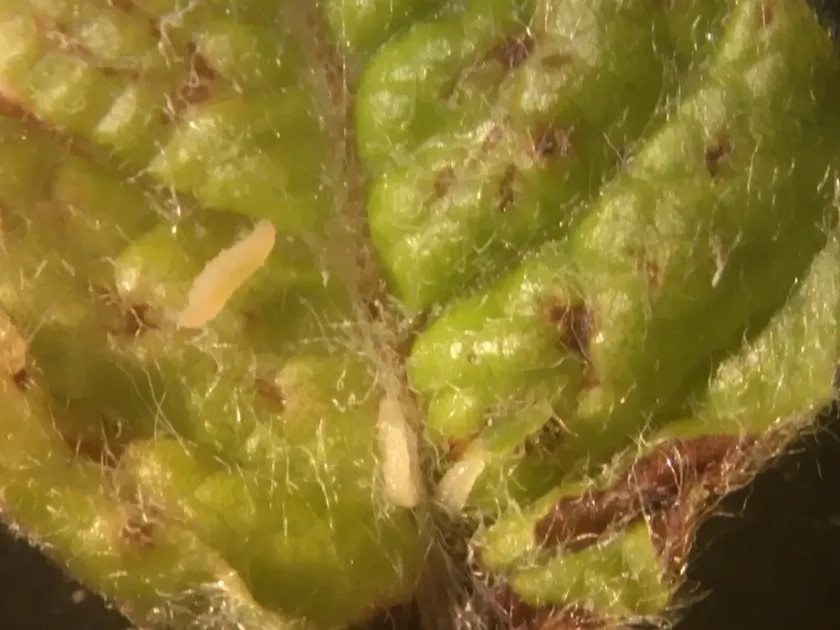
The larvae are the stage of the insect that causes the most interaction with the host plant. They are typically legless and inhabit the inner tissues of the beech leaves, creating a unique micro-environment for their development.
The identification of the species is primarily achieved through the characteristic galls produced on the host plant leaves. These galls are pathological growth forms induced by the larvae's feeding activity.
The life cycle is strictly synchronized with the phenology of the European beech (Fagus sylvatica). The adults emerge precisely when the new leaves are opening to ensure their offspring have immediate access to food.
As a highly specialized insect, Contarinia fagi distribution is perfectly aligned with the natural and planted range of beech forests across Europe, preferring moist and temperate climates.
What it damages
The beech gall midge is host-specific, feeding almost exclusively on Fagus sylvatica. It does not pose a threat to other forest tree species, which helps to limit its spread to localized areas.
Larval feeding causes the leaf to undergo morphological changes, resulting in the formation of galls. These structures consume the tree's resources and disturb the standard photosynthetic processes of the affected leaf tissue.
While mature trees can usually tolerate moderate levels of infestation, heavy outbreaks can reduce the total leaf area, which indirectly affects the growth vigor and long-term vitality of the tree.
In nurseries and young plantations, the damage is more significant. High levels of infestation can stunt the development of young saplings, making them less competitive and more susceptible to environmental stressors.
The disrupted leaf tissue can also become more vulnerable to secondary infections, as the structural integrity of the leaf is compromised by the presence of the gall chambers.
When it appears
Adult midges emerge during the spring, coinciding with the period when beech buds begin to burst. The adults have a very short lifespan, dedicating their time to reproduction and egg-laying.
Throughout the summer, the larvae remain protected inside the galls, where they grow and develop. During this period, the size and color of the galls become increasingly noticeable to the observer.
By late summer or early autumn, the larvae exit the galls and drop into the soil. This migration is a critical part of their life cycle, as the soil provides the necessary conditions for overwintering.
The species is monovoltine, meaning it produces only one generation per year. This limitation makes the spread of the pest relatively slow compared to species with multiple annual generations.
Field observation is most productive during the late spring and early summer when the newly formed galls indicate the success of the spring egg-laying and larval establishment.
Signs of infestation
The most visible sign of infestation is the presence of leaf galls. These are small, hardened swellings that appear on the leaf lamina and often feature a reddish or yellow tint.
Leaves affected by the midge may become wrinkled, deformed, or asymmetrical. In ornamental settings, this significantly impacts the tree's appearance and aesthetic value.
- Characteristic blister-like swellings (galls) on the leaf surface.
- Leaf curling or abnormal growth patterns around the gall sites.
- Premature yellowing or shedding of heavily infested leaves.
- Small exit holes visible on the surface of the galls after larvae have departed.
In cases of heavy infestation, the entire crown of the tree may appear dull or unhealthy. Careful inspection of the underside of the leaves usually reveals the presence of the larvae or their exit points.
Control measures
In mature forest stands, no active intervention is usually required. The natural balance of the ecosystem often keeps the gall midge population below the threshold that would cause significant economic damage.
For ornamental trees or nursery seedlings, the most effective management strategy is the mechanical removal and destruction of infested leaf litter in the autumn to reduce the overwintering population.
Chemical control is rarely recommended due to the short window of vulnerability for the larvae before they encapsulate themselves inside the galls. Systemic treatments are generally only feasible in intensive nursery management.
Promoting a healthy ecosystem with a diverse population of natural predators, such as spiders, parasitic wasps, and predatory bugs, is the most sustainable approach to managing this pest.
Monitoring the forest edge and nursery stock regularly allows for early detection. If a breakout occurs, prompt removal of affected branches may help limit the local spread of the insect.
Taxonomy
- Latin name
- Contarinia fagi
- Order
- Diptera (flies)
- Family
- Cecidomyiidae
- EPPO code
- CONTFA
Discussion
No discussions yet — be the first.