
Citrus gall midge
Contarinia citrina
Description
How to identify
The Citrus gall midge (Contarinia citrina) belongs to the order Diptera and the family Cecidomyiidae. Adult insects are very small, fragile midges measuring approximately 1–2 mm in length.
They possess delicate wings, long antennae, and thin legs. Their body color ranges from yellow to brownish, which provides excellent camouflage against citrus leaves and stems.
The primary damaging stage is the larva. These larvae are legless, spindle-shaped, and usually white or light orange. They reside inside plant tissues, making them invisible to the naked eye until damage is severe.
Their life cycle is highly synchronized with the phenology of citrus plants, particularly the emergence of new growth and flower buds.
The insects are primarily crepuscular, meaning they are most active during dawn or dusk, making them difficult to detect during standard daytime inspections.
What it damages
This pest is a major threat to various citrus species, including lemons, oranges, mandarins, and grapefruits, both in greenhouse and field environments.
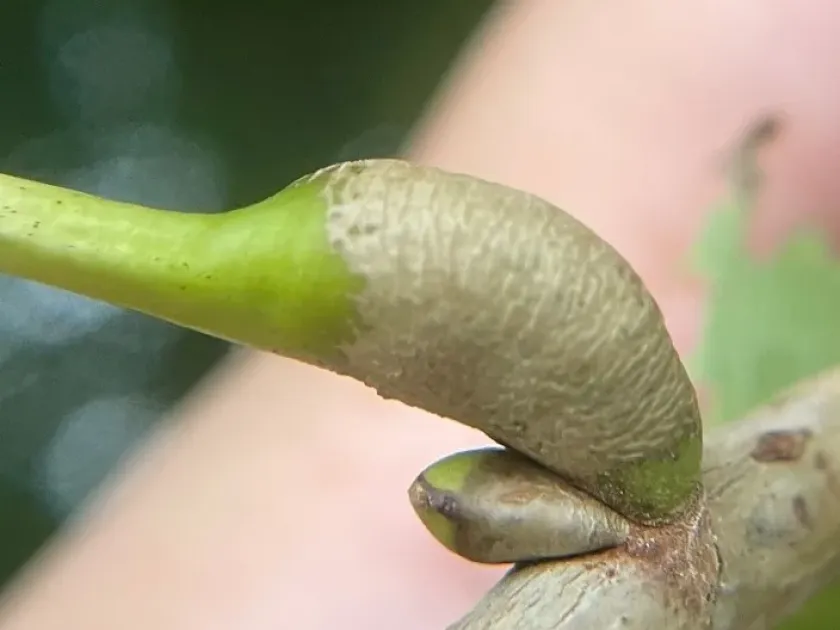
Larval feeding stimulates the plant to form galls—abnormal growths or swellings—which serve as both a food source and a protective habitat for the midge larvae.
Infestation of flower buds causes them to fail to open or fall off, resulting in significant yield loss. Fruit set is often severely impacted by these infestations.
Young shoots may become stunted, twisted, or distorted due to the feeding activity, which inhibits the overall growth and health of the tree.
Extensive damage can lead to premature defoliation and a decline in the tree's vigor, making it more susceptible to secondary infections or environmental stress.
When it appears
The activity of the Citrus gall midge begins in early spring, synchronized with the appearance of young, succulent shoots and budding in citrus trees.
The peak infestation usually occurs during the flowering and fruit set phases, as these plant parts are the preferred oviposition sites for the adult midges.
In warmer, subtropical climates, the midge can complete several generations throughout the growing season, necessitating ongoing vigilance by growers.
They overwinter as pupae or larvae, dormant in the soil beneath the host trees or within plant debris, waiting for warmer conditions to emerge.
The timing of the first generation emergence is strongly temperature-dependent, which makes weather-based monitoring essential for effective management.
Signs of infestation
The most distinctive sign is the development of globular or swollen buds that fail to blossom properly and remain closed.
Leaves and stems may display characteristic galls, swellings, or distortion, which are classic symptoms of the localized reaction to larval feeding.
Massive, premature dropping of tiny fruitlets or unopened buds without any apparent nutritional deficiency or drought stress is a strong indicator of midge presence.
Examining the inside of the galls or the swollen buds will often reveal the presence of small, white, mobile larvae.
- Distortion of terminal growth points.
- Reduced vigor of young citrus trees.
- Abnormal bumps on tender stems.
Control measures
Cultural practices, such as the removal and destruction of fallen leaves and infested fruit, are crucial for breaking the midge's life cycle.
Tilling the soil under the canopy in late autumn or early spring can help expose overwintering pupae to the elements and natural predators.
Chemical control is most effective when systemic insecticides are applied at the onset of adult emergence, targeting the insects before they can lay eggs.
Pheromone traps serve as an excellent monitoring tool, allowing growers to time their insecticide applications precisely when adult activity peaks.
Biological control, using specialized parasitoids or predatory insects, can be an effective component of an integrated pest management strategy to keep populations below economic thresholds.
Taxonomy
- Latin name
- Contarinia citrina
- Order
- Diptera (flies)
- Family
- Cecidomyiidae
- EPPO code
- CECICI
Discussion
No discussions yet — be the first.