
Walnut curculio
Conotrachelus neomexicanus
Description
How to identify
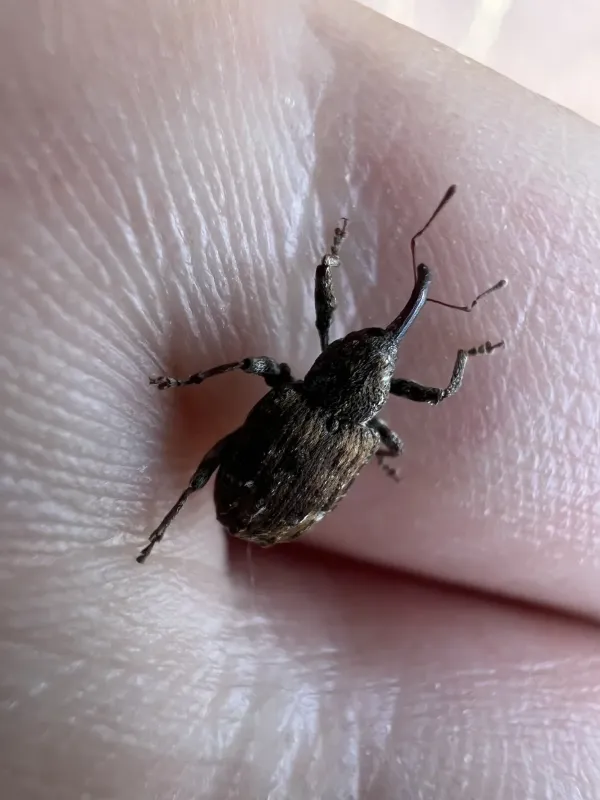
The walnut curculio (Conotrachelus neomexicanus) is a member of the Curculionidae family, within the order Coleoptera. This small beetle is characterized by a body covered in dense hairs, which provides excellent camouflage against the bark and husks of host trees.
A defining feature of this genus is the long rostrum (snout), used by the female for feeding and for boring holes in developing nuts to deposit eggs. The beetle has a robust, oval-shaped body and frequently plays dead when disturbed, dropping from the branches to the ground.
Larvae are typical of the weevil family: legless, C-shaped grubs, usually white or cream-colored with a distinct brown head capsule. They complete their entire development inside the nut, feeding exclusively on the kernel until they reach the pre-pupal stage.
Adult beetles are capable of flying, which facilitates their spread between trees in an orchard. Their activity is heavily influenced by ambient temperature and the specific developmental stage of the walnut fruit.
Identification is often difficult because these insects are primarily nocturnal. During the day, they hide in bark crevices or at the base of the tree, meaning detection often requires jarring branches over a cloth to see if adults drop.
What it damages
The primary hosts for Conotrachelus neomexicanus are trees of the genus Juglans, specifically black and English walnuts. Larvae feed on the developing kernels, destroying the product and rendering the nuts unmarketable.
This pest can also survive on certain wild tree species, which serve as reservoirs for the population near commercial orchards. Infested nuts are often compromised by secondary fungal infections that enter through the larval entry/exit holes.
Early fruit drop is a common symptom of infestation. If the nut remains on the tree, the interior is often hollowed out and filled with larval excrement, leaving it completely useless for harvesting.
Economic damage can be severe if populations are not controlled, as a single female can infest a large number of nuts over the season. This leads to substantial yield losses and reduces the overall quality of the nut crop.
While adults may feed on young shoots and foliage, this damage is generally secondary in importance to the destruction of the nuts themselves. However, heavy infestation can weaken young nursery trees.
When it appears
The life cycle of the curculio is synchronized with the walnut phenology. Adult emergence from the soil, where they overwinter, coincides with the appearance of young nutlets on the trees.
The peak egg-laying period occurs while the nut husks are soft and easily penetrated by the female's rostrum. This is a critical window for intervention to prevent the next generation of larvae from establishing themselves.
Larval development inside the nut lasts several weeks, after which the larvae exit the nut and burrow into the soil to pupate. Depending on the geographical region and climate, the species may have one or two generations per year.
Overwintering occurs primarily as a mature larva in the soil or as an adult in leaf litter or protected areas. Understanding these seasonal habits is essential for timing orchard management practices effectively.
As autumn approaches, activity wanes as the beetles enter dormancy. Monitoring population trends in the spring is highly effective for forecasting potential risk for the coming harvest.
Signs of infestation
The first sign of infestation is the presence of small puncture marks on young nuts, often accompanied by dark staining or sap oozing from the entry site. These are created by females during egg-laying.
Premature nut drop is a major indicator that the orchard is infested. If you inspect fallen nuts, you may find distinct exit holes, indicating that the larvae have finished their growth and moved to the soil.
- Small (1–2 mm) entry or exit holes on the surface of the nut husks.
- Dark, discolored spots on the husk skin.
- Excessive early fruit drop of nuts that appear otherwise normal.
- Presence of C-shaped white larvae when infested nuts are cracked open.
Adult beetles can be spotted at night using a flashlight to inspect tree limbs or trunks. Since they are inactive during daylight, night surveys are the most reliable method for confirming their presence.
The accumulation of frass (larval waste) near the site of entry is a sign of an active infestation. Regular inspection of fallen fruit is the most straightforward way to monitor the pest's presence in your orchard.
Control measures
The primary control measure is orchard sanitation, which involves the prompt collection and destruction of all fallen nuts. This prevents the larvae from successfully exiting the nut to enter the soil for pupation.
Cultivating the soil beneath the trees in late autumn or early spring can help disturb the overwintering stages of the pest, exposing them to predators or harsh weather conditions.
Insecticides targeting adults are most effective when applied after emergence but before the female begins laying eggs. Care must be taken to choose products that minimize impact on beneficial pollinators in the orchard.
Biological control, such as the use of entomopathogenic nematodes applied to the soil beneath trees, can be highly effective in reducing the larval population during their pupation phase in the ground.
Using pheromone traps or sticky bands on trunks helps monitor adult population levels, allowing for data-driven decisions on whether or when to apply chemical control methods.
Taxonomy
- Latin name
- Conotrachelus neomexicanus
- Order
- Coleoptera (beetles)
- Family
- Curculionidae
- EPPO code
- CONHNM
Discussion
No discussions yet — be the first.