
Walnut curculio
Conotrachelus juglandis
Description
How to identify
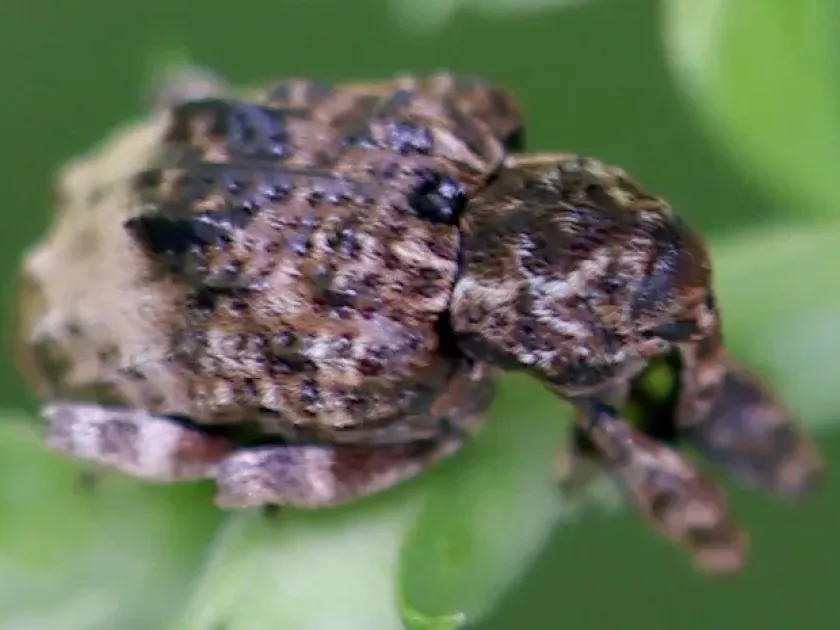
The walnut curculio (Conotrachelus juglandis) belongs to the Curculionidae family within the order Coleoptera. Adult beetles are typically 6–7 mm in length, characterized by their elongated snouts and mottled dark-brown appearance.
Their elytra possess distinct humps and irregular markings, providing excellent camouflage against the bark of walnut trees. They are largely nocturnal, which makes them difficult to spot during routine garden inspections.
What it damages
This pest is highly specialized and primarily attacks trees in the Juglans genus, including black walnuts and English walnuts. Adult beetles feed on developing twigs and petioles, often causing the terminal parts of branches to wilt.
Larval feeding is the most destructive phase. The larvae bore into the fruit, consuming the interior and leaving behind galleries filled with frass, which leads to total fruit drop and secondary infections within the damaged nuts.
When it appears
The lifecycle of the walnut curculio is synchronized with the walnut growing season. Adults emerge in late spring or early summer to mate and begin oviposition on young, soft fruit.
The larval stage lasts for several weeks inside the fruit. Once they reach maturity, they emerge from the fallen nuts and burrow into the soil, where they pupate. The adult beetles overwinter in the leaf litter or soil near the host trees.
Signs of infestation
Symptoms of infestation often appear as small, dark, circular spots on the surface of young nuts, which are entry points made by females during egg-laying. These spots are frequently accompanied by oozing sap.
Premature fruit drop is the most reliable indicator of a significant infestation. When gathered and dissected, these fallen nuts often reveal characteristic larval tunneling and the presence of small, cream-colored, legless larvae.
Control measures
Integrated pest management is essential for controlling this beetle. Sanitation is the most critical step; gardeners should promptly collect and destroy any fallen fruit to kill the larvae before they emerge to enter the soil.
- Application of targeted insecticides during the adult emergence period.
- Cultivation of the soil under the tree canopy to disrupt pupation sites.
- Installation of pheromone traps to monitor population density.
- Removal of infested twigs during winter pruning to reduce the local population.
- Encouragement of beneficial predatory insects and birds to naturally regulate beetle numbers.
Taxonomy
- Latin name
- Conotrachelus juglandis
- Order
- Coleoptera (beetles)
- Family
- Curculionidae
- EPPO code
- CONHJU
Discussion
No discussions yet — be the first.