
Conotrachelus fissunguis
Conotrachelus fissunguis
Description
How to identify
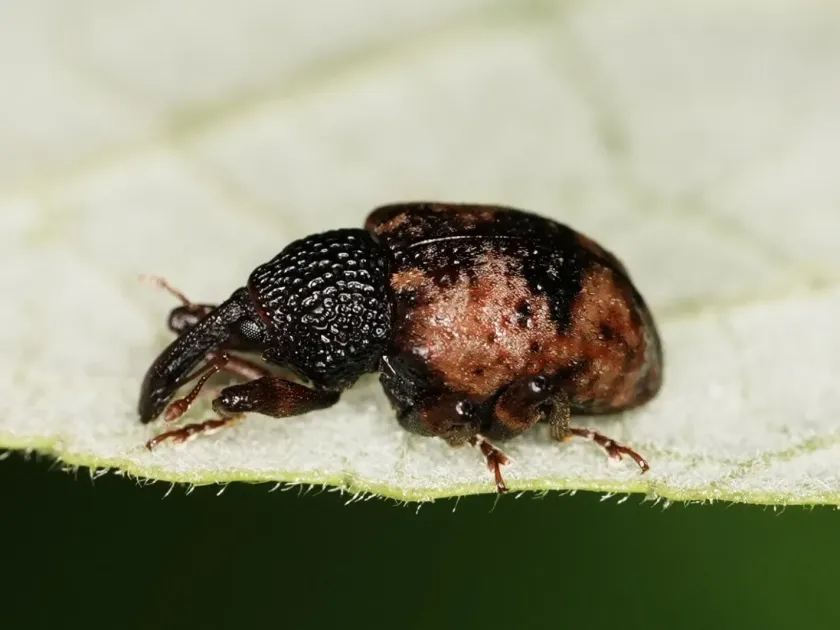
Conotrachelus fissunguis is a species of weevil belonging to the Curculionidae family and the order Coleoptera. These insects are characterized by a pronounced "humped" back and an elongated snout, which are typical morphological features of this genus.
The adult beetle usually displays a dark color palette, ranging from brown to black, which serves as a cryptic coloration on bark or soil. The surface of their elytra is covered with fine ridges and spots, enhancing their camouflage.
The larvae are legless, a standard feature for weevils, with a whitish-yellow body and a robust dark head capsule. This head structure is essential for boring into plant tissues during their development stage.
Due to their small size, adult beetles are often difficult to spot unless their population density is high. Specialists utilize magnifying tools to inspect specific features of the pronotum and elytra for precise identification.
These weevils exhibit a defense mechanism known as thanatosis or "playing dead," where they fold their legs and drop to the ground upon sensing movement or vibration, making them hard to detect among garden debris.
What it damages
The primary hosts for this species are plants in the Malvaceae family, particularly the Hibiscus genus (e.g., Hibiscus moscheutos). The pest causes damage during both its adult and larval life stages.
Adult beetles feed on young leaves, flower buds, and succulent stems. This feeding behavior results in deformed foliage and reduced aesthetic value of ornamental plants, as well as reduced plant vigor.
The larvae are considered the most destructive stage, as they burrow into stems or buds. By feeding internally, they disrupt the vascular system of the plant, significantly hindering the flow of water and nutrients.
Severe infestations can lead to complete bud loss, preventing the plant from blooming. The plant redirects energy to repair damaged areas, often resulting in stunted growth and a weak appearance throughout the season.
Furthermore, the physical damage caused by larval boring creates entry points for secondary infections, including fungal and bacterial pathogens, which can exacerbate plant decline or cause localized necrosis.
When it appears
The life cycle of the beetle is closely tied to climatic conditions and the phenology of the host plant. Emergence of overwintering adults usually occurs in the spring, once temperatures remain consistently above 15 degrees Celsius.
The mating and egg-laying period coincides with the bud formation phase of the hibiscus. Females use their snout to create holes in plant tissue to deposit eggs, ensuring that newly hatched larvae have immediate access to food.
Larval development occurs throughout the summer as they feed inside the stems. Optimal conditions, characterized by moderate to high humidity and warm temperatures, facilitate rapid metamorphosis from larva to adult.
By late summer or early autumn, the new generation of adults completes development and enters hibernation. They seek shelter in the upper layers of soil or deep within organic mulch to survive the winter months.
Survival rates are influenced by winter temperatures, as harsh frosts may limit the population size for the following season, whereas mild winters provide favorable conditions for significant population increases.
Signs of infestation
One of the most indicative signs of infestation is the premature dropping of buds. If buds fall before opening, it is highly likely that larvae are feeding inside them.
Foliage damage appears as small, pin-prick punctures from adult feeding. Over time, these spots can enlarge, leaving the leaves appearing perforated or ragged around the edges.
Localized tissue browning or swellings on stems can suggest larval internal feeding. Affected stems may become brittle and prone to snapping under the weight of the plant or in high winds.
General plant decline, including yellowing leaves and reduced flowering, can indicate significant internal damage that has compromised the plant's vascular integrity.
- Premature bud drop and abortion of flowers.
- Punctured or perforated leaves.
- Brittle, darkened, or swollen stems.
- Larval frass (excrement) visible near entry holes.
- Beetles hiding on the undersides of leaves during the early morning.
Control measures
Sanitation is a critical preventive measure. Collecting and destroying all fallen plant debris at the end of the season can significantly reduce the number of hibernating adults near the site.
Hand-picking adult beetles during the early morning hours can be effective for smaller gardens. Because they tend to fall off when disturbed, a container of soapy water placed beneath the branches helps capture them.
Biological control agents, such as entomopathogenic fungi (e.g., Beauveria bassiana), offer a sustainable and eco-friendly approach to managing larval populations without harming beneficial pollinators.
Chemical control with systemic insecticides should be used sparingly and only when damage thresholds are significantly exceeded, ensuring that applications do not coincide with peak pollinator activity.
Maintaining a diverse garden ecosystem that supports natural predators, such as predatory ants, spiders, and specialized birds, helps keep the weevil population under control naturally throughout the growth cycle.
Taxonomy
- Latin name
- Conotrachelus fissunguis
- Order
- Coleoptera (beetles)
- Family
- Curculionidae
- EPPO code
- CONHFI
Discussion
No discussions yet — be the first.