
Ivy bee
Colletes hederae
Description
How to identify
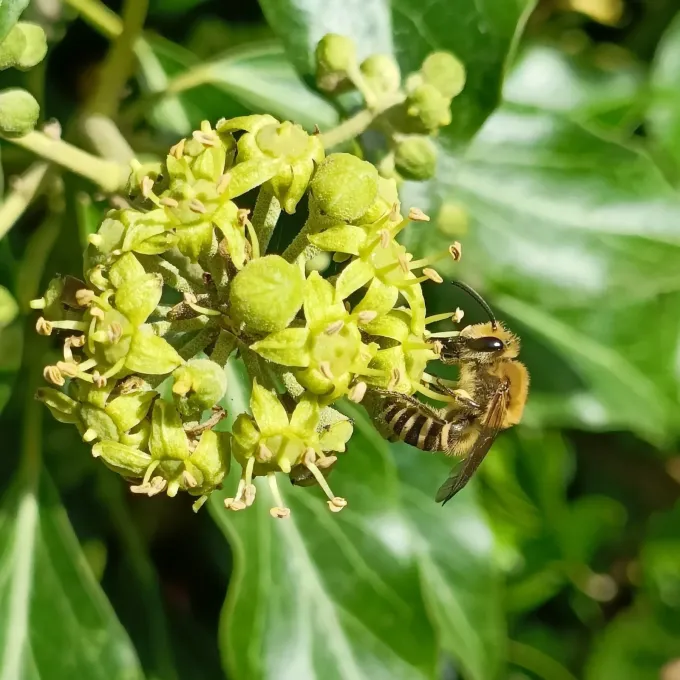
The ivy bee (Colletes hederae) is a solitary mining bee species belonging to the Colletidae family, distinct for its late-season activity.
It typically measures 12–15 mm in length, featuring clear orange-brown abdominal bands and dense, ginger-colored thoracic hairs.
Males are frequently observed in large numbers, hovering over nesting sites in sandy soil, often causing concern for homeowners.
The species is unique due to its specialized relationship with ivy (Hedera helix), which is its exclusive source of pollen for larval development.
The nest entrance is often surrounded by a small chimney of excavated earth, which is a characteristic diagnostic feature of these mining bees.
What it damages
From an agronomical perspective, the ivy bee is not a pest; it does not harm crops, flowers, or garden structures.
The bee lacks the mandibles required to damage plant tissues, and it does not feed on vegetative growth, posing no risk to commercial harvests.
It is an incredibly efficient pollinator, providing vital ecosystem services by facilitating cross-pollination of late-blooming garden flora.
There are no recorded instances of this species damaging agricultural produce, making it an entirely beneficial inhabitant of the landscape.
Treating this bee as a pest is a common misconception rooted in its gregarious nesting behavior rather than actual physical damage to plants.
When it appears
The adult activity period is strictly limited to the autumn months, primarily from late August through October.
The life cycle is tightly synchronized with the blooming period of Hedera helix, which is essential for nest provisioning.
During the winter, the species remains underground in a larval or prepupal state, safely tucked away in waterproof subterranean cells.
Emergence occurs synchronously each year, ensuring that the bees are present exactly when the ivy flowers provide the necessary nectar.
Seasonal patterns are predictable, allowing gardeners to observe their life cycle without the need for intervention or disruptive management.
Signs of infestation
Signs of presence include clusters of small, circular holes in bare, south-facing patches of loose or sandy soil.
Small mounds of soil pellets, excavated by the females, appear near the entrance of the burrows during the late summer months.
High levels of buzzing activity above ground level indicate a healthy, thriving colony of ivy bees in the vicinity.
The presence of late-season ivy blooms nearby often correlates with a concentration of these bees seeking food resources.
Unlike ants, which may spread across a wide area, the ivy bee creates localized, predictable nesting aggregations that remain stable for years.
Control measures
Control measures are unnecessary as the ivy bee is a protected and ecologically significant pollinator in many regions of Europe.
Gardeners are advised to avoid digging, rototilling, or applying pesticides to areas identified as nesting sites during the autumn.
If the nesting site needs to be redirected, maintaining dense vegetation or grass cover can discourage females from selecting the area in the future.
The use of broad-spectrum insecticides is strongly discouraged, as this species is highly sensitive to chemicals and provides essential biodiversity benefits.
Promoting the presence of ivy bees is recommended for sustainable gardens, as they ensure robust pollination and ecological resilience.
Taxonomy
- Latin name
- Colletes hederae
- Order
- Hymenoptera
- Family
- Colletidae
- EPPO code
- CLLTHE
Discussion
No discussions yet — be the first.