
Davies' collet bee
Colletes daviesanus
Description
How to identify
Colletes daviesanus, commonly known as Davies' collet bee, is a species of solitary bee belonging to the family Colletidae. It is widely recognized for its unique ability to secrete a cellophane-like substance to line its nest chambers.
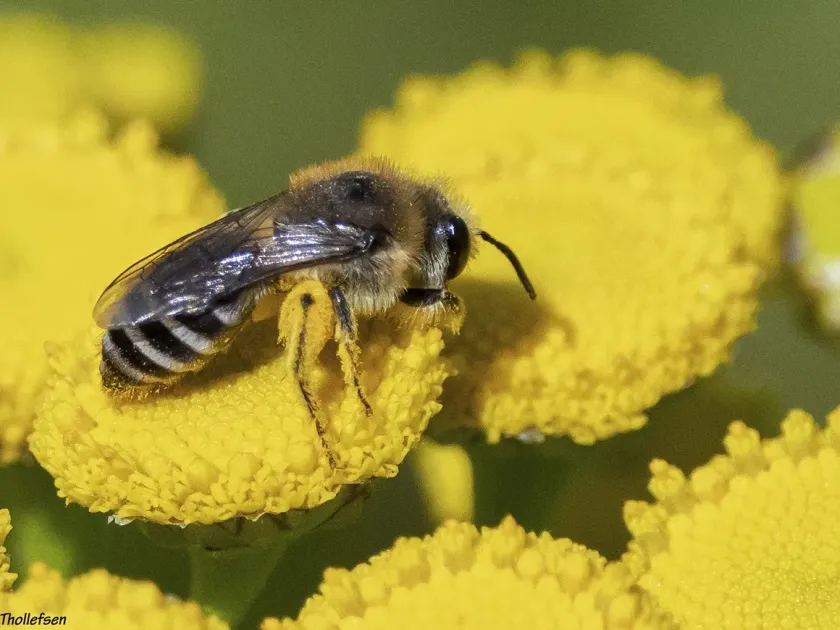
Adult bees typically measure about 8–10 mm in length. They are characterized by a dense covering of hair on the body, with pale or ochre bands visible on the abdomen, typical of many wild bee species.
They are known for nesting in sandy soils or, quite notably, in the mortar joints of walls, brickwork, and masonry, which has earned them the nickname of "plasterer bees."
The biology of this species involves constructing complex burrow systems where females store pollen and nectar to provision their developing larvae.
Unlike honey bees, they do not form large social colonies, but they often nest in high-density aggregations, which makes their nesting activity very noticeable.
What it damages
The primary concern regarding Colletes daviesanus is not the destruction of crops, but rather the structural damage they can cause to buildings and masonry by burrowing into mortar joints.
In cases of heavy infestation, the continuous excavation of tunnels can weaken the integrity of soft mortar, causing it to crumble over time.
In greenhouses or specialized gardening areas, excessive burrowing can disturb soil aeration and interfere with the root zones of delicate plants.
Despite these minor structural issues, it is important to note that these bees are effective pollinators and generally do not feed on plant foliage or fruit.
The agricultural impact is largely neutral, as the benefits of pollination often outweigh the localized inconveniences caused by their nesting behavior.
When it appears
The adult activity period for Davies' collet bee is concentrated in the summer months, typically reaching its peak during June and July.
During this timeframe, the bees are highly active in flight, mating, and excavating new nest sites in suitable substrates.
Larval development occurs within the protected chambers throughout the rest of the summer, with the bees progressing to the pupal stage as autumn approaches.
Winter is spent in a dormant state inside the nest tunnels, where the offspring remain protected from the elements until the following spring.
Emergence in the spring is triggered by rising soil temperatures, marking the beginning of a new generation's reproductive cycle.
Signs of infestation
The most prominent sign of a Colletes daviesanus presence is the occurrence of numerous small, circular holes in walls or soil, often looking like someone used a small drill bit.
Piles of fine, dusty debris or granular material scattered near the entrances are common indicators of recent excavation activity.
Visual observation during sunny summer days will reveal bees actively flying in and out of these small tunnels at a rapid pace.
In masonry, crumbling mortar or fine powder falling from joints is a classic symptom that these bees have established nesting sites within the wall.
Closer inspection may reveal thin, transparent membrane shreds (the nest lining) discarded near the entrances, which is a definitive diagnostic feature.
Control measures
Management of these bees should focus on structural prevention rather than lethal control, given their value as pollinators within the ecosystem.
For damaged walls, the most effective method is to rake out loose, degraded mortar and re-point the joints with a more robust, lime-resistant cement mortar.
In gardens, soil disturbance or the addition of clay to sandy areas can make the substrate less attractive for nesting, naturally encouraging the bees to move elsewhere.
The use of chemical pesticides is strongly discouraged, as it can harm beneficial pollinator populations and cause long-term ecological damage.
Physical exclusion, such as fine-mesh screening over ventilation points or protective wall sealants, is the best strategy to maintain building integrity without disturbing the local bee population.
Taxonomy
- Latin name
- Colletes daviesanus
- Order
- Hymenoptera
- Family
- Colletidae
- EPPO code
- CLLTDA
Discussion
No discussions yet — be the first.