
Cattleya gall midge
Clinodiplosis cattleyae
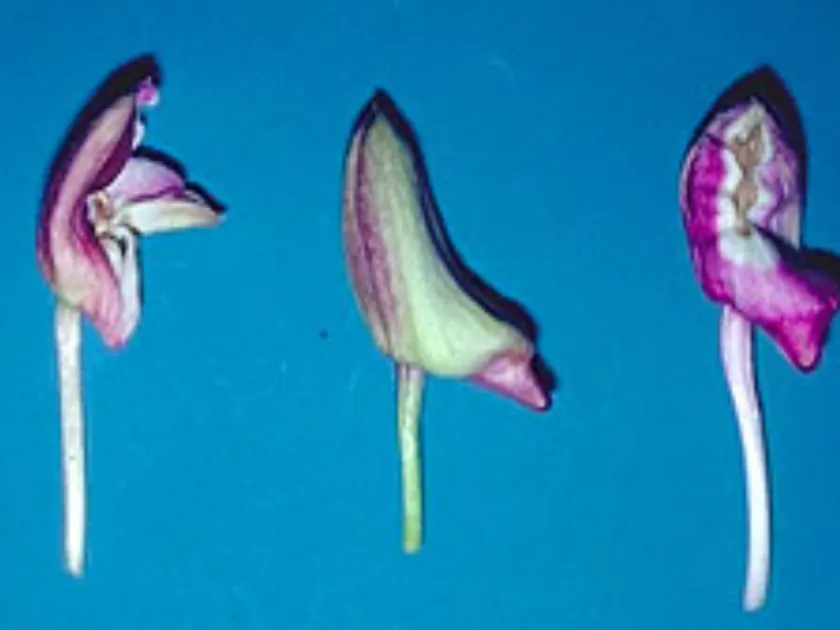
Description
How to identify
The Cattleya gall midge (Clinodiplosis cattleyae) is a small insect belonging to the family Cecidomyiidae, order Diptera. Adult midges are tiny, mosquito-like flies, usually measuring 1–2 mm in length, making them extremely difficult to detect in greenhouse or home environments.
The larvae are the stage responsible for the damage. They are translucent to yellowish, legless creatures that live hidden within the plant tissues, protected by the growth they induce.
The life cycle of this pest is highly dependent on environmental conditions. In warm and humid settings, the reproduction rate increases significantly, allowing for rapid infestation of an entire orchid collection.
Females lay eggs in the soft, actively growing tissues of the orchid. Upon hatching, the larvae immediately begin feeding, which triggers the formation of characteristic galls.
Taxonomically, this species is a highly specialized pest that manipulates plant development for its own nutrient requirements, creating a niche that shields it from many external predators and conventional contact pesticides.
What it damages
This pest specifically targets orchids, primarily within the Cattleya genus and its hybrids. It shows a strong preference for tender, developing pseudobulbs, buds, and young growth points.
As larvae feed on plant sap, they release chemical substances that cause abnormal cell division. This results in the formation of galls—distended, tumor-like growths on the stems or buds.
These galls interrupt the normal flow of nutrients to the growing tip. As a result, the affected growth usually stops developing, becomes deformed, and eventually turns necrotic.
Once the tissues are damaged and necrotic, the plant becomes highly susceptible to secondary infections by bacteria and fungi, which can spread quickly and threaten the entire plant.
Massive infestations severely weaken the orchid, preventing it from producing healthy flowers and potentially leading to the death of the plant if not addressed promptly.
Signs of infestation
The most prominent sign of infestation is the presence of unusual, localized swellings or "bumps" on new growth. These galls often look like small, hardened tumors on the pseudobulbs or leaf sheaths.
Upon closer inspection, the tissue around the gall may show signs of chlorosis or browning, indicating that the internal structure is being consumed by larvae.
If you carefully open a suspected gall, you will typically find several tiny, translucent larvae feeding inside, which confirms the presence of the Cattleya gall midge.
Stunted growth or the sudden blackening of the tip of a new shoot is a clear indicator that something is interfering with the plant's vascular development.
In many cases, the damage is mistaken for fungal rot; however, the hollow, chambered nature of the swellings helps distinguish gall midge activity from common pathogens.
Control measures
The primary control measure is the physical removal and destruction of all infested plant parts. All galls and deformed growths should be cut off immediately to prevent adult midges from emerging.
All cutting tools must be strictly sanitized with alcohol or heat after each cut to avoid cross-contamination of healthy plants within the collection.
Systemic insecticides are considered the most effective chemical method for control, as they can penetrate the plant tissues to reach the larvae hidden inside the galls.
Repeated applications are necessary to ensure that new generations of larvae, which may emerge from eggs laid previously, are also neutralized during their vulnerable stage.
- Isolate infested plants immediately from the main collection.
- Prune and incinerate or dispose of all symptomatic growth.
- Apply systemic insecticides during the active growth season.
Taxonomy
- Latin name
- Clinodiplosis cattleyae
- Order
- Diptera (flies)
- Family
- Cecidomyiidae
- EPPO code
- PLLDCA
Discussion
No discussions yet — be the first.