
Giant pine aphid
Cinara ponderosae
Description
How to identify
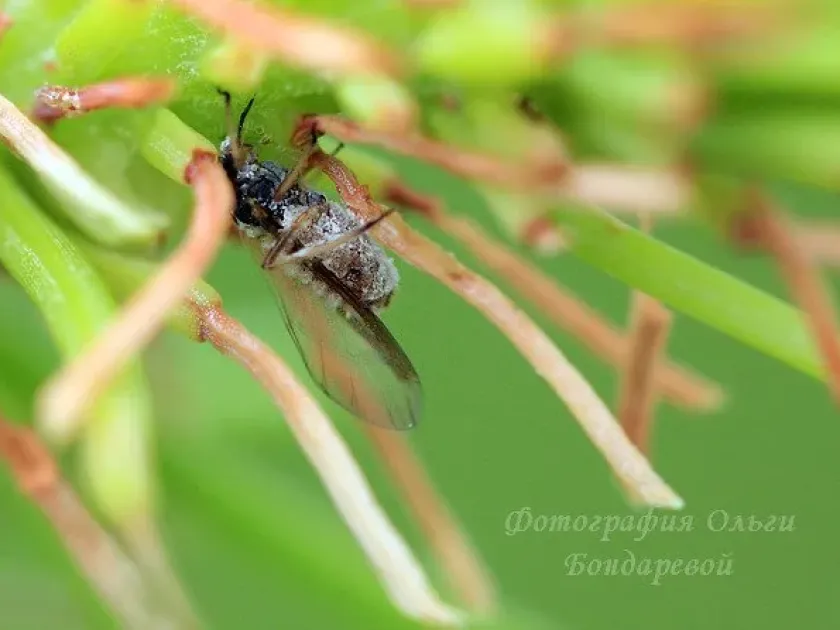
The giant pine aphid, Cinara ponderosae, is a member of the Aphididae family, known for its relatively large size compared to other aphid species.
Adult individuals typically measure between 3 to 4 mm in length and possess a dark brown to reddish-brown body often covered in a fine waxy dust.
These insects exhibit both wingless and winged forms, allowing them to rapidly colonize young branches and stems of various pine species.
Their short, dark siphunculi are a key morphological feature used by entomologists to distinguish this species from other members of the genus.
The species lives in dense clusters, often found along the shoots of host trees, and is frequently tended by ants attracted to their honeydew.
What it damages
Cinara ponderosae feeds primarily on pine trees, causing significant stress by extracting phloem sap from young, tender twigs.
The constant feeding results in the wilting and curling of new shoots, which can stunt the overall growth of young conifer saplings.
Heavy infestations lead to the yellowing of needles and premature needle drop, significantly reducing the aesthetic value of ornamental pines.
The excretion of large amounts of honeydew promotes the growth of sooty mold, which inhibits photosynthesis and weakens the tree's health.
In severe cases, long-term feeding by these aphids can predispose stressed trees to secondary attacks by bark beetles and other wood-boring insects.
When it appears
The life cycle begins in early spring when eggs deposited on needles the previous autumn hatch into first-instar nymphs.
During the warmer months, the aphid produces several generations, with populations often peaking in late spring or early summer.
Winged individuals are produced when overcrowding occurs on a branch, facilitating the spread of the colony to adjacent trees or branches.
As temperatures begin to drop in autumn, sexual forms appear, mate, and deposit eggs on the needles to ensure survival through the winter.
The aphid's activity is closely synchronized with the growth flush of pine trees, ensuring high-quality nutrition for their rapid reproduction.
Signs of infestation
Signs of an infestation include the presence of clusters of brownish aphids on the bark of shoots, often hidden in the needle bundles.
Aggressive ant activity on branches is a reliable indicator that an aphid colony is present, as ants protect them to feed on their secretions.
A sticky, shiny residue on needles and stems, followed by the growth of black sooty mold, is a classic symptom of aphid feeding.
Deformed, stunted, or drooping new growth is a common physical manifestation of damage caused by the sap-sucking activity of the aphids.
The accumulation of white, shed skins (exuviae) left behind after molting can often be observed on the branches as small debris patches.
Control measures
Systemic insecticides applied as soil drenches or bark sprays are effective, as they move within the vascular system to reach the aphids.
For smaller infestations, horticultural oils or insecticidal soaps can be used to coat the insects and suffocate them without harming beneficial predators.
Conserving populations of natural enemies like lady beetles, lacewings, and hoverfly larvae is vital for long-term integrated pest management.
Installing tree bands or physical barriers to prevent ants from climbing the trunk will force the aphids to be exposed to their natural predators.
Maintaining tree vigor through proper watering and avoiding excessive nitrogen fertilization helps reduce the tree's susceptibility to aphid colonization.
Taxonomy
- Latin name
- Cinara ponderosae
- Order
- Hemiptera (bugs, aphids, leafhoppers)
- Family
- Aphididae
- EPPO code
- CINAPO
Discussion
No discussions yet — be the first.