
Yellow Chyromya
Chyromya flava
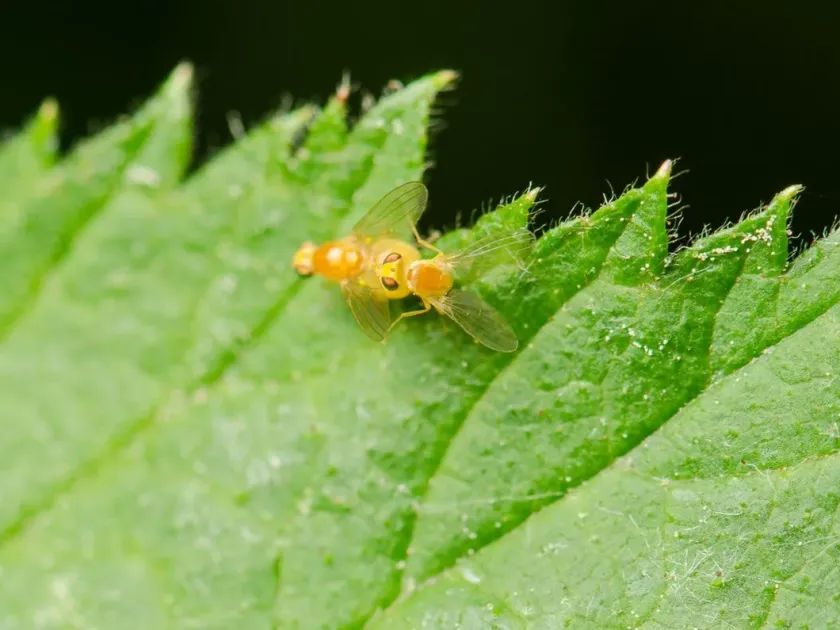
Description
How to identify
Yellow Chyromya (Chyromya flava) is a small dipteran insect belonging to the family Chyromyidae. These flies are characterized by their small size and distinct yellowish or ochre body coloration.
The adult flies typically measure between 2 and 3 millimeters in length. Their wings are transparent and feature specific venation patterns common to the Chyromyidae family, which are useful for identification.
The life cycle of the species consists of egg, larva, pupa, and adult stages. Larvae often thrive in environments rich in organic matter, which can lead them to inhabit the rhizosphere of cultivated plants.
The head of the adult is rounded with prominent compound eyes, adapted for navigation and locating suitable habitats for breeding and feeding.
Identification is often confirmed by entomologists through the examination of male genitalia, as external morphological similarities exist between various species of the Chyromyidae family.
What it damages
This pest is primarily observed in cereal crops and greenhouse vegetables. The larvae can cause significant damage to young plants, particularly by feeding on the root system or the base of the stem.
Feeding activity disrupts the vascular tissues of the plant, preventing the proper transport of water and nutrients, which results in stunted growth and chlorosis.
In greenhouses, the presence of the pest can lead to poor establishment of transplants and uneven growth patterns, severely impacting the commercial quality of the crop.
Beyond direct damage to tissues, the larvae create entry points for secondary pathogens, such as bacteria and fungi, which cause root rots and systemic diseases.
Under favorable moisture conditions, the larval population can increase rapidly, leading to the collapse of young seedlings and significant yield reductions.
When it appears
The activity of Yellow Chyromya adults begins in the spring when temperatures are consistently above the threshold for emergence from diapause.
Populations tend to reach their peak during the humid months of the summer season. In protected environments like greenhouses, the pest can reproduce continuously if conditions remain stable.
The duration of a generation is heavily influenced by environmental temperature and moisture, as the larvae require specific conditions to survive and develop effectively.
As temperatures drop in the autumn, the insects seek shelter in the soil or in plant debris to overwinter in the pupal stage.
Monitoring should commence at the start of the growing season using yellow sticky traps, which are highly effective at attracting and catching adults during their flight periods.
Signs of infestation
Early symptoms of an infestation include generalized stunting of plants and the appearance of pale or yellowing leaves. Plants often show signs of wilt, especially during warmer parts of the day.
- Presence of small yellow flies near the plant base.
- Weakened appearance of seedlings.
- Larvae visible upon close inspection of the root zone and surrounding soil.
- Tunnels or damaged tissue at the plant collar.
- Increased susceptibility to secondary wilting diseases.
Plants affected by the larvae may exhibit darkening of the roots and, in severe cases, the stem may collapse at the soil level due to extensive feeding damage.
A lack of uniformity in crop development is a common observation in fields or greenhouses that have been infested by the Yellow Chyromya.
If a damaged plant is gently tugged, it may come out of the soil easily because the root system has been compromised by the feeding activity of the larvae.
Control measures
The primary control strategy involves good sanitation practices. Eliminating plant debris and organic matter where the larvae can breed is crucial for minimizing populations.
In greenhouse settings, maintaining proper soil moisture and ensuring good aeration is essential, as overwatering creates the ideal environment for the pest.
Chemical control measures include the application of appropriate systemic insecticides that are labeled for use on the specific crop to protect roots and stems.
Preventive soil treatments before planting can significantly reduce the overwintering population and protect vulnerable young seedlings during the initial growth stages.
An integrated approach that combines cultural practices, such as crop rotation, with targeted biological or chemical interventions provides the best long-term success.
Taxonomy
- Latin name
- Chyromya flava
- Order
- Diptera (flies)
- Family
- Chyromyidae
- EPPO code
- CHYRFL
Discussion
No discussions yet — be the first.