
Walnut aphid
Chromaphis juglandicola
Description
How to identify
The walnut aphid (Chromaphis juglandicola) is a small sap-sucking insect belonging to the order Hemiptera. These pests are specialized feeders that primarily target trees of the Juglandaceae family, most notably walnuts.
Their life cycle involves overwintering as eggs in bark crevices. Once spring temperatures rise, these eggs hatch into stem mothers, which start the process of colonizing newly emerged buds and leaves on the host plant.
During the summer months, the aphid produces several generations through parthenogenesis. This rapid reproductive rate allows a small infestation to quickly develop into massive, damaging colonies covering large parts of the canopy.
In the autumn, sexual forms appear, leading to the mating process and the deposition of winter eggs. This ensures the species persists through the dormant winter season, ready to restart the cycle the following year.
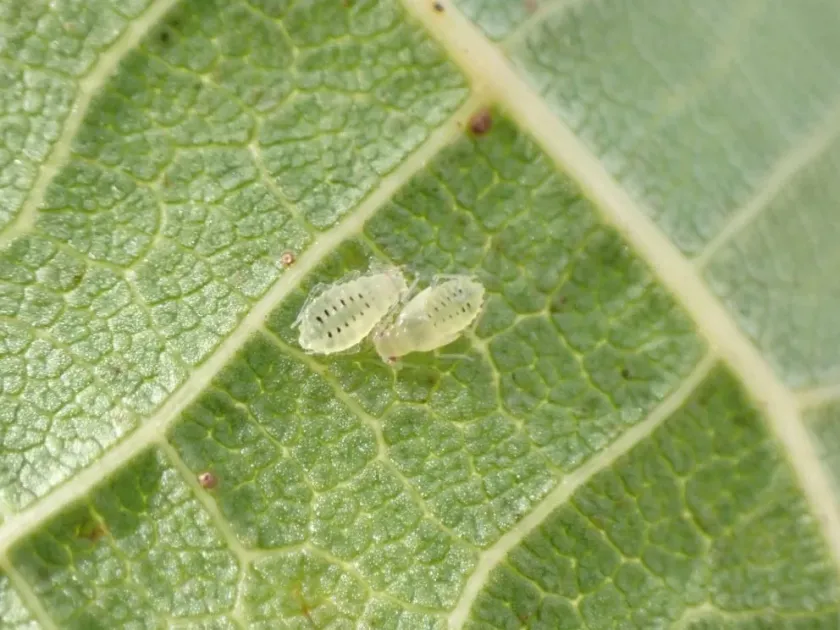
Adult aphids are typically light yellow or pale green. Because they often reside on the underside of leaves and match the foliage color, they are frequently overlooked until the infestation becomes quite severe.
What it damages
The primary damage is caused by the aphid piercing the leaf tissues and extracting plant sap. This constant removal of nutrients weakens the tree, leading to stunted growth and reduced metabolic efficiency.
The feeding process injects toxic saliva into the plant, causing leaves to curl, yellow, and develop necrotic spots. In extreme cases, this leads to premature leaf drop, which significantly impacts the tree's overall vigor.
Aphids excrete a sugary substance known as honeydew. This sticky residue coats the leaves and branches, creating an ideal environment for sooty mold to grow, which further hinders the process of photosynthesis.
Besides direct feeding, aphids are known vectors for several plant viruses. These pathogens can cause long-term decline in orchard productivity and are extremely difficult to manage once established within the tree.
The loss of energy reserves affects the development of nuts. Consequently, growers often experience lower yields and reduced nut quality, including smaller sizes and poorly filled kernels due to the tree's inability to provide sufficient resources.
Signs of infestation
Leaf curling or distortion on the newest foliage is the most common early symptom. This physical deformation is a clear indicator that a colony is active and feeding on the tender tissues beneath the surface.
The presence of sticky honeydew on the leaves or the ground beneath the tree is a strong indicator of an aphid infestation. This residue often attracts ants, which aggressively farm the aphids for their secretions.
Sooty mold growth, appearing as a dark, dusty layer on the foliage, is a sign of a well-established colony. This mold does not infect the plant itself but effectively blocks sunlight from reaching the leaf surface.
Yellowing (chlorosis) or premature browning of the leaves indicates significant nutrient stress. If a tree starts losing leaves in mid-summer, it is a sign that the pest pressure has become critical.
Closer inspection of the leaf undersides, particularly along the veins, will reveal the aphids themselves. Even if they are small, their clustered, sedentary nature makes them easy to spot with a magnifying glass.
Control measures
Effective management begins with monitoring. Orchard inspections starting in the late spring help identify localized hotspots before they have the chance to spread throughout the entire tree canopy.
Biological control is highly effective for walnut aphids. Encouraging populations of natural predators like lady beetles, lacewings, and syrphid flies can keep pest numbers well below the economic damage threshold.
Chemical control should be applied only when necessary. If using insecticides, opt for systemic products that provide lasting protection while aiming to minimize impact on beneficial insect populations.
Good orchard management, including appropriate pruning and fertilization, strengthens the tree. A vigorous, healthy tree is much more resilient to aphid feeding and recovers more quickly from stress-induced damage.
- Monitor for aphid colonies during the early growing season.
- Promote biodiversity to maintain natural enemy populations.
- Use selective insecticides if threshold levels are exceeded.
- Maintain proper tree health through balanced irrigation and nutrient management.
Taxonomy
- Latin name
- Chromaphis juglandicola
- Order
- Hemiptera (bugs, aphids, leafhoppers)
- Family
- Aphididae
- EPPO code
- CHRAJU
Discussion
No discussions yet — be the first.