
African rose beetle
Chlorocala africana
Description
How to identify
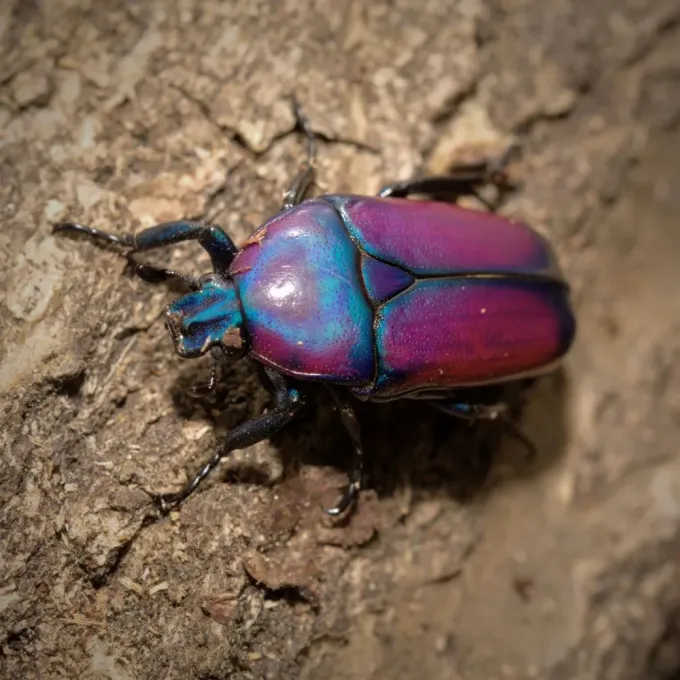
The African rose beetle (Chlorocala africana) is a member of the Scarabaeidae family, specifically the Cetoniinae subfamily. These beetles are known for their vibrant, iridescent, and metallic colors, often ranging from brilliant green to copper-red tones.
The adult beetle has an oval-shaped body, typically measuring between 15 and 25 mm in length. Its smooth, hardened elytra often feature distinct white patterns or spots, which serve as excellent camouflage when they are resting among flowering foliage.
The larvae, which live in the soil or decaying organic matter, are C-shaped, creamy-white in color with a brown head capsule. They are typical scarab larvae, characterized by slow movement and a diet consisting primarily of decomposing plant material.
The life cycle involves complete metamorphosis: egg, larva, pupa, and adult. Adults are diurnal, meaning they are primarily active during sunny days, frequently flying between flowers in search of food and mates.
In addition to their role in decomposition, the adults are opportunistic feeders, making them a significant concern for gardeners during the peak blooming season when they aggregate in large numbers on ornamental flowers.
What it damages
The primary damage is caused by adult beetles feeding on the reproductive parts of flowers. They are particularly attracted to large, fragrant blooms like roses, peonies, and dahlias, where they consume petals, stamens, and pistils.
This feeding behavior causes significant cosmetic damage, resulting in shredded petals and deformed buds that often fail to open properly. In many cases, the affected flowers are rendered completely unattractive for display.
Fruit trees are also susceptible to damage. During the blossoming period, the beetles congregate in the flowers of apples, pears, and cherries, destroying the structures necessary for fertilization, which directly correlates to lower fruit yields.
While the larvae are generally beneficial decomposers, in situations where organic matter is scarce, they may turn to the roots of garden plants, causing stunted growth or even the death of younger, more vulnerable specimens.
Commercial nurseries and flower farms suffer economic losses due to the presence of these beetles, as even a small amount of damage makes the products unsellable or drastically reduces their quality grade.
When it appears
Adult activity typically begins in late spring, coinciding with the first major flushes of flowering, and persists throughout the summer months. Peak infestation levels often correlate with periods of warm, stable, and sunny weather.
Signs of infestation
The most obvious sign of an infestation is the presence of the beetles themselves nestled deep within flower heads. Their feeding leaves characteristic ragged edges and holes in the petals of the most colorful blooms.
- Visible holes and shredded tissue on flower petals and centers.
- Accumulation of frass (insect waste) within the flower buds or on the leaves below.
- A noticeable decrease in successful fruit set on trees that were heavily infested during blooming.
- Unexplained wilting of ornamental plants due to root feeding by larvae.
- Evidence of beetles emerging from soil, such as small circular exit holes near the base of plants.
Control measures
Hand-picking remains the most practical and eco-friendly control method. Because the beetles are lethargic in the early morning, they can be easily knocked into a bucket of soapy water, which effectively kills them without harming the plants.
Light traps can be utilized during the evening hours to attract and capture adult beetles, helping to suppress local populations before they have the chance to lay eggs in the surrounding soil or mulch.
For severe infestations, contact insecticides may be necessary. It is critical to apply these products in the evening when pollinators are less active, ensuring that the chemicals are directed at the beetles and not the foraging bees.
Cultural management is vital: remove compost piles or decaying leaf litter near flower beds to eliminate breeding sites. Proper garden hygiene makes the area significantly less attractive to female beetles looking for places to oviposit.
Encouraging natural predators, such as birds or predatory beetles, can help manage larval populations in the soil. Maintaining healthy, well-mulched soil with plenty of organic matter can also prevent the larvae from damaging plant roots.
Taxonomy
- Latin name
- Chlorocala africana
- Order
- Coleoptera (beetles)
- Family
- Scarabaeidae
- EPPO code
- CLOAAF
Discussion
No discussions yet — be the first.