
Black vine weevil
Cheiracus sulcatus
Description
How to identify
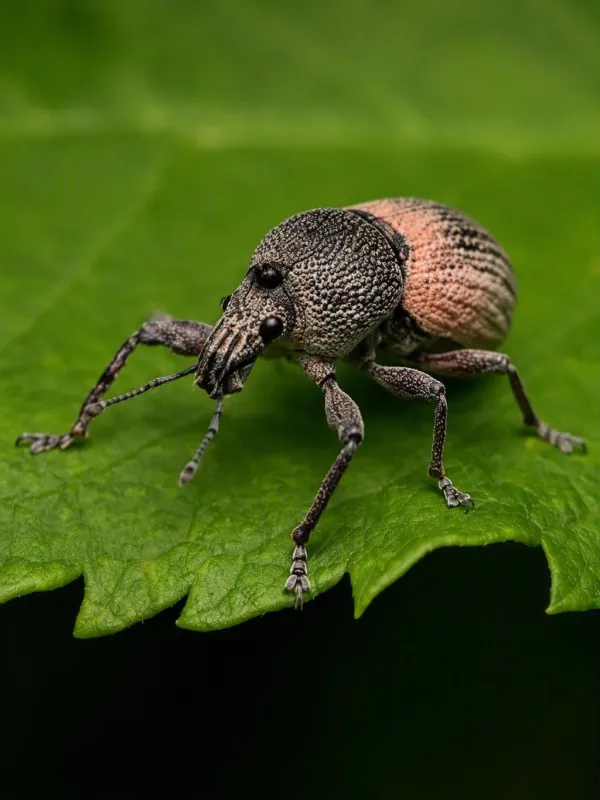
The black vine weevil (Otiorhynchus sulcatus) is a notorious pest belonging to the Curculionidae family. Adult beetles are roughly 8–11 mm long and have a distinctive matte black or dark brown body covered with small, yellowish scales.
Their physical appearance is marked by deep, longitudinal grooves running along the elytra (wing covers), which is the source of their common name. The snout is relatively short, and they are incapable of flight, relying instead on walking or being transported via infested soil and plants.
The larvae are perhaps the most destructive stage; they are legless, C-shaped grubs with creamy white bodies and tan-colored heads. They live exclusively underground, feeding on the root systems of various host plants, which makes them difficult to monitor.
This species reproduces through parthenogenesis, meaning all individuals are female. This biological trait allows a single surviving individual to start a new infestation, making the management of this pest a significant challenge for growers.
The life cycle involves overwintering as larvae in the soil, which allows them to resume feeding as soon as the temperature rises in the spring. In greenhouse environments, the life cycle can be accelerated, leading to overlapping generations throughout the year.
##damage##The black vine weevil is a highly polyphagous pest with a vast host range. It frequently attacks strawberries, grapes, raspberries, and many ornamentals like rhododendrons, azaleas, cyclamens, and various conifers.
Larval damage is severe because they feed on the fine root hairs and later consume larger roots and the bark of the root collar. This activity destroys the plant's vascular system, often leading to sudden wilting and total death of the specimen.
Adult weevils cause cosmetic damage by feeding on leaf margins, creating irregular, notches known as leaf-notching. While this rarely kills the plant directly, it significantly reduces the market value and ornamental quality of flowers and foliage plants.
In container nursery production, damage can be catastrophic. Because the root system is confined within a pot, a small number of larvae can consume the entire root ball in a very short time, killing the plant before the grower realizes there is an issue.
The pest is often spread through the movement of potting media or infested nursery stock. Once established in a garden or greenhouse, they can persist for years if left untreated, gradually colonizing neighboring plants.
##signs##Notched leaf edges are the classic indicator of adult black vine weevil activity. Since the adults are nocturnal, they are rarely seen during daylight hours, making these leaf scars the primary evidence of their presence in the landscape.
Signs of larval infestation include unexpected wilting that does not respond to irrigation. A telltale sign is a plant that can be easily pulled out of the soil or container, revealing that the roots have been severed near the base.
Inspecting the soil around the base of the plant often reveals the C-shaped larvae. They are typically found in the upper 5–15 cm of the root zone, particularly where the soil is moist and high in organic matter.
In professional settings, a decline in plant vigor, leaf yellowing, and stunted growth are common symptoms. These indicators often appear when the root system has already been severely compromised by larval feeding.
Growers should also watch for adult weevils near the base of the plants or on the underside of leaves at night. Using a flashlight after dark is the most effective way to catch them in the act of feeding.
##control##Effective management requires an integrated pest management (IPM) strategy that targets both the secretive larvae in the soil and the mobile adults above ground.
- Application of entomopathogenic nematodes (such as Heterorhabditis bacteriophora) to the soil, which actively hunt and infect the larvae.
- Nocturnal manual collection of adult beetles by shaking them from foliage onto collection trays.
- Use of systemic insecticides labeled for soil application to control larvae, particularly in high-value ornamental production.
- Implementing strict quarantine measures for all incoming plant materials and potting mixes to prevent introducing the pest.
- Cultural practices such as removing leaf litter and ensuring good drainage to reduce favorable conditions for larval development.
Taxonomy
- Latin name
- Cheiracus sulcatus
- Order
- Mites
- Family
- Diptilomiopidae
- EPPO code
- CHECSU
Discussion
No discussions yet — be the first.