
Spotted snakehead
Channa punctata
Description
How to identify
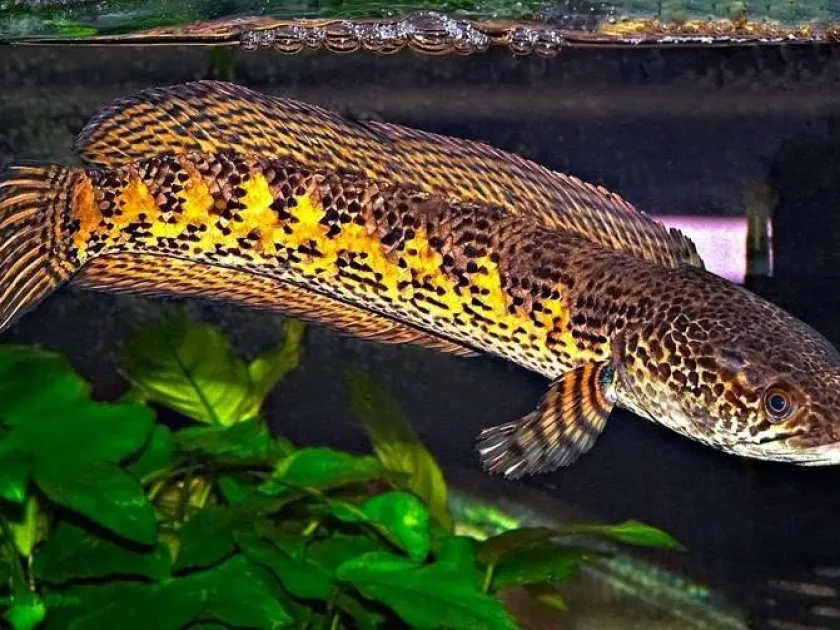
The spotted snakehead (Channa punctata) is a member of the Synbranchiformes order and the Channidae family. It is a hardy freshwater fish capable of breathing atmospheric air.
The body is elongated and cylindrical, featuring distinct spots and scales on the head that resemble a snake. This appearance is an evolutionary adaptation for blending into muddy environments.
Adult fish grow up to 30 centimeters in length and possess strong pectoral fins, which allow them to maneuver across damp surfaces between water bodies.
They are highly resilient, surviving in stagnant, low-oxygen water that would prove fatal to other species, often burying themselves in mud during dry spells.
Reproduction is highly efficient, with parents exhibiting strong protective instincts over their eggs and fry, ensuring a high survival rate in diverse environments.
What it damages
In agricultural settings, particularly in rice-fish farming systems, the spotted snakehead is considered a major pest due to its aggressive predatory behavior.
The fish consumes large quantities of fry and beneficial organisms that play a crucial role in maintaining the ecosystem health of rice paddies.
This predatory activity disrupts the natural biocontrol mechanisms, leading to an increase in insect pest populations that damage the rice crops themselves.
Economic losses are significant for farmers as the snakehead replaces target fish species, reducing the total yield and profitability of integrated farming.
Additionally, their ability to migrate through irrigation infrastructure spreads them to new areas, complicating pest management efforts across large agricultural regions.
When it appears
The spotted snakehead exhibits increased activity and reproductive behavior during the monsoon season when rice paddies are flooded, creating optimal habitats.
During the dry season, they remain relatively dormant in deep mud, only to re-emerge and colonize flooded agricultural lands rapidly when the rains return.
Control measures
Physical barriers such as fine-mesh screens and nets are essential to prevent the entry of snakeheads into irrigation canals and aquaculture ponds.
Draining and sanitizing rice fields after harvest is a standard procedure to eliminate nesting sites and reduce the overwintering population.
Continuous monitoring and systematic trapping during the spawning season are recommended to keep populations below the threshold that causes economic damage.
Managing aquatic weeds in irrigation ditches is critical, as these plants provide the cover necessary for snakeheads to hide and lay their eggs.
Integrated management plans, including local community awareness and regulated fishing programs, are necessary to mitigate the spread of this invasive species.
Taxonomy
- Latin name
- Channa punctata
- Family
- Channidae
- EPPO code
- CHNNPU
Discussion
No discussions yet — be the first.