
Snakehead
Channa
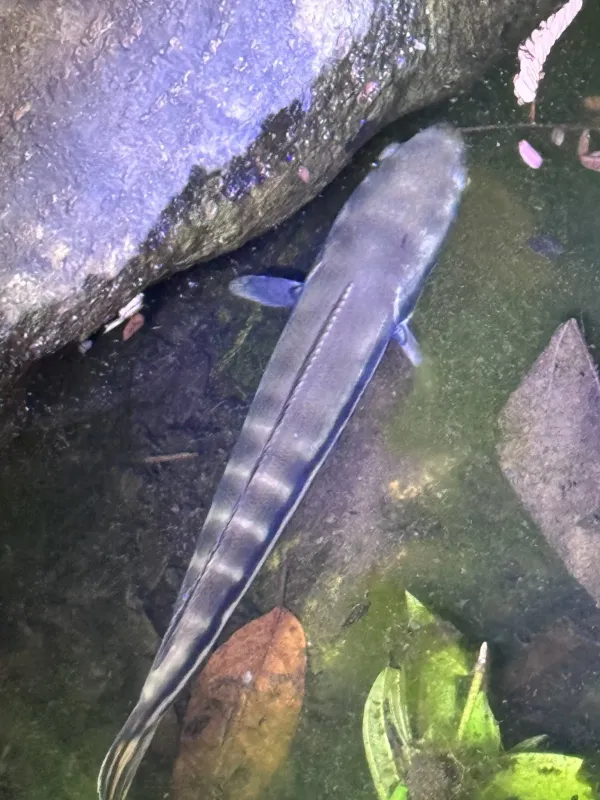
Description
How to identify
The snakehead (genus Channa) is a predatory freshwater fish belonging to the family Channidae, known for its distinct elongated body and snake-like head.
These fish possess a suprabranchial organ that allows them to breathe atmospheric air, granting them the ability to survive in oxygen-depleted waters or even on land for limited periods.
Adult snakeheads can reach significant sizes, often exceeding one meter in length, and are covered in thick, protective scales with varied mottled patterns.
Taxonomically, they are categorized under the order Anabantiformes, which includes other air-breathing fish adapted to harsh, stagnant water environments.
They are characterized by strong jaws lined with sharp teeth and an extremely aggressive territorial nature, allowing them to dominate any water body they infiltrate.
What it damages
As an invasive species, the snakehead causes severe damage to local fisheries by preying heavily on native fish species, including commercially valuable breeds.
In aquaculture environments, they decimate fry and juvenile populations, making it nearly impossible for farmers to sustain stock in infested ponds.
They disrupt local food webs by displacing native predators and consuming primary food resources, leading to a long-term decline in aquatic biodiversity.
Beyond predation, snakeheads can act as vectors for various parasites and diseases, posing a significant biosecurity risk to surrounding ecological systems.
Their ability to move across moist land during wet weather allows them to colonize new areas, spreading the destructive impact far beyond the initial site of introduction.
When it appears
Snakeheads are most active during the warmer months, typically from late spring to early autumn, when water temperatures facilitate their high metabolic rate.
During the spring spawning season, these fish become highly protective of their nests, making them more visible and aggressive towards any potential threats.
Throughout the summer, they frequent shallow, vegetated areas where they wait for prey, utilizing the dense plant cover for camouflage and ambush tactics.
As water temperatures drop in late autumn, their activity levels decrease, though they continue to feed actively until the water becomes significantly cold.
During winter, they enter a state of dormancy, burying themselves in mud or deep crevices at the bottom of the water body to survive until spring arrives.
Signs of infestation
A primary indicator of a snakehead infestation is a sudden and unexplained decline in the population of smaller fish species and juvenile stocks in a pond.
Observers may notice the fish surfacing to gulp air, an act that produces a distinctive splash or sound on the surface of the water in quiet environments.
During the breeding season, one can spot cleared patches of aquatic vegetation, indicating the presence of a nest guarded by one or both adult snakeheads.
Caught fish often display traumatic physical injuries, such as deep lacerations or bite marks on the flanks, consistent with attacks by a large predatory fish.
The lack of small fish near the shore, despite otherwise favorable conditions, is a strong circumstantial sign that an apex predator like the snakehead is present.
Control measures
The most effective strategy for population reduction in contained environments is the systematic use of heavy netting, traps, and electrofishing tools.
Preventative measures include installing heavy-duty screens on water intake and output pipes to ensure that no eggs, fry, or adults can enter or exit the pond system.
Maintaining clear pond perimeters and removing excessive aquatic vegetation limits the ambush opportunities for the fish, reducing their effectiveness as hunters.
In severe infestations, total drainage of the water body followed by chemical treatment with lime is necessary to sterilize the area and eliminate all life stages of the pest.
It is vital to restrict the movement of fish between bodies of water and strictly regulate the trade of live aquatic organisms to prevent accidental further spread.
Taxonomy
- Latin name
- Channa
- Family
- Channidae
- EPPO code
- CHNNSP
Discussion
No discussions yet — be the first.