
Cylindric grain flea beetle
Chaetocnema cylindrica
Description
How to identify
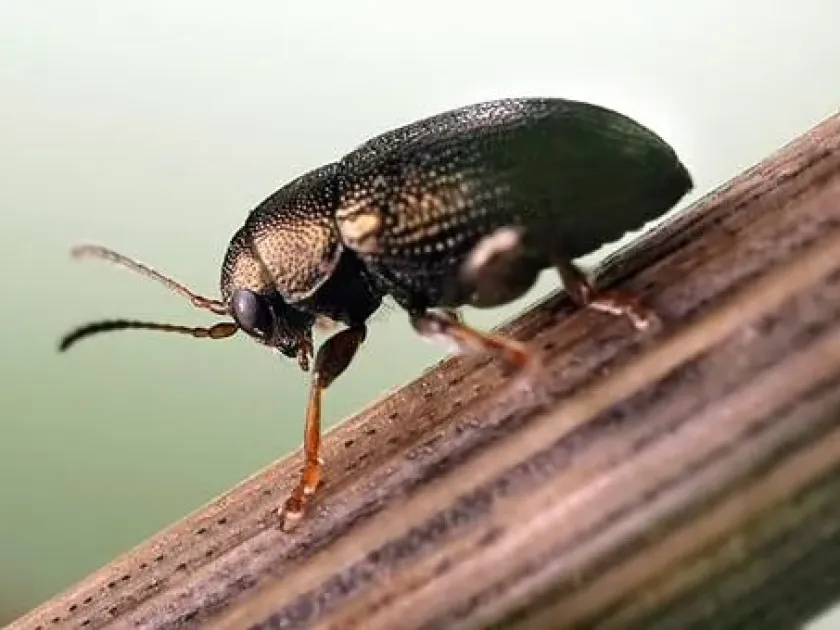
The cylindric grain flea beetle (Chaetocnema cylindrica) is a small insect belonging to the leaf beetle family (Chrysomelidae) within the order Coleoptera. Adult beetles are characterized by their distinct cylindrical body shape, typically measuring 2 to 3 millimeters in length.
Their coloration ranges from bronze to dark green with a metallic luster, providing effective camouflage on the stems and leaves of host plants. The hind legs are significantly enlarged and muscular, allowing the insect to perform rapid jumps when disturbed, which is a signature behavior of flea beetles.
The larvae are white or yellowish, elongated, and equipped with mouthparts specialized for feeding on the root systems of cereal crops. The entire pupation stage occurs within the soil, where the insect undergoes metamorphosis before emerging as an adult.
This species is well-adapted to temperate agricultural environments. Identification in the field can be challenging due to their tiny size and erratic movement, making detection based on leaf injury patterns often more reliable than spotting the adults themselves.
Adults overwinter in the topsoil, under leaf litter, or in field margins and hedgerows. As temperatures rise in early spring, these beetles emerge from hibernation and immediately begin searching for newly emerged cereal crops to feed on.
What it damages
The primary hosts for the cylindric grain flea beetle include wheat, barley, rye, and oats. In the absence of primary crop hosts, these beetles may feed on various wild grasses that serve as a bridge for the population between seasons.
Adult beetles feed on young leaves by gnawing away the epidermis, which results in characteristic longitudinal strips or small holes in the leaf tissue. Excessive feeding can cause the seedlings to wither and die, especially during the early germination stages.
Larvae contribute to the damage by feeding on the root systems, which impairs the plant's ability to absorb water and essential nutrients. This root damage can be devastating during dry spring periods when seedlings are already under significant physiological stress.
High infestation rates often lead to thinning of the crop stands, which may necessitate reseeding in extreme cases. Surviving plants usually show stunted growth and delayed maturity, significantly impacting the final grain yield potential.
Mechanical damage caused by feeding provides entry points for secondary plant pathogens, such as fungi and bacteria. This increases the susceptibility of the crop to diseases that would otherwise be resisted by healthy, non-infested plants.
When it appears
Activity begins in early spring as soon as soil temperatures exceed 8–10 degrees Celsius. Adults emerge from their overwintering sites and rapidly colonize winter and spring cereal crops, focusing on the first or second leaf stages.
The peak of damage usually occurs during the middle of spring. If weather conditions are dry and warm, the beetle population can multiply rapidly, and the plants have less capacity to recover from feeding damage, leading to higher rates of seedling mortality.
The species completes one generation per year. After a period of intense feeding and reproduction, adults enter a summer diapause, preparing for the upcoming winter. This lifecycle limits their spread but makes them highly dangerous during the critical seedling stage.
Environmental factors like wet and humid spring conditions can act as a natural check on population growth, as they often promote fungal infections among the beetle population. Conversely, mild winters followed by dry springs are ideal for mass outbreaks.
Regular field scouting is essential during the early stages of crop development. It is advised to monitor the edges of the fields first, as these areas are typically colonized first by beetles moving from their wintering habitats.
Signs of infestation
Early symptoms of infestation include light longitudinal stripes on the leaves. As damage progresses, these stripes may coalesce, causing the leaf to turn yellow, curl, and eventually die from the tip down toward the base.
A quick inspection of the crop canopy might reveal the presence of small, jumping beetles. Using an entomological sweep net along the diagonals of the field is an effective way to estimate population density and determine if the economic threshold has been reached.
Below-ground, larval damage is marked by stunted plants that are easily pulled from the soil. The roots will appear thin, fragmented, or stripped of their fine root hairs, which effectively prevents the plant from accessing soil moisture.
Patchy development within the field is a common sign of uneven infestation. Clusters of stunted or dead seedlings surrounded by healthier areas suggest that the beetles have concentrated their activity in specific parts of the field.
Monitoring should be focused on the central leaf whorl and the base of the plant. A missing or damaged central leaf is a classic indicator of severe infestation, signaling that immediate control actions might be required to save the remaining crop stand.
Control measures
The most effective strategy for managing grain flea beetles is the use of systemic insecticide seed treatments. This ensures that the plant is protected from the very moment of germination, which is the most vulnerable phase of its growth.
Cultural control practices include deep plowing in the autumn to disrupt overwintering sites. Additionally, optimal planting dates are crucial; ensuring rapid germination and quick development through the seedling stage allows the crop to outgrow the beetles' preference for young tissue.
Providing optimal nitrogen and phosphorus fertilization promotes vigorous growth and helps the plants compensate for minor root damage. Robust, healthy plants are significantly more resilient to beetle feeding than those struggling with nutrient deficiencies.
When the economic threshold of damage is reached, foliar application of insecticides, such as pyrethroids or organophosphates, is necessary. Applications should be performed during the coolest parts of the day, such as early morning, for optimal efficacy.
It is vital to rotate different chemical classes of insecticides in an integrated pest management program to prevent the development of insecticide resistance. Continuous monitoring after applications confirms whether the intervention successfully suppressed the pest population.
Taxonomy
- Latin name
- Chaetocnema cylindrica
- Order
- Coleoptera (beetles)
- Family
- Chrysomelidae
- EPPO code
- CHAECY
Discussion
No discussions yet — be the first.