
Viburnum aphid
Ceruraphis viburnicola
Description
How to identify
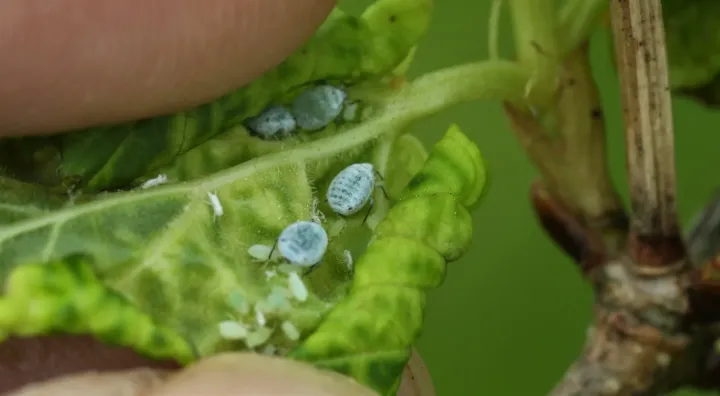
The Viburnum aphid (Ceruraphis viburnicola) is a small sap-sucking insect belonging to the family Aphididae. Adults range in color from pale yellow to greenish-brown.
The life cycle begins in spring when nymphs hatch from eggs overwintered on the shrub's branches. These nymphs quickly develop into a new generation of aphids.
They possess a piercing-sucking mouthpart designed to feed on the nutrient-rich sap of the host plant. The colony structure includes both winged and wingless forms.
The reproduction rate of this species is extremely high, allowing it to form dense colonies on the undersides of leaves within a very short period.
Identification is often assisted by the presence of ants, which attend the aphids to feed on the sugary honeydew they excrete during the feeding process.
What it damages
The primary hosts for this pest are Viburnum species, including the common snowball bush. Damage is most severe on young, succulent plant tissues.
By constantly extracting sap, the aphids weaken the plant, causing foliage to curl and stunt. This significantly impairs the plant's overall photosynthetic ability.
Deformation of shoot tips is a hallmark of this infestation. Affected branches often become stunted, twisted, and lose their ornamental appeal for the season.
The plants become more susceptible to secondary issues, including fungal pathogens that thrive on the honeydew deposits left on leaves and stems.
If left unmanaged, the infestation can prevent normal growth and potentially inhibit flowering, leading to long-term decline in the shrub's vigor.
When it appears
Activity starts in early spring, synchronized with the bud burst of the Viburnum plants. Nymphs begin feeding as soon as the young leaves emerge.
The population reaches its peak density during late May and June. During this window, the impact on plant growth is most noticeable and destructive.
As the summer progresses and leaves harden, the aphid reproductive rate may slow, but colonies often persist on the shrub throughout the summer months.
Autumn marks the return to the branches where eggs are deposited near the buds. This stage ensures the survival of the species during the winter dormant season.
Environmental factors significantly influence outbreaks; warm and dry spring weather creates ideal conditions for rapid population expansion.
Signs of infestation
The most distinctive symptom is the severe curling and crinkling of leaves at the tips of the shoots, creating tight clusters that protect the insects.
Inspection of the undersides of these curled leaves will reveal massed colonies of aphids, confirming the presence of the pest on the host plant.
Sticky honeydew secretions are another clear indicator, often leaving a glossy appearance on the surface of the leaves and stems below the colony.
A black, sooty mold may eventually develop on the honeydew, turning the leaves dark and further reducing the aesthetic value of the shrub.
- Twisted and curled young leaves
- Sticky honeydew coating on stems and leaves
- Presence of ants patrolling the branches
- Black sooty mold spots on foliage
Control measures
Cultural control involves pruning and removing the most heavily infested shoot tips before the aphid populations become widespread throughout the bush.
Chemical control using systemic insecticides is highly effective when applied early in the season to prevent the initial colonies from establishing.
It is important to rotate insecticide classes to minimize the risk of the aphid population developing resistance to commonly used chemical treatments.
Encouraging natural predators such as ladybugs, lacewings, and hoverflies can provide significant biological suppression of the aphid population.
Maintaining plant health through adequate irrigation and fertilization helps the shrub withstand and recover from the stress caused by aphid feeding.
Taxonomy
- Latin name
- Ceruraphis viburnicola
- Order
- Hemiptera (bugs, aphids, leafhoppers)
- Family
- Aphididae
- EPPO code
- NEOCVI
Discussion
No discussions yet — be the first.