
Eurasian treecreeper
Certhia familiaris
Description
How to identify
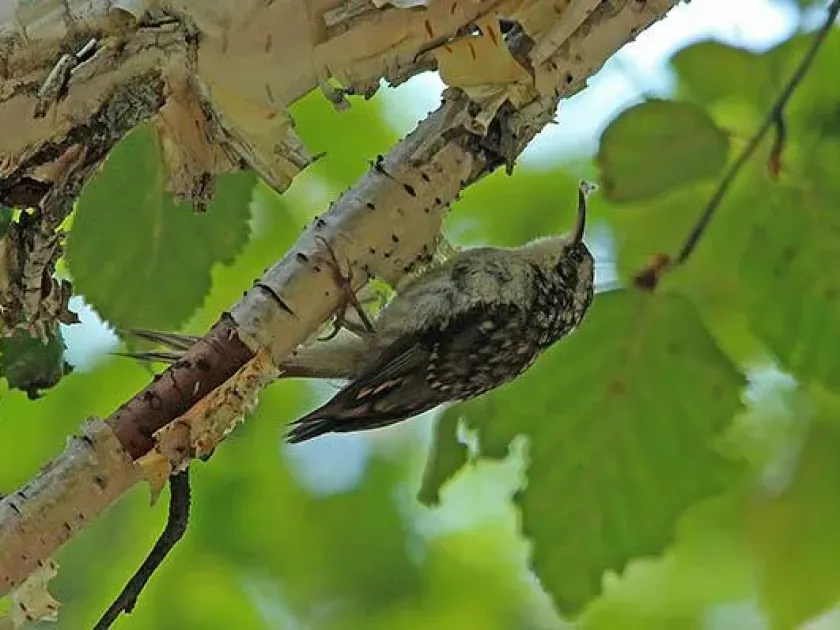
The Eurasian treecreeper (Certhia familiaris) is a small passerine bird from the Certhiidae family. It is easily recognized by its slender, decurved bill and stiff tail feathers used for support while climbing.
Its plumage is cryptic, matching the color and texture of tree bark. This camouflaging makes the bird nearly invisible while it searches for food, moving spirally up the trunks of trees.
Unlike true agricultural pests, this species is highly active and constantly scans bark crevices for small invertebrates. Its behavior is consistent and focused on exploiting the resources provided by tree surfaces.
Breeding usually occurs in narrow slits behind loose bark or in tree cavities. This life-cycle stage requires suitable habitat conditions within mature woodland or well-established orchards.
It is identifiable by its thin, high-pitched call and specific way of crawling vertically along the bark, which sets it apart from other tree-dwelling bird species.
What it damages
The Eurasian treecreeper is not a plant pest. In fact, it is classified as a highly beneficial insectivore that helps manage pest populations by consuming insects that feed on tree bark.
Claims regarding potential damage are usually unfounded. Any marks left on the bark are incidental and pose no threat to the vitality or health of fruit-bearing trees.
Its diet consists almost entirely of insects, larvae, and spiders found in bark crevices. By preying on beetles, weevils, and borers, it provides an essential ecosystem service for orchard owners.
The bird interacts with a wide range of fruit trees, including apple, pear, and cherry. In these settings, it functions as a natural pest control agent, significantly reducing the need for chemical interventions.
Agricultural data confirms no correlation between treecreeper activity and crop loss. Their presence is a sign of a healthy, functioning environment capable of self-regulation.
Control measures
No control measures are necessary for the Eurasian treecreeper, as it is a protected and beneficial species. Eradication or displacement of this bird would be counterproductive for pest management.
The recommended approach for maintaining a healthy orchard is to encourage the presence of this species. Maintaining older trees with sufficient bark crevices promotes the nesting of beneficial birds.
Avoid the indiscriminate use of insecticides. These chemicals kill the very insects the treecreeper eats, and their toxic residue can indirectly impact the health of the birds themselves.
If protection of specific young plants is required, use physical barriers like nets rather than attempting to deter local wildlife, ensuring that the ecological balance remains intact.
By treating the Eurasian treecreeper as a partner in agricultural production, growers can lower their reliance on synthetic pesticides and promote sustainable fruit cultivation practices.
Taxonomy
- Latin name
- Certhia familiaris
- Family
- Certhiidae
- EPPO code
- CRTIFA
Discussion
No discussions yet — be the first.