
Short-toed treecreeper
Certhia brachydactyla
Description
How to identify
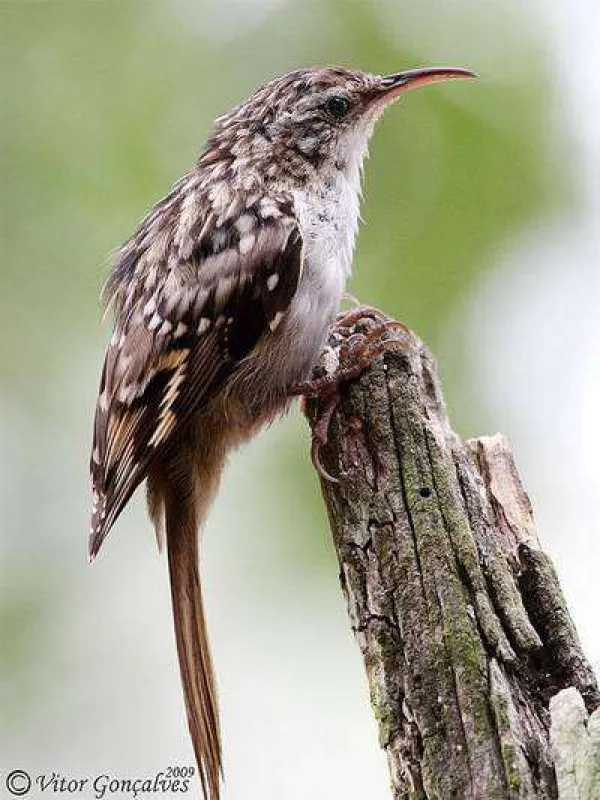
The short-toed treecreeper is a small passerine bird from the Certhiidae family. It is a highly specialized species adapted for climbing along tree trunks in search of hidden insect prey.
The bird features a long, slender, down-curved bill, perfectly evolved to reach deep into crevices of tree bark where many pests remain hidden from other bird species.
Its plumage consists of mottled browns and whites, providing excellent camouflage against the bark of old trees. This cryptic coloration makes it nearly invisible to predators while foraging.
The tail feathers are stiff and pointed, acting as a prop that allows the bird to maintain its grip on vertical surfaces. This unique anatomy enables efficient vertical movement.
It can be distinguished by its movement pattern: it always climbs upwards in a spiral, starting at the base of a trunk and working its way to the top before flying to the next tree.
What it damages
From an agricultural standpoint, the short-toed treecreeper is not a pest; it is a highly beneficial natural enemy of many orchard insects. It does not feed on fruits, buds, or leaves.
Its diet consists almost entirely of spiders, beetles, aphids, and various insect larvae found under the bark. By consuming these, the bird acts as a natural guardian of orchard tree health.
There are no recorded instances of this species causing damage to crops. On the contrary, their activity helps to suppress populations of xylophagous insects and bark-dwelling pests.
By protecting the tree's vascular system from larvae that damage the cambium, treecreepers contribute significantly to the longevity and productivity of fruit trees.
In terms of economic importance, these birds provide essential ecosystem services, reducing the need for chemical intervention in organic and traditional orchard management.
When it appears
The short-toed treecreeper is typically sedentary, staying within its range throughout the year. They are present in orchards across all four seasons, performing their cleanup work tirelessly.
During the spring and early summer, the birds become highly active as they forage to feed their nestlings, leading to a significant reduction in the insect population.
In autumn and winter, when other birds migrate, treecreepers remain, focusing on the dormant stages of pests hiding under the bark. This winter foraging is crucial for preventing spring outbreaks.
Their activity levels are highest during the early morning and late afternoon, coinciding with the peak movement of the small invertebrates they prey upon.
Regardless of the season, their presence indicates a healthy, functioning environment with sufficient tree diversity to support a stable avian population.
Signs of infestation
The primary sign of a treecreeper's presence is the characteristic spiraling movement up the trunks of trees. Any small, brown, fast-moving bird climbing in this manner is likely a treecreeper.
Careful observation of the bark may reveal small, clean patches where moss or old bark has been pried away, indicating that a treecreeper has been probing for insects in those specific spots.
A lack of bark-boring insect damage and a generally clean appearance of tree trunks in an orchard are often the result of steady predation by these birds.
During the nesting season, they may be seen visiting deep cracks in the bark or hollows, where they build their nests. This is a clear indicator that the birds have established a home in your trees.
Their voice is a quiet, rhythmic trill that can be heard throughout the breeding season, signaling their territory and presence to other birds.
Control measures
Protection and encouragement are the only necessary actions regarding the short-toed treecreeper. Because they provide free pest control, every effort should be made to keep them in the garden.
- Install specialized nesting boxes shaped like narrow, vertical slits to mimic natural bark crevices.
- Reduce or eliminate the use of broad-spectrum insecticides that deplete the bird's natural food source.
- Preserve old trees with rough, thick bark, as these provide the primary hunting grounds and nesting sites for the species.
- Keep domestic cats away from the nesting area, as they are the biggest threat to these tree-climbing birds.
- Maintain a diverse orchard environment to ensure year-round availability of insects for the birds to feed on.
Taxonomy
- Latin name
- Certhia brachydactyla
- Family
- Certhiidae
- EPPO code
- CRTIBR
Discussion
No discussions yet — be the first.