
Treecreeper
Certhia
Description
How to identify
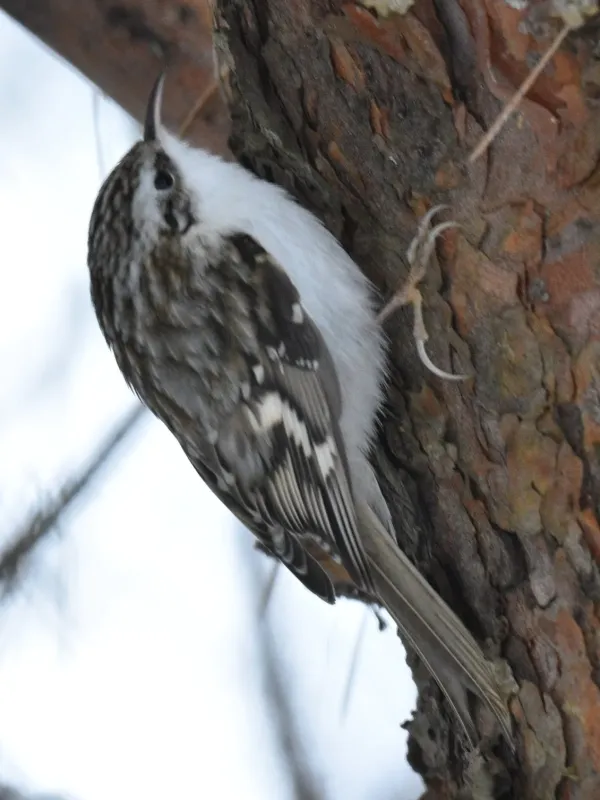
The treecreeper (Certhia) is a genus of small woodland birds within the Passeriformes order. They are characterized by their specialized long, thin, and decurved bills, which are perfectly adapted for probing into crevices and cracks in tree bark to locate prey.
Their plumage provides excellent camouflage, blending seamlessly with the texture and color of tree trunks. They possess stiff tail feathers which they use as a prop, and strong claws for climbing vertical surfaces in a spiral motion.
In agronomic terms, the treecreeper is not a pest. It is an extremely beneficial insectivore that acts as a natural pest control agent, contributing to the health and vitality of trees in orchards and forests.
These birds rarely venture to the ground, preferring to remain on the trunks and branches of trees where they spend most of their daylight hours foraging for food.
Scientific observation confirms that the treecreeper contributes significantly to the maintenance of the orchard's phytosanitary state by constantly removing potentially harmful insect populations.
What it damages
The treecreeper causes no damage to cultivated plants. It does not feed on fruits, buds, or leaves, making it a harmless and valuable presence in any agricultural setting.
Conversely, its diet is composed entirely of insects hiding within the bark, including overwintering stages of beetles, larvae, and pupae that are often problematic for fruit trees.
Confusion sometimes occurs when observers see the birds on already damaged trees. It is important to note that the bird is not the cause of the tree's poor health, but rather an indicator of the presence of insects that the bird is actively trying to eliminate.
Orchard owners should understand that any small markings left by the bird's bill on the bark are simply the result of its efforts to extract hidden parasites.
Therefore, the economic impact of the treecreeper is purely positive, as it provides a self-sustaining service that helps reduce the reliance on chemical pesticides.
When it appears
Treecreepers are generally resident birds, meaning they can be found in the orchard throughout the entire year, which increases their value as a constant biological control agent.
During the winter months, when other food sources are scarce, treecreepers intensify their search for insects under the bark, proving to be crucial in controlling pest populations during the cold season.
In the spring and summer, when treecreepers are raising their young, their demand for protein-rich insects is at its peak, coinciding with the rapid development of many garden pests.
During the autumn, these birds often join mixed-species foraging flocks, effectively cleaning tree trunks of larvae preparing for diapause.
The consistent seasonal presence of the treecreeper makes it a reliable component of an integrated pest management strategy.
Signs of infestation
The primary sign of a treecreeper's presence is its unique foraging behavior: climbing vertically up a trunk in a series of small, rapid movements, starting from the base.
Visible evidence of their activity includes cleaned bark surfaces where moss and lichen might have been disturbed as the bird probed for insects. This is a natural sanitizing process for the tree.
Treecreepers are relatively quiet and inconspicuous birds, so visual spotting is the most reliable way to confirm their presence in the garden.
The absence of damage to fruit, foliage, or twigs, coupled with the presence of these birds, strongly suggests that the garden is being managed by a balanced ecosystem.
If you see a treecreeper spending a significant amount of time on a specific tree, it might be a hint that the tree has a high density of insects that require your monitoring.
Control measures
Control measures against the treecreeper are entirely unnecessary and counterproductive, as this is a beneficial species that should be protected and encouraged in agricultural landscapes.
Instead, the best approach is to enhance the garden's environment to attract more treecreepers, thereby maximizing their role in biological pest suppression.
- Maintain old trees with rough, textured bark that provides shelter for insects.
- Minimize the use of broad-spectrum insecticides that can harm beneficial avian species.
- Install specialized nesting boxes designed to mimic natural bark crevices.
- Avoid damaging the bark of trees during pruning or general garden maintenance.
Integrating the treecreeper into an orchard's management plan is a hallmark of sustainable and eco-friendly farming, leading to a healthier ecosystem and reduced input costs.
Taxonomy
- Latin name
- Certhia
- Family
- Certhiidae
- EPPO code
- CRTISP
Discussion
No discussions yet — be the first.