
Cerotoma atrofasciata
Cerotoma atrofasciata
Description
How to identify
Cerotoma atrofasciata is a species of beetle belonging to the family Chrysomelidae, commonly known as leaf beetles. This insect is recognized as a specialized pest that primarily targets leguminous crops, specifically soybeans, causing significant agricultural damage.
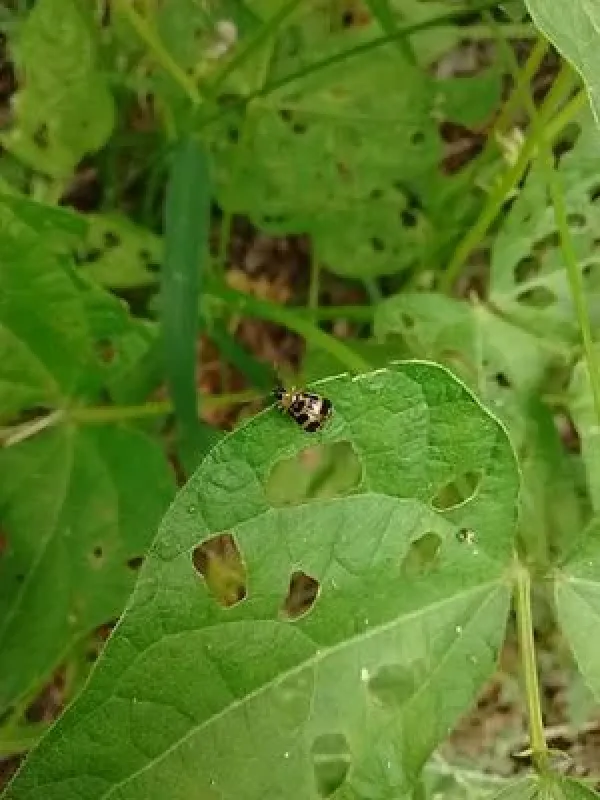
The adult beetle typically measures between 5 and 7 mm in length. Its body is oval-shaped, and the coloration ranges from pale yellow to reddish-brown, often featuring distinct black spots or transverse bands on the elytra, which serves as its primary identification feature.
The larvae are soil-dwelling insects. They have a cylindrical, whitish body and a well-developed head capsule with chewing mouthparts. They spend their entire development stage below the ground, feeding on the root system and nitrogen-fixing nodules of host plants.
The life cycle involves a complete metamorphosis including egg, larval, pupal, and adult stages. In many climates, the insect overwinters as an adult within plant debris or in the top layers of the soil, emerging in the spring as temperatures rise.
The rate of population growth is highly dependent on environmental factors, particularly temperature and moisture levels. Multiple generations can occur within a single growing season if conditions remain favorable, making rapid population expansion possible.
What it damages
The most significant economic damage caused by Cerotoma atrofasciata occurs in soybean fields. Both adults and larvae contribute to yield losses through different feeding behaviors that weaken the plant's structural and physiological integrity.
Adult beetles feed primarily on the foliage, creating numerous small, circular holes in the leaves. This defoliation reduces the overall photosynthetic capacity of the plant, which is vital during the pod-filling stages of soybean development.
Larval feeding on roots and nitrogen-fixing nodules is particularly detrimental. By destroying the root nodules, the pest interferes with the plant's ability to fix atmospheric nitrogen, leading to nutrient deficiencies and stunted growth.
The combination of foliar damage and root system impairment significantly stresses the plant, making it more susceptible to environmental stressors such as drought or secondary infections from opportunistic pathogens.
In cases of severe infestation, yield reductions can be substantial. The lack of nitrogen leads to lower seed weight and reduced overall quality of the soybean harvest, directly impacting the profitability of the agricultural operation.
Signs of infestation
The most obvious visual sign of a Cerotoma atrofasciata infestation is the characteristic shot-hole pattern on the leaves. These holes appear when beetles congregate to feed on the leaf tissue, often leaving only the veins behind.
General plant decline is another indicator. If soybean plants appear stunted, chlorotic, or exhibit uneven growth across the field, it may suggest that larval feeding is occurring on the root system below the surface.
During the early morning hours, adult beetles can often be observed on the undersides of the leaves or in the terminal growth areas of the plants. When disturbed, they frequently drop to the soil surface to hide.
The presence of root damage, characterized by missing or chewed nitrogen nodules, is a definitive sign of larval activity. This can be confirmed by carefully digging up a soil sample around the base of an affected plant.
Premature leaf drop or late-season wilting that does not correlate with water availability often points to severe root destruction caused by the larval population during the earlier stages of crop development.
Control measures
Effective management begins with robust crop rotation practices. Avoiding the continuous planting of soybeans in the same field disrupts the beetle's life cycle and prevents the accumulation of larvae in the soil environment.
Chemical control is often necessary when populations reach the economic threshold. Systemic or contact insecticides should be applied strategically, targeting the adult beetle population before significant egg-laying occurs.
Cultural practices, including deep tillage after harvest, help disrupt the overwintering sites of adult beetles. By burying plant debris, farmers can significantly reduce the number of emerging adults in the following spring.
Weed management around field borders is essential to eliminate alternative host plants. Reducing the presence of wild legumes near soybean crops helps limit the pest's reproductive success and dispersal range.
Ongoing monitoring using yellow sticky cards or field scouting counts is recommended. Farmers should regularly inspect soybean fields to track pest density and ensure that any chemical applications are timed for maximum efficacy and minimal environmental impact.
Taxonomy
- Latin name
- Cerotoma atrofasciata
- Order
- Coleoptera (beetles)
- Family
- Chrysomelidae
- EPPO code
- ANDCAT
Discussion
No discussions yet — be the first.