
Hen flea
Ceratophyllus gallinae
Description
How to identify
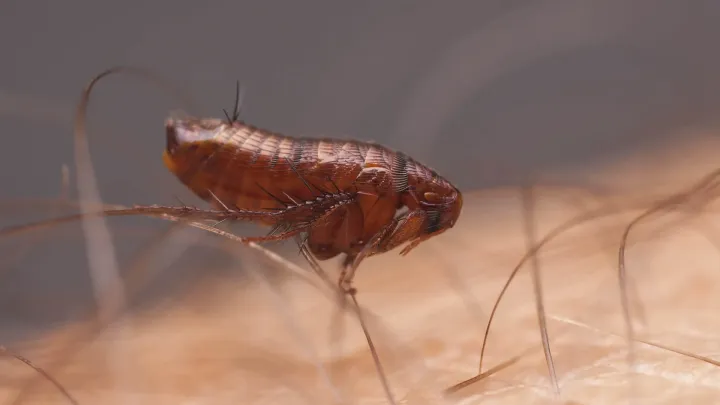
The hen flea (Latin: Ceratophyllus gallinae) is a wingless, blood-feeding insect belonging to the order Siphonaptera, family Ceratophyllidae. Adult specimens are laterally flattened, measuring 1.5 to 3.2 mm in length, and typically display a dark brown or black coloration.
The insect is equipped with powerful hind legs designed for jumping, allowing it to move distances of up to 30–50 cm. Their mouthparts are specialized for piercing avian skin, facilitating the intake of blood as an obligate ectoparasite.
The biological life cycle consists of four distinct stages: egg, larva, pupa, and imago. Adult fleas spend the majority of their time in nesting material, crevices, or floor bedding, jumping onto the host only for feeding.
Larvae are not parasitic on the birds themselves. They reside in nest debris and manure accumulations, feeding on organic matter, including dried blood and the excrement of adult fleas containing undigested host blood.
Under optimal environmental conditions, such as temperatures between 18–25°C and high humidity, the life cycle completes in 3–4 weeks, leading to rapid population expansion within poultry facilities.
What it damages
This pest primarily infests domestic and wild birds, including chickens, turkeys, ducks, and pigeons. In the absence of their primary hosts, hen fleas may occasionally bite other warm-blooded animals, including humans.
Although the flea does not damage plants, its impact on poultry farming is severe. Infestations lead to anemia, weight loss, and a significant drop in egg production. The birds suffer from physical and mental distress.
The primary damage results from multiple bites causing intense itching, dermatitis, and allergic reactions. Infested birds become restless and constantly peck at their feathers, leading to plumage degradation and skin lesions.
Hen fleas act as vectors for various diseases, including salmonellosis, pasteurellosis, and tapeworm infections. They compromise the overall health and biosecurity status of the entire flock.
Severe infestations in young chicks can be lethal, leading to exhaustion, blood loss, and the secondary infection of open wounds caused by excessive pecking or scratching.
Signs of infestation
The first indicator of an infestation is abnormal behavior, such as restlessness, frequent preening, and a reluctance to sit on eggs. Birds may abandon their nests entirely if the flea population is high.
During a physical examination, particularly around the head, neck, and under the wings, one can observe clusters of dark, mobile insects that move rapidly away from the light or touch, hiding deep within the feathers.
In nests and floor litter, one may find "flea dust," which consists of adult flea excrement mixed with organic debris. Patchy plumage and ruffled feathers are common visible consequences of the irritation.
Fresh bites often manifest as small red spots or crusty scabs on the bird's skin. In advanced stages, the skin appears inflamed and irritated, reflecting the intensity of the pest attack.
Monitoring the facility by placing a white sheet of paper beneath roosts at night is an effective way to detect the presence of jumping adults as they fall off the birds or move through the environment.
Control measures
Effective control requires thorough sanitation of the poultry house. This involves the complete removal of all bedding and waste, followed by the rigorous application of approved insecticidal agents to all surfaces.
Treatment of the flock involves using veterinary-approved insecticidal powders, sprays, or spot-on solutions. It is imperative to strictly follow manufacturer guidelines regarding dosage and treatment frequency to ensure safety.
- Regular replacement of nesting materials.
- Whitewashing walls with lime mixed with approved disinfectants.
- Implementing barriers to prevent wild birds and rodents from entering the coop.
- Maintaining proper environmental conditions (temperature and humidity control).
- Performing preventative disinfection at least twice a year.
While traditional remedies such as using aromatic herbs like tansy or wormwood may provide a temporary repellent effect, they are insufficient for eradicating established flea populations.
Taxonomy
- Latin name
- Ceratophyllus gallinae
- Family
- Ceratophyllidae
- EPPO code
- CERHGL
Discussion
No discussions yet — be the first.