
Bird flea
Ceratophyllus
Description
How to identify
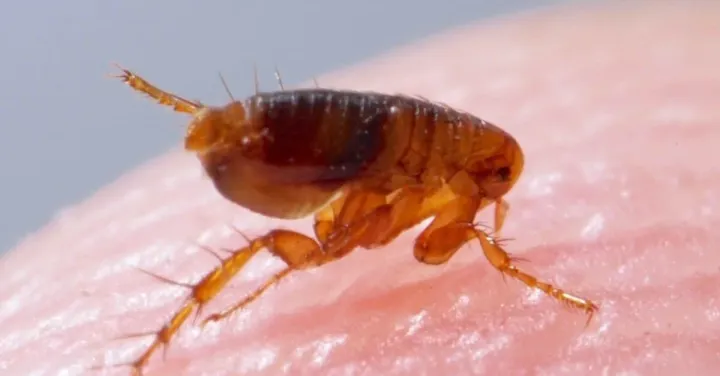
The bird flea, Ceratophyllus, is a common ectoparasite belonging to the family Ceratophyllidae. These insects are laterally compressed, wingless, and typically range from 2 to 4 millimeters in length, colored reddish-brown.
Their bodies are equipped with backward-pointing bristles, allowing them to move easily through the feathers of their hosts. Strong hind legs provide the ability to jump significant distances to reach new hosts.
Bird fleas undergo complete metamorphosis, passing through egg, larva, pupa, and adult stages. Unlike permanent parasites, adult fleas spend most of their time in the nesting material, cracks, and crevices of the coop.
The life cycle is heavily influenced by the presence of a host. Adults are stimulated to emerge from their pupal cocoons by the vibration and warmth provided by nesting birds, ensuring they reach their food source.
Larvae are scavengers that live in nest debris and organic matter. They feed on dried blood, skin scales, and feces of adult fleas, which contain undigested blood proteins necessary for their growth.
What it damages
The primary harm is caused by constant blood-feeding, which leads to anemia, especially in young chicks. Severe infestations can significantly weaken the immune system, making the birds susceptible to secondary diseases.
Birds suffer from intense irritation and itching, leading to restless behavior, excessive grooming, and feather-picking. This persistent stress decreases egg production and weight gain in poultry.
Bird fleas act as vectors for various pathogens, including bacteria and viruses that affect poultry health. The spread of these diseases within a flock can lead to increased mortality rates and economic loss.
In addition to blood loss, the damage to the skin caused by flea bites can lead to dermatitis and localized infections. Such physical damage often ruins the quality of the bird's skin and carcass value.
While primarily affecting poultry, bird fleas may occasionally bite humans. Although they cannot complete their life cycle on human skin, their bites cause painful, itchy reactions and allergic dermatitis.
When it appears
Bird flea activity is highest during the spring and summer months, coinciding with the peak breeding season of birds and rising environmental temperatures that speed up development.
In climate-controlled poultry facilities, breeding can occur throughout the year. The lack of distinct seasonal changes in modern coops often favors continuous flea population growth.
The development from egg to adult is temperature-dependent. In favorable conditions, a generation can be completed in approximately 3 to 4 weeks, facilitating rapid infestation of new flocks.
Pupae are the most resilient life stage. They can remain dormant in cocoons for several months, surviving long periods without a host, waiting for favorable conditions to emerge as adults.
The emergence of adults is synchronized with the bird's presence. Once birds occupy the nest, the fleas emerge in large numbers, often catching the host off guard and starting the infestation cycle anew.
Signs of infestation
One of the first signs of infestation is abnormal behavior in the flock. Chickens may show agitation, spend excessive time scratching, and attempt to pluck feathers from their neck, wings, or base of the tail.
Visual inspection of the birds often reveals fleas clustered around areas with thinner skin, such as under the wings, around the vent, or near the eyes, where they can feed without much resistance.
Checking the coop environment usually confirms the presence of the pest. Fleas can be seen jumping in the nest boxes or in the dust when the bedding is disturbed.
- Reduced appetite and significant decline in egg production.
- Pale combs and wattles in hens, indicating anemia.
- Visible patches of feather loss due to constant pecking and grooming.
When infestation is severe, young birds become weak and lethargic. The constant blood loss turns their skin color pale and prevents them from reaching their natural growth potential.
Control measures
Effective management begins with rigorous hygiene. Regular removal of bedding, litter, and waste is essential, as these materials serve as the primary breeding grounds for flea larvae.
Insecticide treatment is required to eliminate adult fleas and larvae. Approved chemicals in spray or dust forms should be applied to the coop structure, focusing on crevices, cracks, and nesting areas.
Treating the birds directly requires caution. Only products approved for poultry use should be applied to avoid toxic residues and ensure the safety of the eggs and meat produced.
Biosecurity is key. Restricting access of wild birds to the coop is necessary, as they are often the primary carriers ofCeratophyllus fleas into a domestic flock.
Regular maintenance, including the sealing of cracks in the housing and rodent control, significantly reduces the survival rate of flea pupae and prevents recurrent outbreaks.
Taxonomy
- Latin name
- Ceratophyllus
- Family
- Ceratophyllidae
- EPPO code
- CERHSP
Discussion
No discussions yet — be the first.