
Resin midge
Cecidomyia resinicoloides
Description
How to identify
The Resin midge (Cecidomyia resinicoloides) is a small dipteran insect belonging to the family Cecidomyiidae, known for their association with resin-producing plants.
Adults are tiny, fragile midges that are often difficult to spot in forest environments due to their small size and specific coloring.
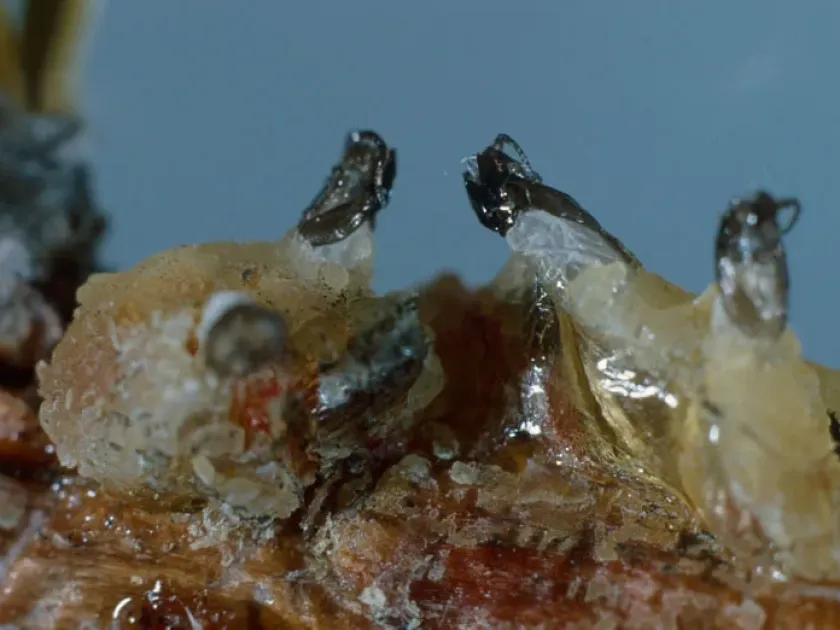
The larvae are specialized to thrive inside the sticky, resinous secretions produced by pine trees in response to irritation.
The species is taxonomically challenging to identify, requiring specialized equipment to differentiate it from other gall midges.
Research indicates that this insect is highly adapted to the chemical composition of conifer resin, using it as both a food source and a shelter.
What it damages
This pest primarily infests species of pine, favoring areas where the tree produces significant amounts of sap.
The larvae feed on the bark and phloem, stimulating the tree to produce more resin, which then forms the characteristic galls.
Infestations typically occur near wounds, branch whorls, or other areas where the bark may be slightly compromised.
Chronic infestations can lead to reduced tree vigor, slowed growth, and increased susceptibility to secondary diseases.
In extreme cases, the localized damage to the bark and phloem can lead to the death of small branches or even top-kill.
When it appears
The life cycle of the Resin midge is closely synchronized with the growth cycle of the host pine trees.
Adult midges typically emerge during the spring when temperatures begin to favor active sap flow.
Larval development occurs throughout the summer months as they continue to deepen their chambers within the resin.
Overwintering usually takes place in the larval stage, protected by the hardened or semi-hardened resin matrix on the tree trunk.
Pupation occurs in the spring, allowing the next generation of adults to emerge and start the cycle anew.
Signs of infestation
The most visible sign is the presence of abnormal resin blobs or "pitch masses" on the bark surface of the tree.
If the resin mass is carefully probed, small orange or yellowish larvae can often be found inside the sticky tunnels.
The bark area immediately surrounding the resin mass often appears discolored or necrotic due to prolonged larval feeding.
Foliage on infested branches may exhibit signs of stress, such as yellowing or wilting, reflecting the damage to the conductive tissues.
Increased resin dripping from the branches during the growing season is a strong indicator of midge activity.
Control measures
Manual removal of infected bark sections or heavily infested resin masses can be effective in small-scale plantings.
Proper silvicultural practices, including avoiding mechanical wounds during logging, help prevent initial infestations.
Chemical control with systemic insecticides may be an option in nurseries but is rarely feasible in large-scale forest stands.
Sanitation cutting to remove severely infested trees helps reduce the overall population pressure in the area.
Biological control, focusing on natural predators and parasitoids, remains the most sustainable approach for long-term forest management.
Taxonomy
- Latin name
- Cecidomyia resinicoloides
- Order
- Diptera (flies)
- Family
- Cecidomyiidae
- EPPO code
- CECIRE
Discussion
No discussions yet — be the first.