
Cebrio gigas
Cebrio gigas
Description
How to identify
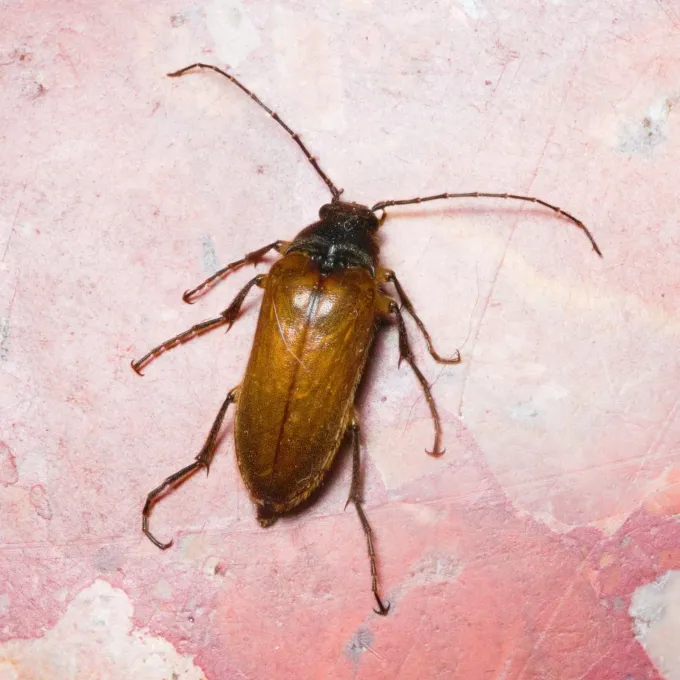
Cebrio gigas is a beetle species belonging to the family Cebrionidae, which shares many biological similarities with click beetles. Adult males are typically between 20 and 25 mm long, feature impressive pectinate antennae, and are capable of flight, which facilitates their dispersal.
Females of the species are wingless and exhibit a more sedentary, subterranean lifestyle. Their bodies are stout and robust, covered in fine hairs that help them thrive in sandy and well-drained soil environments. The dark coloring provides camouflage during their activity periods.
Larvae resemble the larvae of click beetles (wireworms) and are characterized by a cylindrical, heavily sclerotized body. They are highly adapted to soil life and possess strong mandibles capable of feeding on various root systems throughout their multi-year development.
The activity of adults is seasonal, with mass emergence often triggered by heavy spring or early summer rains. This synchrony is vital for mating and subsequent oviposition in the soil, ensuring the continuity of the generation.
Research into their distribution indicates a preference for warm climates, making them a recurring problem in the Mediterranean basin and similar agricultural regions where environmental conditions support soil-bound insects.
What it damages
The primary economic damage is caused by the larval stage, which feeds on the root systems of various crops. By consuming roots and boring into the stems of young seedlings, the larvae effectively stunt plant growth and reduce the plant's ability to absorb water and nutrients.
Affected crops often show symptoms of water stress, yellowing leaves, and wilting even when irrigation is sufficient. In severe infestations, the loss of root structural integrity causes plants to collapse, leading to significant gaps in field density.
These pests are polyphagous and demonstrate a wide host range, attacking cereal crops, legumes, and several vegetable varieties. Their ability to persist in the soil for several seasons makes them difficult to eradicate once a field is heavily infested.
Seedlings are the most vulnerable stage, as even minor root damage at the germination phase can lead to the immediate death of the young plant. This makes establishment of crops in infested fields challenging without preemptive measures.
Fields with high populations may suffer from yield losses exceeding 20-30%, depending on the crop sensitivity and environmental factors influencing the mobility and feeding rate of the larvae.
Control measures
Management of Cebrio gigas requires an integrated approach starting with rigorous agronomic practices. Deep plowing and soil cultivation are essential, as these mechanical disturbances expose larvae to predators and harsh environmental conditions.
Crop rotation is a fundamental tool for breaking the pest's life cycle. Avoiding susceptible crops in fields known for high pest density can reduce the food supply and limit the growth of the local population over time.
For high-risk areas, the application of soil-applied granular insecticides during the seeding process is the most common chemical intervention. These products form a protective zone around the seeds, deterring larvae from feeding during the critical germination phase.
Weed management is equally important, as various weeds serve as alternative hosts that help larvae survive throughout the season. Keeping fields clean from vegetation significantly decreases the attractiveness of the soil for egg-laying adults.
Monitoring population levels using soil sampling or baited traps helps farmers make informed decisions about the necessity of chemical controls, ensuring both economic viability and minimizing the environmental impact of pest management.
Taxonomy
- Latin name
- Cebrio gigas
- Order
- Coleoptera (beetles)
- Family
- Cebrionidae
- EPPO code
- CEBRGI
Discussion
No discussions yet — be the first.